
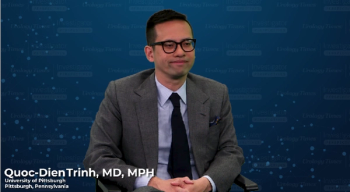
A panelist discusses how Black men have a 67% higher incidence of prostate cancer and more than 2-fold higher risk of mortality compared with members of other races and ethnicities.
A panelist discusses how Black men have a 67% higher incidence of prostate cancer and more than 2-fold higher risk of mortality compared with members of other races and ethnicities.
A panelist discusses how the differences in prostate cancer among Black men are multifactorial, including biological differences in risk alleles, social determinants of health, and limited access to care and clinical trials.
Explore the critical underrepresentation of black men in metastatic hormone sensitive prostate cancer trials and its implications for treatment outcomes.
Explore the latest advancements in metastatic hormone-sensitive prostate cancer treatment, highlighting effective agents and clinical trial outcomes.
New analysis reveals promising outcomes for black men with mHSPC, showing comparable survival rates and significant PSA suppression in treatment responses.
Study reveals comparable safety profiles for mHSPC treatments across races, reassuring clinicians and patients about treatment acceptability.
This study highlights the safety of mHSPC drugs in black men, supported by both trial data and real-world evidence.
Emerging data on mHSPC shows promising trends in overall survival, highlighting the impact of care access and competing risks.
Research highlights the effectiveness and safety of mHSPC treatments for black men, ensuring they receive appropriate care and reassurance.
Research highlights the need for personalized treatment in mHSPC, addressing variations in drug efficacy across diverse populations for optimal patient care.
Enhancing diversity in mHSPC clinical trials requires community outreach, collaboration, and accessible care for underrepresented populations.
Enhancing minority enrollment in clinical trials and utilizing real-world data improves drug safety and efficacy for mHSPC treatments.