
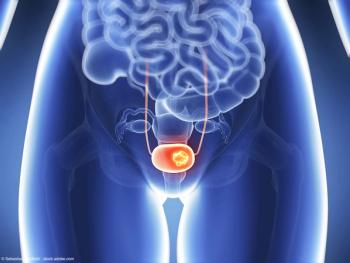
"Ultimately, there is no 'right choice' when it comes to urinary diversion," writes Anne K. Schuckman, MD.
"Ultimately, there is no 'right choice' when it comes to urinary diversion," writes Anne K. Schuckman, MD.

"For telephone-only (audio only) visits, Medicare has officially stated that such a visit would be considered the same as an in-person visit, with a few qualifications," write Jonathan Rubenstein, MD, and Mark Painter.

"Sometimes, there is more than a single answer to a question; this certainly applies to patients with benign prostatic disease," writes Gopal H. Badlani, MD.
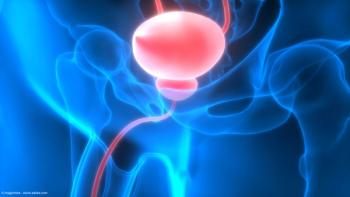
According to ImmunityBio, shipments of rBCG are set to begin immediately via the EAP.
The median duration of response was 47.8 months among patients who achieved an initial complete response.

Overall, 85% of respondents indicated they experienced frequent bladder leaks.
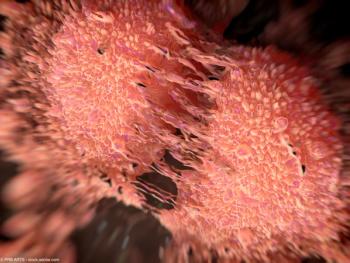
"The management of advanced prostate cancer has evolved significantly, driven in part by the integration of diverse biomarkers that guide treatment decisions from diagnosis through progression," says Nedim Ruhotina, MD.

At 24 months, 79% of patients experienced a response to therapy, and 56% achieved at least a 75% reduction in UUI episodes.
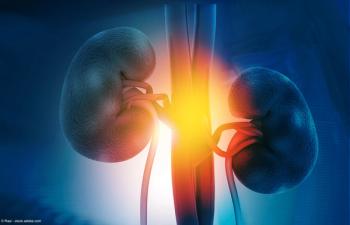
At a median follow-up of 40.2 months post-surgery, no patients had experienced a disease recurrence.
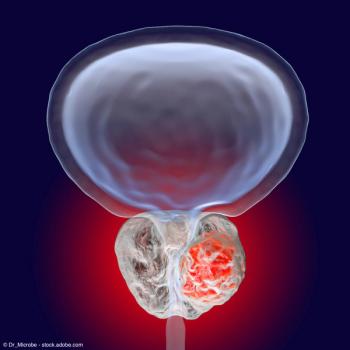
The incidence of late grade 2 or greater GU toxicity at 5 years was 12.5% among those who did experience acute toxicity vs 7.5% among those who did not.

“MPS2 could potentially improve the health of our patients by avoiding overdiagnosis and overtreatment and allowing us to focus on those who are most likely to have aggressive cancers," says Ganesh S. Palapattu, MD, FACS.
If approved, the marketing authorization application would be valid in all 27 European Union member states as well as in Iceland, Liechtenstein, and Norway.

64Cu-SAR-bisPSMA was previously granted a fast track designation in August 2024 for PET imaging of PSMA-positive prostate cancer lesions in patients with suspected metastasis who are candidates for initial definitive therapy.
In a recent study of the RELIEF stent, 95% of patients showed no VUR following stent placement.