Evolving Treatment Strategies in Metastatic Castration-Sensitive Prostate Cancer
This episode reviews treatment intensification in metastatic castration-sensitive prostate cancer, focusing on why ADT plus an ARPI is the current backbone of care, what barriers still limit its use, and how clinicians think about triplet therapy, de-intensification, frail patients, and emerging biomarker-driven options such as PARP inhibitors.
This episode examines how indirect trial comparisons can help guide ARPI selection in metastatic castration-sensitive prostate cancer when head-to-head studies are unavailable, while emphasizing the importance of patient-specific factors, tolerability, and clinical judgment.
This episode explores how long-term management of metastatic castration-sensitive prostate cancer is increasingly shaped by personalized treatment planning that balances disease burden, patient fitness, quality of life, and shared decision-making.
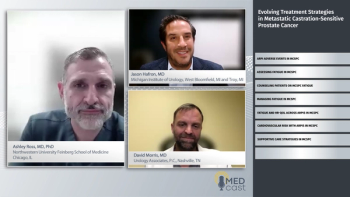
This series explores how fatigue and other treatment-related adverse events influence quality of life and treatment persistence in metastatic castration-sensitive prostate cancer, with a focus on practical strategies for assessment, management, and supportive care in patients receiving ADT and ARPI-based therapy.
The faculty discusses how ARPI monotherapy may fit into the management of high-risk biochemically recurrent prostate cancer, with a focus on patient selection, trade-offs of monotherapy versus combination therapy, and practical counseling around efficacy, quality of life, and adverse events. The conversation also explores emerging questions around biomarkers, PARP inhibitors, treatment intensification, and how monotherapy may evolve as a therapeutic option in select patients.
The faculty discuss how androgen receptor pathway inhibitor–based strategies are reshaping the management of high-risk biochemical recurrence, with an emphasis on risk stratification, imaging, and patient selection for systemic therapy. The conversation also explores how long-term clinical evidence, treatment suspension, and emerging study designs are informing more individualized treatment decisions in practice.
The faculty discusses how ARPI monotherapy may fit into the management of high-risk biochemically recurrent prostate cancer, with a focus on patient selection, trade-offs of monotherapy versus combination therapy, and practical counseling around efficacy, quality of life, and adverse events. The conversation also explores emerging questions around biomarkers, PARP inhibitors, treatment intensification, and how monotherapy may evolve as a therapeutic option in select patients.
The faculty discuss how androgen receptor pathway inhibitor–based strategies are reshaping the management of high-risk biochemical recurrence, with an emphasis on risk stratification, imaging, and patient selection for systemic therapy. The conversation also explores how long-term clinical evidence, treatment suspension, and emerging study designs are informing more individualized treatment decisions in practice.
