Articles by David Morris, MD, FACS
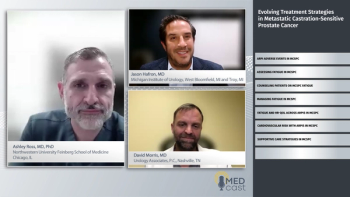
This series explores how fatigue and other treatment-related adverse events influence quality of life and treatment persistence in metastatic castration-sensitive prostate cancer, with a focus on practical strategies for assessment, management, and supportive care in patients receiving ADT and ARPI-based therapy.

In the final episode, ‘Advice for Integrating PSMA PET Imaging in Advanced Prostate Cancer,’ the panelists share practical advice for incorporating PSMA PET into prostate cancer clinics and workflows.
In this episode, ‘Clinical Reliability of PSMA PET in Advanced Prostate Cancer,’ expert faculty examine the real-world reliability of PSMA PET imaging in evaluating tumor burden and disease extent in advanced prostate cancer.

David Morris, MD, FACS, highlights key strategies for counseling patients receiving the gemcitabine intravesical system as well as considerations for maintaining patients on therapy long enough to achieve meaningful clinical benefit.
This episode, titled ‘Clinical Considerations for PSMA PET Agents in Advanced Prostate Cancer,’ the expert faculty review the currently FDA-approved PSMA PET diagnostic agents and their labeled indications, which are largely similar and include initial staging, biochemical recurrence, and evaluation for radioligand therapy.
David Morris, MD, FACS, discusses expert panel recommendations on intravesical drug-releasing systems in bladder cancer, highlighting early drug release dynamics, tolerability, and optimizing patient comfort.
In ‘Expanding Clinical Use of PSMA PET in Advanced Prostate Cancer,’ our experts delve into how PSMA PET imaging is being incorporated into treatment decisions for patients with advanced and metastatic prostate cancer.
How teams use PSMA PET to stage prostate cancer: who orders, who reads, and how tumor boards refine treatment when findings conflict.
Learn how PSMA PET reshapes prostate cancer staging, outperforms CT and bone scans, and finds recurrence even at very low PSA.

Discover essential insights for managing metastatic prostate cancer, including the importance of clinical trials and early genetic testing.
Explore the complexities of treatment protocols for metastatic hormone-sensitive patients, focusing on therapy cessation and re-initiation strategies.
Affordability and Accessibility of Therapies in mCSPC Care
Experts discuss evolving treatment strategies for metastatic castration-resistant prostate cancer, emphasizing personalized therapy and innovative options.
Experts discuss evolving treatment strategies for metastatic castration-resistant prostate cancer, emphasizing personalized therapy and innovative options.
Healthcare professionals discuss patient selection, treatment strategies, and compliance tools for managing advanced prostate cancer effectively.
Experts discuss the importance of genetic testing in managing aggressive prostate cancer, emphasizing early testing and actionable mutations for treatment decisions.
It seems there is no text provided for summarization. Please provide the text you'd like summarized, and I'll be happy to help!
Healthcare professionals discuss the importance of patient counseling on treatment options, emphasizing the balance between efficacy and quality of life.
Identifying the Ideal Patient for Doublet versus triplet in mCSPC
Explore the latest long-term data on abiraterone and enzalutamide, revealing survival benefits and safety insights for prostate cancer treatments.
Explore the evolving landscape of prostate cancer treatments, focusing on efficacy, tolerability, and the nuances of various therapies.
Experts discuss the future of metastatic cancer treatment, focusing on risk stratification, personalized therapies, and the balance between intensification and de-escalation.
Healthcare professionals discuss the importance of patient characteristics and comorbidities in selecting effective and tolerable treatments.
Healthcare professionals discuss the importance of patient characteristics and comorbidities in selecting effective and tolerable treatments.
Mechanisms of Action and Differentiation Among ARPI Therapies in mCSPC
Current Treatment Landscape and Guideline Recommendations in mCSPC

Explore strategies for seamless coordination between urologists and medical oncologists to ensure uninterrupted, patient-focused care in prostate cancer treatment.

Explore the coordinated approach between urologists and medical oncologists to ensure smooth transitions and ongoing care for patients receiving combination therapies in prostate cancer treatment.
Join experts David Morris, MD, FACS, and Benjamin Garmezy, MD, as they discuss the barriers and considerations in prescribing triplet therapy, offering insight into its benefits and how collaborative care between urologists and medical oncologists ensures a seamless patient journey.
Discover considerations for doublet or triplet therapy in advanced prostate cancer, analyzing the benefits and manageable added toxicity, as discussed by renowned experts in the field.