

Opinion|Videos|December 8, 2025
Addressing Unmet Needs in mCSPC Care
Fact checked by: Nicole Canfora Lupo
Experts discuss the future of metastatic cancer treatment, focusing on risk stratification, personalized therapies, and the balance between intensification and de-escalation.
Advertisement
Episodes in this series
This segment explores the unmet needs and future directions in managing metastatic castration-sensitive prostate cancer (mCSPC). Panelists discuss the critical balance between treatment intensification and de-intensification, emphasizing the need to identify which patients can achieve optimal outcomes with less therapy and which require escalation to triplet regimens. They highlight emerging trials, including TRIPLE-SWITCH and TALAPRO-3, and studies integrating PARP inhibitors, radioligand therapy, and novel mechanisms of action for high-risk or genomically defined subgroups. The conversation also underscores the importance of biomarker-driven precision medicine, such as using genomic assays like Decipher or testing for BRCA1/2, PTEN, and PIK3 pathway alterations to personalize care. Panelists agree that the next frontier lies in refining therapy duration, incorporating targeted radiation and systemic combinations, and leveraging biologic insights to optimize outcomes—transforming prostate cancer treatment from a one-size-fits-all model to a tailored, precision-based approach that maximizes efficacy while minimizing toxicity.
Panelists noted that abiraterone, apalutamide, and enzalutamide demonstrate overall survival benefits, while darolutamide primarily delays progression. They discussed adverse effect profiles and monitoring needs—highlighting the need for liver function monitoring and steroid coadministration with abiraterone—and emphasized that treatment selection often depends on balancing efficacy, toxicity, and clinician comfort.
Advertisement
Related to this article

This approval expands the label for nogapendekin alfa inbakicept to include patients with high-grade papillary-only tumors.

Melissa Hadley Barrett discusses real-world outcomes and tolerability of intranasal vardenafil for men with persistent erectile dysfunction despite prior standard therapy.

The completion of the first procedure marks the beginning of a controlled US commercial release.
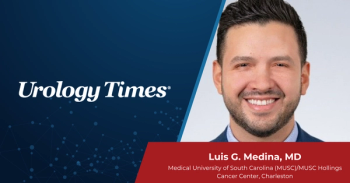
Delayed diagnosis and skipped nodal staging worsen penile cancer outcomes, according to Luis G. Medina, MD.

Butterfly Medical has also submitted a premarket approval application to the FDA.

Moderators and participants reviewed ARANOTE, ARACOG, and ARASEC data and how they inform individualized treatment for mCSPC.

Timothy N. Clinton, MD, recaps bladder cancer data from the 2026 AUA Northeastern Section meeting, including BOND-003 cretostimogene results and safety data on mitomycin intravesical solution.

Juan J. Andino, MD, MBA, discusses surgical decision-making in prolonged ischemic priapism and how ischemia duration affects erectile dysfunction risk and treatment timing.
Advertisement
Advertisement
Trending on Urology Times
1
FDA approves nogapendekin alfa inbakicept plus BCG for papillary-only BCG-unresponsive NMIBC
2
Study compares PSMA-PET radiopharmaceuticals in prostate cancer recurrence
3
Matching mCSPC treatment to the patient, not just the trial data
4
Urocross Expander System enters US commercial use for symptomatic BPH
5