
Opinion|Videos|December 8, 2025
Mechanistic Differences in ARPIs and Long-Term Clinical Outcomes in mCSPC
Fact checked by: Nicole Canfora Lupo
Explore the evolving landscape of prostate cancer treatments, focusing on efficacy, tolerability, and the nuances of various therapies.
Advertisement
Episodes in this series
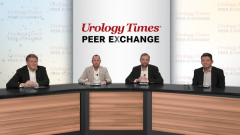
In this segment, panelists examined emerging long-term data on androgen receptor pathway inhibitors (ARPIs) used in metastatic castration-sensitive prostate cancer (mCSPC). They reviewed distinctions among the lutamides (enzalutamide, apalutamide, darolutamide) and abiraterone, emphasizing that while all enhance androgen suppression, abiraterone’s CYP17 inhibition introduces added metabolic and hepatic risks due to required steroid coadministration. Discussion highlighted recent ASCO readouts, which suggested that in frailer, elderly populations, lutamides may offer superior tolerability compared with abiraterone—challenging prior assumptions. Panelists also addressed misconceptions surrounding ARPI adverse effects, noting that double-blind trial data (ARCHES, TITAN) show grade 3 adverse event rates and discontinuations comparable to placebo. They emphasized that clinician perceptions and communication can strongly influence how patients experience and report toxicities. Overall, the segment underscored the importance of balancing efficacy, safety, and patient perception when selecting long-term therapy for mCSPC.
Panelists noted that abiraterone, apalutamide, and enzalutamide demonstrate overall survival benefits, while darolutamide primarily delays progression. They discussed adverse effect profiles and monitoring needs—highlighting the need for liver function monitoring and steroid coadministration with abiraterone—and emphasized that treatment selection often depends on balancing efficacy, toxicity, and clinician comfort.
Advertisement
Related to this article

Engy Habashy, MD, discusses key takeaways from the 2025 AUA GSM guideline, including the role of androgens and hormonal therapies in managing genitourinary syndrome of menopause.

Chad R. Ritch, MD, MBA, FACS, discusses how PSMA-PET informs staging, treatment planning, recurrence workup, and the interpretation of equivocal findings.

Michael S. Cookson, MD, MMHC, FACS, discusses how Anktiva’s expanded FDA approval may broaden bladder-preserving treatment options for BCG-unresponsive papillary-only NMIBC.

Jeffrey M. Spier, MD, discusses how fatigue may impact patient quality-of-life and when dose reduction may be an appropriate treatment strategy.

This approval expands the perioperative use of pembrolizumab plus enfortumab vedotin to all patients with MIBC, regardless of cisplatin eligibility.
Take a look through some of the notable data presentations at this year's ESMO Congress.

The investigational HIF-2α inhibitor casdatifan demonstrated antitumor activity as monotherapy and in combination regimens across the ARC-20 platform study.

The agency issued a PDUFA target action date of June 14, 2027.
Advertisement
Advertisement
Trending on Urology Times
1
European Commission approves perioperative pembrolizumab plus enfortumab vedotin for MIBC
2
FDA accepts new drug application for UGN-103 in recurrent LG-IR-NMIBC
3
How PSMA-PET shapes staging and recurrence workup in prostate cancer
4
Michael Cookson, MD, reacts to Anktiva’s expanded approval in NMIBC
5