
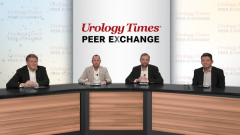
Opinion|Videos|January 27, 2026
Advice for the Next Generation of Urologists in mCSPC Management
Discover essential insights for managing metastatic prostate cancer, including the importance of clinical trials and early genetic testing.
Advertisement
Episodes in this series
In this closing discussion, the panel offers practical advice for new clinicians entering the field of metastatic castration-sensitive prostate cancer (mCSPC) management. The faculty emphasized that this is an exciting and rapidly advancing area of urology, with numerous therapeutic options now improving survival and quality of life. They encouraged junior clinicians to embrace clinical trial participation, stay informed about ongoing research, and gain hands-on experience with all major treatment modalities to build confidence and competence. The conversation also reinforced the importance of early genetic testing, a growing standard in optimizing patient selection and therapy sequencing. Panelists highlighted collaboration between academic and community practices as essential for accelerating innovation and improving patient outcomes. Above all, they advised approaching this field with curiosity, humility, and enthusiasm—recognizing that mCSPC care continues to evolve and that future advances will depend on both rigorous science and real-world clinical engagement.
Panelists noted that abiraterone, apalutamide, and enzalutamide demonstrate overall survival benefits, while darolutamide primarily delays progression. They discussed side-effect profiles and monitoring needs—highlighting the need for liver function monitoring and steroid co-administration with abiraterone—and emphasized that treatment selection often depends on balancing efficacy, toxicity, and clinician comfort.
Advertisement
Related to this article

Engy Habashy, MD, discusses key takeaways from the 2025 AUA GSM guideline, including the role of androgens and hormonal therapies in managing genitourinary syndrome of menopause.

Chad R. Ritch, MD, MBA, FACS, discusses how PSMA-PET informs staging, treatment planning, recurrence workup, and the interpretation of equivocal findings.

Michael S. Cookson, MD, MMHC, FACS, discusses how Anktiva’s expanded FDA approval may broaden bladder-preserving treatment options for BCG-unresponsive papillary-only NMIBC.

Jeffrey M. Spier, MD, discusses how fatigue may impact patient quality-of-life and when dose reduction may be an appropriate treatment strategy.

This approval expands the perioperative use of pembrolizumab plus enfortumab vedotin to all patients with MIBC, regardless of cisplatin eligibility.
Take a look through some of the notable data presentations at this year's ESMO Congress.
The investigational HIF-2α inhibitor casdatifan demonstrated antitumor activity as monotherapy and in combination regimens across the ARC-20 platform study.

The agency issued a PDUFA target action date of June 14, 2027.
Advertisement
Advertisement
Trending on Urology Times
1
European Commission approves perioperative pembrolizumab plus enfortumab vedotin for MIBC
2
FDA accepts new drug application for UGN-103 in recurrent LG-IR-NMIBC
3
Michael Cookson, MD, reacts to Anktiva’s expanded approval in NMIBC
4
ESMO 2026: Key presentations across genitourinary oncology
5