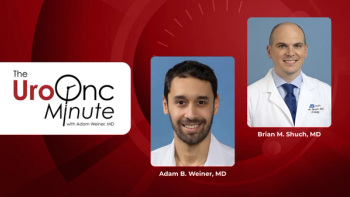
Adam B. Weiner, MD, is joined by Brian M. Shuch, MD, for a concise yet wide-ranging update on the evolving role of adjuvant therapy in renal cell carcinoma.
Adam B. Weiner, MD, is joined by Brian M. Shuch, MD, for a concise yet wide-ranging update on the evolving role of adjuvant therapy in renal cell carcinoma.
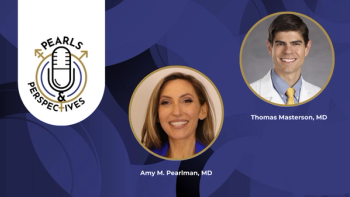
The conversation explores the growing role of at-home semen testing kits as screening tools, their advantages in accessibility and privacy, and their limitations compared with in-lab testing.
The study is designed to assess the safety, tolerability, pharmacokinetics, and preliminary anti-tumor activity of NEO-811 in ccRCC.
The sildenafil oral film is expected to be commercially available in the US in March 2026.

URO-1’s FDA-cleared SUREcore and coreCARE prostate biopsy devices have been adopted at multiple Novant Health hospitals as part of a systemwide value analysis.
The conversation explores evolving strategies that have further lowered infection risk, including no-touch principles, chlorhexidine skin preparation, antibiotic and customizable implant coatings, and growing interest in antiseptic-based solutions rather than antibiotics alone.

At 24 months, apalutamide demonstrated a statistically significant improvement in OS vs darolutamide without concurrent docetaxel.
Amy Pearlman, MD, sits down with Katherine A. Amin, MD, to discuss the evolving landscape of female pelvic medicine, overactive bladder management, and fellowship training.
The application is seeking approval of Signatera CDx as a companion diagnostic to select patients with MIBC for treatment with adjuvant atezolizumab.
A recap of the FDA submissions and regulatory decisions in urology from January 2025.
ANDROMEDA is looking to build on previous findings from the LUNAR trial in recurrent, oligometastatic prostate cancer.
The conversation highlights the steady pace of innovation in urogynecology.
Cooled laser focal therapy with the ProFocal Device showed promising cancer control in patients with localized prostate cancer.
In this episode, Amy Pearlman, MD, speaks with Phillip M. Pierorazio, MD, about integrating mindfulness and wellness into a demanding surgical career and the evolving complexities of modern prostate cancer care.

The combination was tolerable and demonstrated promising early efficacy as a 3rd-line option for patients with mCRPC.
Beyond operative technique, the episode addresses patient counseling, including expectations around fertility, anejaculation, and postoperative complications such as chyle leak.
The report highlights key trends in cancer treatment and outcomes, including detailed analyses across 3 cancer types: prostate, esophageal, and melanoma.
AVA-291 is a differentiated formulation of testosterone designed to retain androgen activity while resisting aromatization.
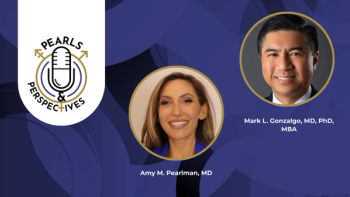
Gonzalgo explores how prostate cancer diagnosis and management continue to evolve.


The prospective registry is evaluating a personalized counseling and monitoring strategy for patients who are at an increased risk of prostate cancer due to positive family history or pathogenic genetic variants.
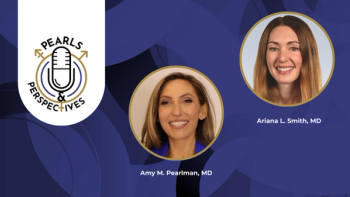
In this episode of Pearls and Perspectives, host Amy Pearlman, MD, sits down with Ariana L. Smith, MD, to explore how clinicians navigate evidence gaps, evolving guidelines, and emerging innovation in overactive bladder care.

The results highlight the early clinical potential of the device for restoring erectile function post-prostatectomy.
The safety and efficacy of the Break Wave device was assessed in the pivotal SOUND trial.
The ARID platform is evaluating the safety and efficacy of the Voro Urologic Scaffold in minimizing stress urinary incontinence following robot-assisted radical prostatectomy.
The phase 3 BiPASS trial is assessing earlier use of 68Ga-PSMA-PET imaging in the pre-biopsy setting.
Enrollment in the ongoing pivotal QUILT-2.005 trial has now reached 85%.