
Akanksha Mehta, MD, MS, discusses why the updated vasectomy guideline expands its focus on fertility restoration, emphasizing patient counseling on reversal and individualized decision-making for future family building.
Akanksha Mehta, MD, MS, discusses why the updated vasectomy guideline expands its focus on fertility restoration, emphasizing patient counseling on reversal and individualized decision-making for future family building.
Akanksha Mehta, MD, MS, discusses AUA guideline recommendations for performing post-vasectomy semen analysis.
Akanksha Mehta, MD, MS, discusses updated recommendations from the 2026 AUA Vasectomy Guideline on vas isolation and occlusion techniques.
Akanksha Mehta, MD, MS, highlights key recommendations on pre-vasectomy counseling from the American Urological Association’s 2026 Vasectomy Guideline.
The following FAQ highlights key recommendations for urologists from the 2026 AUA Vasectomy Guideline.
Beyond operative technique, the episode addresses patient counseling, including expectations around fertility, anejaculation, and postoperative complications such as chyle leak.
The study assessed descriptive sequencing and oncologic outcomes among patients receiving gene therapy for BCG-unresponsive NMIBC.
This episode offers practical insights for clinicians navigating complex prostate cancer cases and underscores how precision imaging and tailored radiation strategies are redefining care for patients with advanced disease.

Taylor Goodstein, MD, and Pretesh Patel, MD, explore how image guidance and adaptive radiation planning have revolutionized precision, even allowing real-time treatment plan adjustments.

Shreyas S. Joshi, MD, MPH, discusses some of the key considerations for new agents entering the treatment landscape for BCG-unresponsive NMIBC.
Among the topics covered are BCG dosing and maintenance regimens.
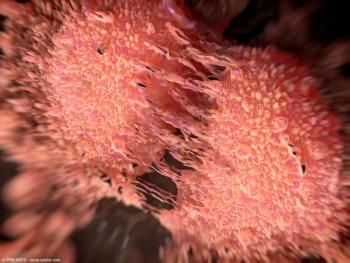
A first-of-its kind study led by Emory researchers uncovered how prostate cancer transforms into its most lethal form — and identified a promising new treatment strategy.
Vikram M. Narayan, MD, FACS, offers advice for institutions that are considering investments in technology to improve clinical workflows.
Vikram M. Narayan, MD, discusses Emory's recent shift to Apple products, aimed at reducing physician burnout and improving patient interactions.

"Overall, these findings add to the growing body of evidence that [shows that] apalutamide may offer a survival advantage in real-world setting in patients with metastatic castration-sensitive prostate cancer," says Mehmet A. Bilen, MD.
“It is likely that more and more, these newer agents are going to play earlier and more central roles in the early treatment of BCG-unresponsive disease," says Shreyas S. Joshi, MD, MPH.

"The combination demonstrated clinical activity and an acceptable safety profile in the perioperative setting for locally advanced, non-metastatic clear cell RCC," says Mehmet Asim Bilen, MD.
“Then recently, of course, with the single-port device, that has truly allowed us to be less invasive with our robotic approaches,” says Adam Lorentz, MD, FACS.

“They come out of the fellowship competent and competitive in the field to any urology position that they're interested in,” says Tania Solomon, PA-C, MSc.

According to Sanda, future advancements may involve gene and RNA sequencing, the use of AI in imaging, and multidisciplinary collaboration.

"We are trying to develop epigenetic biomarkers that can predict patients that are starting to progress to neuroendocrine prostate cancer," says Jindan Yu, MD, PhD.
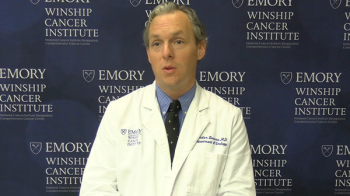
“The patients I find that have the most pronounced benefit are the patients with the very large prostates, or the patients who are catheter dependent with concern for neurogenic or myogenic bladder failure,” says Brendan M. Browne, MD.
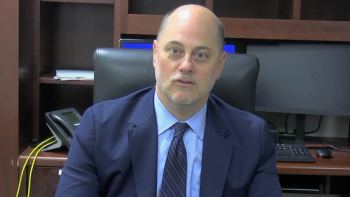
“One of the ways we make the most difference for our patients is we take care of the people who are taking care of them,” says Chad Ritenour, MD.
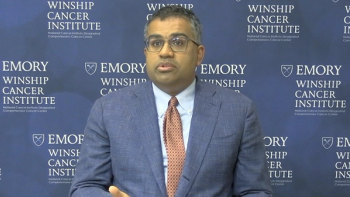
“The key take home message of that study was that having assumptions about basic medical terminology that we think are simple may actually leave patients confused,” says Vikram M. Narayan, MD.

“I think promoting women in leadership positions, promoting mentorship for women applicants and women already in this field, and working on policy changes are the top 3,” says Michelle S. Sheng, MD.

“It's a good problem to have, because we're thinking about a previous era in which we didn't have many options besides more BCG vs cystectomy,” says Vikram M. Narayan, MD.
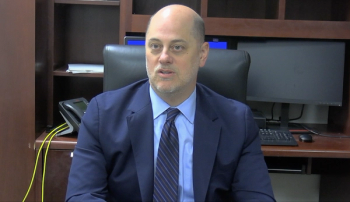
"This idea that physicians and medical teams always feel that they need to be available at all hours of the day really starts to stress people." says Chad W. M. Ritenour, MD, FACS.

"We're very much looking forward to the new data that'll be presented, hopefully, within the next year, to see where this falls in the grand scheme of the all the new drugs coming into play here," says Shreyas S. Joshi, MD, MPH.
"We're excited about the science behind it, but we're also excited for our patients that if they can have access to this, maybe we can delay or completely avoid radical cystectomy or further aggressive treatments," says Shreyas S. Joshi, MD, MPH.