
“What we've been working on is a giant 30,000 patient database study using the National Cancer Database to see exactly what the rates are of upstaging and downstaging for these larger kidney tumors,” says Taylor Goodstein, MD.
“What we've been working on is a giant 30,000 patient database study using the National Cancer Database to see exactly what the rates are of upstaging and downstaging for these larger kidney tumors,” says Taylor Goodstein, MD.
“Physicians are spending, depending on how much they utilize it, 20% to 30% less time on nights and weekends,” says Ernest A. Morton, MD, MBA, MS.
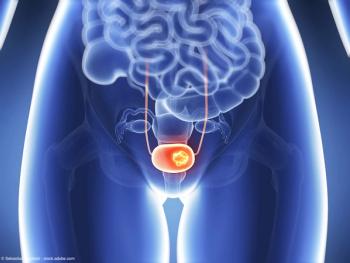
"Overall, the take-home message is that in patients with BCG-unresponsive non–muscle invasive bladder cancer, you can consider nadofaragene as an option among those that are available for treating these patients," said Vikram Narayan, MD.
“Overall, the take-home message is that in patients with BCG-unresponsive non–muscle-invasive bladder cancer, you can consider nadofaragene as an option among those that are available for treating these patients,” says Vikram M. Narayan, MD.
Ernest A. Morton, MD, MBA, MS, spotlights projects looking at the use of AI scribes to assist in notetaking and an AI algorithm to analyze prostate biopsies.
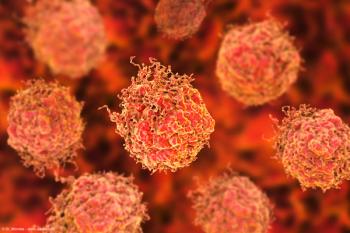
“Our study highlights the potential of epigenomic profiling from a simple blood draw to provide a real-time, non-invasive readout of PSMA expression that corresponds with treatment response," says Jacob E. Berchuck, MD.

"This year, we are starting an international rotation with a focus on global health and humanitarian work," says Akanksha Mehta, MD, MS.
“Put another way, with Apple Vision Pro, what we're hoping to do is have our residents be able to put on a headset and walk through a case before they actually walk into an operating room,” says Vikram M. Narayan, MD.

Winship study paves the way for more patients to benefit from future immunotherapies.
“After doing a literature review about cystectomy patients and how devastating it is for female sexual function after having a cystectomy, [my main takeaway from this study is that] it seems that women tolerate the intravesical treatments well,” says Talia A. Helman, MD.

“Allowing these women to have a fulfilling life after cancer is one of the best things we can do as physicians,” says Talia A. Helman, MD.
“The hope is that we can collaborate with folks who might be interested in trying nadofaragene plus something else, something that compliments the mechanism of action, so that we can build upon what we have now,” says Vikram M. Narayan, MD.
"Because it takes advantage of a viral vector and is delivered as a gene therapy product, what it can do is it can have sustained release of IFNα2b in the bladder," says Vikram M. Narayan, MD.
“We’re in a very exciting time for those of us who take care of patients with bladder cancer. There are a lot of new emerging treatment options,” says Vikram M. Narayan, MD.

“We looked at MRD negative patients, MRD positive patients, and their ultimate clinical response to see if it could be predictive of recurrence-free survival,” says Vikram M. Narayan, MD.
"If we do not see people that look like us in positions of leadership, that is not a field that we're going to want to enter," says Akanksha Mehta, MD, MS.

"We are caring for a variety of patients who do not look like the physicians who are providing care to them," says Akanksha Mehta, MD, MS.
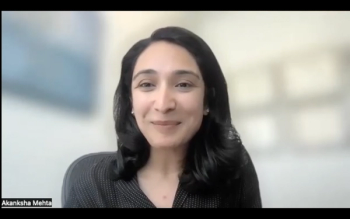
"The [SWIU meeting] is a meeting that provides updates to all of our members about the exciting initiatives that the organization has been able to accomplish in the preceding year, as well as the initiatives that are planned for the subsequent year," says Akanksha Mehta, MD, MS.
"It is a big ask of a trainee to have them sign up for a field that is demanding in terms of training, but also demanding in terms of non-professional commitments that they would otherwise make to their family life and their personal life," says Akanksha Mehta, MD, MS.

“There are not enough male reproductive health specialists across the country at the present moment,” says Akanksha Mehta, MD, MS.

“The proportion of clinics that employ an onsite urologist, where the urologist is integrated into the flow of that clinic, is relatively small,” says Akanksha Mehta, MD, MS.