

Recent data suggest that obesity may be a risk factor for increased pain on transperineal biopsy.
Recent data suggest that obesity may be a risk factor for increased pain on transperineal biopsy.
Amy E. Krambeck, MD, recaps her talk from AUA 2025.

"It’s a very good time to be taking care of patients with bladder cancer," says Joshua J. Meeks, MD, PhD.

Jennifer Miles-Thomas, MD, URPS, MBA, discusses the AUA's legislative priorities along with issues in medicine related to artificial intelligence.


“It's going to be an important time for US urologists to identify that this is becoming the standard of care," says Joshua J. Meeks, MD, PhD.

“You absolutely need to have a CT scan prior to the surgery to best identify and really intimately understand the kidney’s anatomy," says Perry Xu, MD.
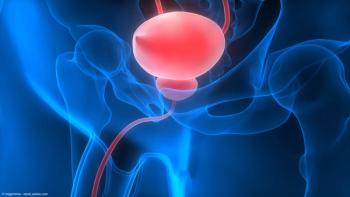
"There really wasn't a difference in in surgical outcomes. The patients tolerated it very well,” says Joshua J. Meeks, MD, PhD.

“The NIAGARA approval really begins to bring immunotherapy into the neoadjuvant setting," says Joshua J. Meeks, MD, PhD.

"A lot of people are using [single-use ureteroscopes] nowadays, and part of it is because it really enhances our ability to provide guaranteed care, because we don't have to rely on the reusability of scopes," says Perry Xu, MD.

“I think we can really use AI in several different facets of endourology," says Perry Xu, MD.

"I would also like us to be able to reliably use even smaller scopes, but keep them efficient," says Amy E. Krambeck, MD.
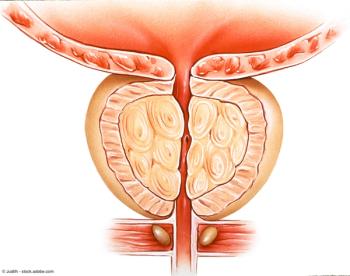
"[Urologists] really need to understand how big the prostate is and how big of a surgery that they're looking at," says Amy E. Krambeck, MD.

"I'm always trying new things. I feel like, once you decide that this is the way you have to do it and stick with that forever, that's when you immediately become irrelevant," says Amy E. Krambeck, MD.
"We really try to limit the amount of tissue we resect and what we do in patients who've had radiation," says Amy E. Krambeck, MD.

"Despite the fact that multiple new procedures have come to light, nothing has the same excellent outcomes as HoLEP," says Amy E. Krambeck, MD.

"I would say the fact that we performed 754 HoLEP procedures in 2024 is a reflection of the efficiency and the high quality of care that you receive at Northwestern," says Amy E. Krambeck, MD.

As the year comes to a close, we revisit some of this year’s top content on prostate cancer.


"We found that almost half of them had suspicious findings as defined by the radiologist, but also that the positivity rate for PSAs below 0.5 were around 35%," says Eric Li, MD.

"I think it's really important when we're prescribing any medication to our patients to really have a good idea of what they can expect," says Evan Panken, MD.

"I think that using this database does allow for some generalizability, and we're pretty confident in that," says Evan Panken, MD.
"We found an increased association with AKI or acute kidney injury in the group receiving testosterone replacement therapy," said Evan Panken, MD.

In this episode, Robert E. Brannigan, MD, and Juan J. Andino, MD, MBA, discuss the recent amendment to the AUA/ASRM guideline on male infertility.

No patients in the transperineal cohort experienced an infection, compared with 1.6% of patients in the transrectal cohort.

"I just want to underscore how important and how incredible it was to participate in this, because there was a lot of dialogue among the faculty and also the course participants," says Ziho Lee, MD.

"Based on our work, it does show that ileal ureter replacement can be an effective long-term option for patients with long-segment ureteral stricture disease," says Ziho Lee, MD.

“The other thing that I think would be interesting is there's the thought of vasectomy regret where because of the permanent nature, what proportion of patients have regret surrounding their decision?” says Catherine S. Nam, MD.

“Within our department at University of Michigan, there has been increased numbers of vasectomy procedure days to be able to meet the demand so that there's not a very long prolonged delay for our patients,” says Catherine S. Nam, MD.

“It will be interesting to see how this plays out long-term in the changing political scheme, as well as the general trend of the current generation potentially having different thoughts in terms of wanting to have children or not in the future,” says Catherine S. Nam, MD.