

"All forms of cancer start out by genetic changes in the DNA that cause cancer, so genetic testing becomes very important," says William J. Catalona, MD.
"All forms of cancer start out by genetic changes in the DNA that cause cancer, so genetic testing becomes very important," says William J. Catalona, MD.

"We're one of the first to look at hypogonadism, or low testosterone, as a marker for both frailty and also as a biomarker for how these patients do after surgery," says Daniel Greenberg, MD.

"We found that about 25% of these men had either sought treatment for a men's health issue or a sexual issue or had wanted to seek care," says Daniel Greenberg, MD.
“Health literacy pushed people towards active surveillance, which I thought was an interesting finding,” says Adam B. Murphy, MD, MBA, MSCI.
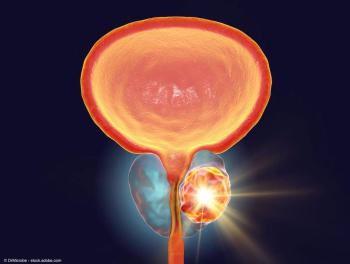
The research projects are assessing combination therapies in advanced prostate cancer that include the use of relugolix.
"For those people in the intervention arm who did get the assay, the doctors were more likely to prefer active treatment with surgery or radiation compared to the control group," says Adam B. Murphy, MD, MBA, MSCI.

“I've always felt like my patients are my partners in discovery,” says Edward M. Schaeffer, MD, PhD.

"It was really wonderful to work with a lot of our coauthors for the chapters because they really are thought leaders in the field," says Edward M. Schaeffer, MD, PhD.
“The purpose of the course is really to bring together like-minded surgeons and physicians who are interested in robotic reconstructive surgery to really come together to not only build a network, but also discuss complex situations, discuss tips and tricks, and also to review the most salient literature in this space,” says Ziho Lee, MD.
“I was of course flattered when Dr. Walsh and Janet Worthington approached me to take the lead on editing and writing this fifth version of the book,” says Edward M. Schaeffer, MD, PhD.
"I would say the take-home message from this study is that HoLEP uptake has nearly doubled from 2016 to 2019," says Jenny Guo, MD.
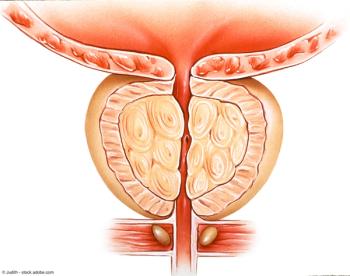
"Interestingly enough, we found that PVP accounted for nearly a third of BPH surgeries back in 2016. This number drastically decreased to just 0.7% of all BPH surgeries in 2019," says Jenny Guo, MD.

The Northwestern Medicine Department of Urology provides no-cost continuing medical education programs for urology professionals.

"[These findings] will encourage us to continue to offer bladder neck incision to these patients if their bladder neck appears narrow after laser enucleation," says Nicholas S. Dean, MD.

"Of the patients who underwent a prophylactic bladder neck incision... none of those patients developed a bladder neck contracture at 14 months of median follow-up," says Nicholas S. Dean, MD.
"My predominant role as a genetic counselor is really to serve our patient population and help support our providers," says Brittany M. Szymaniak, PhD, CGC.
“I think the prostate cancer community has benefited a lot in the past several years with the advent of enhanced imaging tools to help us better stage patients with prostate cancer both at their initial diagnosis and if, unfortunately, they have a recurrence,” says Edward M. Schaeffer, MD, PhD.
"I would say that the take-home message of the study is that these immunosuppressive medications have alterations in the microbiology in a lot of these organs and a lot of these tumors," says Conor Driscoll, MD.

"Northwestern Madison's urology program has a very robust clinical research enterprise," says Edward M. Schaeffer, MD, PhD.

"The NCCN guidelines are unique in that they're almost constantly updated in real time," says Edward M. Schaeffer, MD, PhD.

"Prostate cancer showed a decreased risk, which we thought was very interesting, because it was the only cancer for which that signal existed, that there is possibly a protective effect of these medications," says Conor Driscoll, MD.
“Looking at the impressive results for cohort K, with enfortumab, it's amazing what that is going to provide our patients,” says Joshua J. Meeks, MD, PhD.
“We're still very interested in early-stage bladder cancer, those at high risk do not respond to BCG,” says Joshua J. Meeks, MD, PhD.

"It pretty much has been adopted around the world so that about 80% of men who are diagnosed with low-risk prostate cancer go on active surveillance. In Sweden, it's about 80%. That's considered the goal. But the United States has been slow in adopting this," says William J. Catalona, MD.
"About 80% of the patients who underwent treatment showed a very strong reduction in tryptase levels," says Praveen Thumbikat, DVM, PhD.

Press Release
Men with high-risk prostate cancer who received immunotherapy treatment with enoblituzumab in the weeks leading up to surgery had favorable rates of disease remission and tumor downgrading after surgery.
"Because we don't have calibration data on Black, or Hispanic, or Asian men in many of these risk tools, we don't know the impact of these tools as screening tests," says Adam Murphy, MD, MBA, MSCI.
“I think, overall, nomograms are a really powerful tools just because there are so many different clinical variables that we consider when we talk to patients about whether to proceed with prostate biopsy,” says Eric Li, MD.
The update was presented at the 2023 American Urological Association Annual Meeting in Chicago, Illinois.

"Patients with a prior BPH procedure were on average older than our HoLEP controls; however, there were no other differences in preoperative patient characteristics or postoperative functional outcomes," said Nicholas S. Dean, MD.