
In this Q&A, Zachary Feuer, MD, discusses the implementation of a telehealth-based rapid access program for evaluating men with an elevated PSA.
In this Q&A, Zachary Feuer, MD, discusses the implementation of a telehealth-based rapid access program for evaluating men with an elevated PSA.

Mary Dunn, MSN, RN, NP-C, OCN, discusses how APPs support genetic testing through patient counseling, test ordering, result communication, and referrals to genetics specialists.

Davis Viprakasit, MD, FACS, discusses advanced cystoscopy training for APPs and the importance of collaboration between APPs and urologists to expand patient care.
Mary Dunn, MSN, NP-C, OCN, RN, highlights advances in advanced prostate cancer, including earlier systemic therapy, PSMA-PET, and PARP inhibitors.

Hans Arora, MD, PhD, discusses how communication and collaborative leadership can strengthen teamwork and performance in the operating room.

Kathryn H. Gessner, MD, PhD, discusses the current limitations in identifying appropriate candidates for bladder-preserving trimodal therapy, the promise of utDNA, and why shared decision-making remains essential.
The 2025 AUA Census documents significant geographic maldistribution of the urologic workforce—with 62% of US counties lacking a urologist—alongside a median practitioner age of 54 and generational shifts in career expectations that together pose near-term workforce sustainability challenges.
Health services research at UNC is informing community-based outreach efforts in prostate cancer—including engagement with HBCUs and patient groups across North Carolina—by centering patient and community perspectives to identify and address the barriers that prevent evidence-based care from reaching those who need it most.
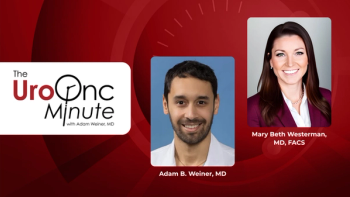
Adam B. Weiner, MD, is joined by Mary Beth Westerman, MD, FACS, to discuss the landmark CISTO trial—a large pragmatic study examining patient-reported outcomes among individuals with high-risk non–muscle invasive bladder cancer who underwent either bladder-sparing therapy or radical cystectomy.
The 2026 AUA Annual Meeting will feature significant bladder cancer data, a plenary lecture on screening and overdetection, and programming that integrates advanced practice providers across sessions, against a backdrop of AUA-driven policy wins including removal of the vaginal estrogen black box warning and early steps toward a federal Office of Men's Health.

Angela B. Smith, MD, MS, discusses the guiding priorities behind shaping this year’s Society of Women in Urology annual meeting.

Angela B. Smith, MD, MS, stresses that balancing PROs with traditional clinical end points begins with engaging patients early in the trial design process.


The findings revealed that patients prioritized improvements in overall survival and reductions in cancer recurrence at 5 years over all other treatment factors

Avani Desai emphasizes that inadequate or unclear parental leave policies carry significant consequences, particularly during residency.
Kathryn H. Gessner, MD, PhD, outlines the clinical scenarios in which she finds genomic testing most useful.

Ultimately, Desai argues, increasing transparency in policies is not only about compliance but about fostering resident well-being and inclusivity.

Urologists from the University of North Carolina share insights into key advancements across the field of urologic oncology.

Policy availability varied by specialty, with urology leading in program-specific policies—yet still only at 11%.
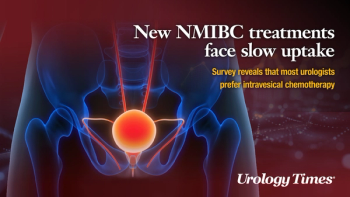
Results of an exclusive Urology Times survey point to urologists preferring intravesical chemotherapy for treating BCG-unresponsive NMIBC.

"Developing a relationship with your legislator is just as important at the state level as it is at the federal level," says Hans Arora, MD, PhD.
“What happens, mechanistically speaking, is that it stimulates the 2 arms of the immune system, both innate immunity as well as the adaptive immunity,” says Kate Chan, MD.

“In the setting of widespread metastatic progression or failure, we typically prefer more systemic therapy with metastasis-directed therapy for symptomatic sites,” says Kate H. Gessner, MD, PhD.

“To add to the complexity is the issue of intratumoral heterogeneity, where some clones may develop these resistance mechanisms and lose response over time or become resistant, while other clones will continue to respond,” says Kate H. Gessner, MD, PhD.

"This exciting and innovative technology has a wide range of possible applications, including tissue engineering, drug development, and precision medicine," write Kate Gessner, MD, PhD, and Philip Abbosh, MD, PhD.

"I think the fact that we're having these conversations, that they are being talked about at national meetings, and that we are bringing the patient voice into this is hugely important," says Mary W. Dunn, MSN, NP-C, OCN, RN.

"Teixobactin, and more broadly, the iChip approach to novel antibiotic discovery, is an exciting development in infection control," write Philip Abbosh, MD, PhD, and Kate Gessner, MD, PhD.

"There are many opportunities to support our patients with bladder cancer who smoke from their clinic appointments from their intravesical therapy visits to their surveillance cystoscopies," says Marc Bjurlin, DO, MSc, FACOS.

"Our next goal is transitioning to really understand the patient experience and how we can support them to quit smoking cigarettes," says Marc Bjurlin, DO, MSc, FACOS.

“At the Advocacy Summit earlier this spring, 2 of the 3 leave-behind documents that outlined specific issues related to urology priorities were directly informed by information from the Census,” says Matthew Nielsen, MD, MS, FACS.