
“It’s hard to see yourself in a field when there are not that many residents or faculty that look like you,” says Micha Cheng, MD, MPH, MS.
“It’s hard to see yourself in a field when there are not that many residents or faculty that look like you,” says Micha Cheng, MD, MPH, MS.

Micha Yin-Zheng Cheng, MD, MPH, MS, discusses the background of the UCSF UReTER (UnderRepresented Trainees Entering Residency) Mentorship Program.
Danica May, MD, discusses positive feedback she has received from participants in the KU Department of Urology rotation.

"This device has been really well studied, and we have lots of data on it," says Andrew C. Peterson, MD, MPH.

In this companion article, Armine K. Smith, MD, reflects on the role of kidney-sparing approaches for LG UTUC and emphasizes the importance of patient-provider communication when making treatment decisions.

“We actually found that our calculator held up pretty well at different risk thresholds, especially when compared to the PCPT in terms of maintaining the same number of missed cancers, but cutting the number of biopsies that were not necessary nearly in half,” says Neil Mistry, MD, MPH.

“When it comes to encouraging patients to utilize this therapy the number 1 thing I say is that it is the most effective therapy out there on the market,” says Raveen Syan, MD.
“We still need better representation from the AUA national level on down to the section meeting. There is a positive push for that, but things are still in process,” says Danica May, MD.
“It’s always fun getting to interact with people from different programs and different areas and we want to make them feel as welcome as possible,” says Danica May, MD.

Vignesh Packiam, MD, discusses study results showing sequential intravesical gemcitabine and docetaxel is an effective and well-tolerated therapy for BCG-naïve NMIBC.

Two main options exist: sperm retrieval with assisted reproductive therapies or vasectomy reversal, according to Kevin J. Campbell, MD, MS.
In the fourth interview of the series, Armine K. Smith, MD, from Sibley Memorial Hospital in Washington DC highlights considerations when discussing LG UTUC treatment options with patients including key points about response rates, adverse effects and long-term consequences, treatment availability, and insurance challenges.
In the third interview of the series, Benjamin H. Lowentritt, MD, FACS, reflects on financial and operational considerations in the use of leuprolide with emphasis on managing the cost burden, coding and reimbursement, and product inventory.

Vignesh Packiam, MD, explains how innovation driven by the BCG shortage led to a potential promising new regimen of sequential intravesical gemcitabine and docetaxel for patients with BCG-naïve non–muscle-invasive bladder cancer.

Albert Jang, MD, discusses the promise of using ctDNA to determine whether patients with advanced genitourinary cancers are responding to immune checkpoint inhibitors.
Among the topics touched on in the discussion are lifestyle considerations, medical therapy, and surgical options.
There are still quite a few patients who still do not respond to immunotherapy, says Albert Jang, MD.

“I think my goal in doing all this research is to draw awareness to these problems and the disparities,” says Elisabeth M. Sebesta, MD.

In this companion article, Brenda Heath, RN, reflects on practical considerations in the preparation and administration of formulations of leuprolide acetate and leuprolide mesylate.

“Several of these patients were able to undergo surgery that spared them the need to remove their ureter and their kidney,” says Matthew T. Campbell, MD.
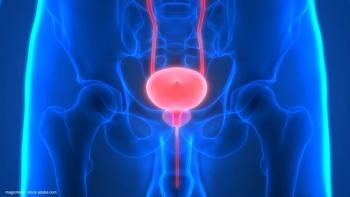
“The NRG SWOG 1806 trial is a phase 3 trial randomizing patients to standard trimodality therapy or trimodality therapy plus atezolizumab,” says Sophia Kamran, MD.

“We’re in the process of following patients who have taken saw palmetto extract and tracking their clinical diagnosis,” says Bilal Chughtai, MD.
“Health care disparities are very complex issues; it’s not like a linear cause-and-effect relationship,” says Elisabeth M. Sebesta, MD.

“[We] found that women were spending on average, nearly $35 a week on incontinence products in the highest symptom severity, which is a huge financial burden,” says Elisabeth M. Sebesta, MD.

Stephen J. Freedland, MD, highlights emerging data to look out for that might address unmet needs in prostate cancer testing and treatment.
Dr Freedland discusses the clinical implications of using genomic test results for management of patients with prostate cancer.
A key opinion leader provides an overview of study data investigating the clinical validity and clinical utility of the currently available genomic testing options in prostate cancer.
“I’ve been using it my practice and also based on the literature, it seems like it is a relatively safe extract with little to no change in sexual function…and no obvious contraindications,” says Bilal Chughtai, MD.
Sacral neuromodulation administered through an implantable neurostimulator has shown promise as a therapy for patients with bladder and bowel dysfunction.