

Hayne finds the emergence of antibody drugs conjugates in urothelial cancer to be particularly intriguing.
Hayne finds the emergence of antibody drugs conjugates in urothelial cancer to be particularly intriguing.

Campbell emphasized that although gender representation in medicine is shifting, structural and cultural biases continue to influence academic recognition.

Panelists discuss how the ongoing BCG shortage has forced clinicians to adapt treatment strategies for non–muscle-invasive bladder cancer (NMIBC), balancing resource constraints with patient outcomes through dose adjustments, chemotherapy substitution, and earlier cystectomy, while emphasizing the importance of maintaining trial eligibility and adhering as closely as possible to evidence-based protocols.
Panelists discuss evolving strategies for managing non–muscle-invasive bladder cancer (NMIBC), highlighting how risk stratification, resource limitations, and emerging therapies like gemcitabine-docetaxel are shaping treatment decisions, while emphasizing the urgent need for predictive tools and biomarkers to guide personalized care.


The study compared patient experiences with silicone vs polyurethane ureteral stents.

“It is possible to conserve fluid when we're trying to do these procedures without compromising patient care," says Roshan M. Patel, MD.

Paul E. Dato, MD, discusses how the absence of genetic alterations in the second case makes the patient ineligible for PARP inhibitor therapy until castration resistance develops, with focus remaining on ADT, AR-targeted therapy, chemotherapy, and bone support.

Panelists discuss how real-world data from a recent Mayo Clinic study confirms the promising efficacy and favorable safety profile of nadofaragene firadenovec in BCG-unresponsive non–muscle-invasive bladder cancer (NMIBC), highlighting high cystectomy-free and overall survival rates, with longer follow-up needed to assess response durability.
Panelists discuss how nogapendekin alfa, an intravesical immunotherapy that stimulates a localized immune response, combined with BCG therapy, provides a novel dual approach for treating BCG-unresponsive non–muscle-invasive bladder cancer (NMIBC), targeting both local and systemic immune responses.
Paul E. Dato, MD, discusses how triplet therapy involving ADT, docetaxel chemotherapy, and an androgen receptor targeting agent would be the best treatment option for this patient with high-volume, high-risk symptomatic metastatic disease including hepatic involvement.

The test demonstrated comparable or superior performance in Black and Non-White men.

"We...observed an exceedingly high degree of safety across the board, with very few complications,” says Jared S. Winoker, MD.

Jim C. Hu, MD, MPH, shares in-depth findings comparing urinary continence recovery across 3 RARP approaches.

“We're now entering an era of new types of technologies to treat BPH in a minimally invasive fashion,” says Dean Elterman, MD.

Exploring the impact of ultra-sensitive PSA testing on treatment decisions for metastatic hormone-sensitive prostate cancer, enhancing patient outcomes and care efficiency.
Exploring the impact of ultra-sensitive PSA testing on treatment decisions for metastatic hormone-sensitive prostate cancer, enhancing patient outcomes and care efficiency.

Panelist discusses how urologists can benefit from adopting newer treatment modalities like aqua ablation for BPH, emphasizing its growing popularity, ease of learning, and efficiency in improving patient throughput, while still allowing urologists to leverage their existing skills.

Study reveals comparable safety profiles for mHSPC treatments across races, reassuring clinicians and patients about treatment acceptability.

Imaging advancements in ccRCC are crucial for predicting tumor biology and enhancing treatment strategies through molecular imaging techniques.
Explore the role of biopsies in managing ccRCC, especially in elderly patients, to optimize treatment decisions and preserve kidney function.
New analysis reveals promising outcomes for black men with mHSPC, showing comparable survival rates and significant PSA suppression in treatment responses.

“What [we] found was that those men who received a penile implant had a significant reduction in depression and psychological distress," says Mohit Khera, MD, MBA, MPH.

In this video, part 4 of a 4-part series, panelists discuss how primary care providers can address patient questions on prostate cancer screening.

"Patients are having a hard time getting diagnosed because physicians are leaving medical training and medical education without getting this solid curriculum around female sexual dysfunction," says Maria Uloko, MD.
In this video, part 3 of a 4-part series, panelists discuss treatment planning for prostate cancer, particularly in older patients.
In this video, part 2 of a 4-part series, panelists discuss the increasing prevalence of de novo metastatic hormone-sensitive prostate cancer.
In this video, part 1 of a 4-part series, panelists discuss the nuances and challenges of prostate cancer screening.

Panelists discuss how they approach a typical bladder cancer case of a 79-year-old man with hematuria, including initial diagnostic procedures, the importance of proper tumor measurement during resection, BCG therapy protocols, and management options for BCG-unresponsive disease with a focus on nadofaragene firadenovec (Adstiladrin).
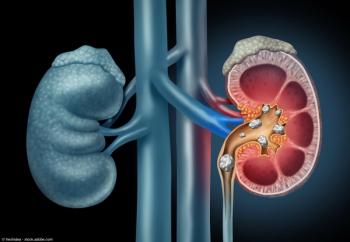
Jared S. Winoker, MD, addresses the wide range of stone burdens treated by the CVAC system for the study.