At a median follow-up of 60.9 months, median EFS was 74.1 months in the pembrolizumab arm and not reached in the placebo arm.
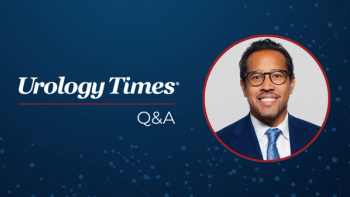
"I think the most important thing, or take-home message that we try to share, is gathering data, understanding what those metrics are from the very beginning," says Brooke B. Edwards, MD.
In this interview with Urology Times, Brooke B. Edwards, MD, chief medical officer for The Urology Group in Ohio, discusses the
A key message, she explains, is the importance of data-driven decision-making. Practices should collect and analyze key metrics early—such as payer contracts, case mix, and efficiency indicators—to identify problem areas and guide improvements. Edwards notes that data transparency is the cornerstone of any successful ASC transformation.
Discussing procedural transitions, Edwards highlights the success of moving complex urologic surgeries—like percutaneous nephrolithotomy (PCNL) and CVAC procedures—from hospitals to ASCs. Her Cincinnati team has effectively implemented these changes and is now exploring advanced benign prostatic hyperplasia (BPH) treatments such as holmium laser enucleation of the prostate (HoLEP) and Aquablation for outpatient settings.
Edwards underscores that patient confidence is critical when expanding ASC capabilities. Consistent communication and education from the entire care team are essential to building trust. Digital tools—such as mobile platforms that deliver educational content and post-procedure reminders—enhance patient engagement and reinforce the quality of ASC-based care.
Technology, particularly artificial intelligence (AI), is playing an increasing role in ASC management. Edwards describes how AI assists in data filtering, revenue cycle management (RCM), patient selection, and risk stratification.
Edwards concludes by celebrating LUGPA’s collaborative environment, where peer discussions, vendor partnerships, and shared problem-solving create opportunities for innovation and improvement across urology practices. She describes the annual meeting as both exhausting and energizing—a hub for collective learning and advancement in ASC care.
Edwards: We're providing a very informative talk to hopefully help a wide range of groups, from those that are just starting out with a brand-new ASC to those that are really trying to optimize and create a more efficient ASC. We're going to look all the way from the building blocks of operations through financial sustainability to clinical improvement and quality to new technology.
Edwards: I think the most important thing, or take-home message that we try to share, is gathering data, understanding what those metrics are from the very beginning. If you can collect that and know where you stand with your payer contracts, with your case mix, and where those efficiencies or inefficiencies are, if you gather that data from the beginning, then you can figure out where your problems are and where you need to start with tweaking and improve those problem areas.
Edwards: Most recently, the area of stone care has been very successful in transitioning PCNLs over the past several years, and then, more recently, CVAC-type cases. We personally in Cincinnati, have spent the past year and a half doing a lot of CVAC and bringing in our PCNL cases in successfully. Those are sometimes a competing technology, but it's worked very well for us. We're also looking in the BPH area to bring in those more advanced therapies, whether they're HoLEP or Aquablation-type procedures.
Edwards: It's a great question. It's really important, especially when you're changing the culture of what your program has traditionally done over the years. But I think communication and patient education are the 2 things, and those go hand in hand. So having your full team—staff, APPs, all of the above, being able to speak consistently and giving the same message that we're providing high-quality care with good technology in a setting that's usually urology focused. Sharing that message consistently is key. And then if you can bring in different education pieces for the patient, that helps, whether that's in your mobile technology, through texting or email. Bringing on digital platform for education is one thing that we're working on, so that there are the reminders that go out that also educate the patient on what they're having done, what can be expected in aftercare. Providing those things really makes an ASC stand out, I think, especially when you're comparing to the larger entities and local hospitals.
Edwards: We are all trying to use AI. It's becoming more obvious in our data collection and in our filtering through our data, whether that's in RCM and billing, or if that is in patient selection with our patient navigators, we're starting to utilize a lot of AI to be able to find those patients and filter out the data that we couldn't do before. It certainly works in our ASC setting, but bladder cancer is [also] a great example. Probably the biggest challenges that groups have are finding those patients and being able to risk stratify them, and without AI, that's just really not possible because we don't have the discrete data in our EMR systems, but AI is giving us that ability.
Edwards: I'm excited for our session to talk about ASCs, but I think it's just a great example of all the topics that LUGPA is able to offer and the connections and people that you run into, and acquaintances and the vendor relationships, it's just a great resource for sharing knowledge. And I mean, you get worn out after 3 days because of all the discussions and problem solving that you're doing and sharing your experiences so that someone else doesn't have to go through the challenges you've had. It's a great 3 days.