
Opinion|Videos|March 11, 2026
PTEN’s Role in Treatment Planning for mHSPC
Author(s)Gordon A. Brown, DO
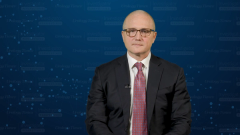
In this video, Gordon A. Brown, DO, FACOS, discusses PTEN deficiency as a prognostic marker and its implications for treatment selection, monitoring, and risk stratification in mHSPC.
Advertisement
Episodes in this series
Precision oncology increasingly requires clinicians to recognize biologically distinct disease subsets within metastatic prostate cancer. Gordon A. Brown, DO, FACOS, an associate professor at Rowan University School of Osteopathic Medicine, program director of Urologic Surgery at Rowan University School of Osteopathic Medicine, and director of New Jersey Urology’s Center for Advanced Therapeutics, highlights that PTEN deficiency represents a validated prognostic biomarker associated with aggressive clinical behavior across both localized and metastatic settings. Evidence from large meta-analyses demonstrates significantly higher risks of recurrence, faster progression, and reduced survival among patients harboring PTEN-deficient tumors.
According to Brown, recognizing PTEN-deficient mHSPC as a separate biologic subgroup has important therapeutic implications. These patients frequently demonstrate earlier escape from androgen deprivation therapy and androgen receptor pathway inhibition, suggesting the need for treatment intensification strategies. Emerging evidence indicates that some patients may benefit from earlier chemotherapy or combination approaches incorporating AKT inhibition alongside standard hormonal therapy.
Data from the phase 3 CAPItello-281 trial (NCT04493853) further reinforce the clinical value of PTEN testing. Brown explains that PTEN-deficient patients exhibit more aggressive radiographic progression patterns, sometimes progressing on imaging despite stable prostate-specific antigen levels. As a result, clinicians may need to adjust monitoring strategies, imaging intervals, and patient counseling, integrating biomarker status into everyday treatment planning and longitudinal disease management.
Advertisement
Related to this article

Engy Habashy, MD, discusses key takeaways from the 2025 AUA GSM guideline, including the role of androgens and hormonal therapies in managing genitourinary syndrome of menopause.

Chad R. Ritch, MD, MBA, FACS, discusses how PSMA-PET informs staging, treatment planning, recurrence workup, and the interpretation of equivocal findings.

Michael S. Cookson, MD, MMHC, FACS, discusses how Anktiva’s expanded FDA approval may broaden bladder-preserving treatment options for BCG-unresponsive papillary-only NMIBC.

Jeffrey M. Spier, MD, discusses how fatigue may impact patient quality-of-life and when dose reduction may be an appropriate treatment strategy.

This approval expands the perioperative use of pembrolizumab plus enfortumab vedotin to all patients with MIBC, regardless of cisplatin eligibility.

Take a look through some of the notable data presentations at this year's ESMO Congress.

The investigational HIF-2α inhibitor casdatifan demonstrated antitumor activity as monotherapy and in combination regimens across the ARC-20 platform study.

The agency issued a PDUFA target action date of June 14, 2027.
Advertisement
Advertisement
Trending on Urology Times
1
How PSMA-PET shapes staging and recurrence workup in prostate cancer
2
ESMO 2026: Key presentations across genitourinary oncology
3
European Commission approves perioperative pembrolizumab plus enfortumab vedotin for MIBC
4
Engy Habashy, MD, on the role of androgens in GSM management
5