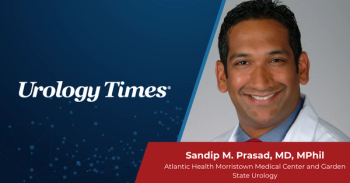
Sandip M. Prasad, MD, MPhil, discusses the safety profile of mitomycin intravesical solution, including common adverse events and patient counseling during chemoablation for NMIBC.
Sarah P. Psutka, MD, MSc, reflects on her AUA 2026 talk regarding frailty and surgical outcomes in urologic oncology.
In the following interview, conducted at the
Psutka is an associate professor of urology at the University of Washington and a urologic oncologist at Fred Hutch Cancer Center in Seattle, Washington.
Psutka explained that frailty is a distinct clinical construct that reflects a patient’s overall vulnerability to stressors, particularly the inability to recover effectively after major interventions such as surgery. Although frailty overlaps with age, disability, and comorbidity, she stressed that it is not synonymous with any of those factors. Rather, frailty captures physiologic age and resilience in ways that traditional measures cannot. She noted that the concept is becoming increasingly integrated into the urologic literature as clinicians seek more objective approaches to risk stratification beyond the traditional “eyeball test” of patient fitness.
During her presentation, Psutka highlighted the growing relevance of geriatric principles within urology, particularly given that many urologic malignancies disproportionately affect older adults. According to Psutka, urologists frequently serve as primary specialists for older adults, making it essential for the field to better understand age-related vulnerability and incorporate these concepts into routine clinical decision-making.
Psutka also discussed the range of available frailty assessment methods, from comprehensive geriatric evaluations performed by trained specialists to simpler screening instruments that can be integrated into everyday practice. She emphasized that these tools can help clinicians identify the underlying factors contributing to a patient’s vulnerability profile and support more individualized treatment discussions. Ultimately, she suggested that frailty assessment may improve shared decision-making by helping clinicians better match therapeutic intensity to a patient’s physiologic reserve and recovery potential.