

Following the positive recommendation, the European Commission will now review the application for vibegron for potential approval in the OAB setting in all EU member states, as well as in Iceland, Liechtenstein, and Norway.
Following the positive recommendation, the European Commission will now review the application for vibegron for potential approval in the OAB setting in all EU member states, as well as in Iceland, Liechtenstein, and Norway.

The clearance of the IND application for RAG-01 will initiate the launch of clinical trials in the US.

A decision regarding EU marketing authorization is expected by June 2024.

“ARO-HIF2’s ability to target cancer cells, disrupting a key tumor-driving mechanism, illustrates the potential of siRNA technology in oncology,” says James Brugarolas, MD, PhD.

“This brand new guideline offers options for all patients with OAB with a focus on shared decision-making between patients with OAB and clinicians, as well as a personalized, tailored approach to care,” said Cameron and Smith.
The approval is based on 3 clinical trials evaluating the efficacy of different pivmecillinam dosing regimens in comparison with either placebo, another oral antibacterial drug, or ibuprofen.
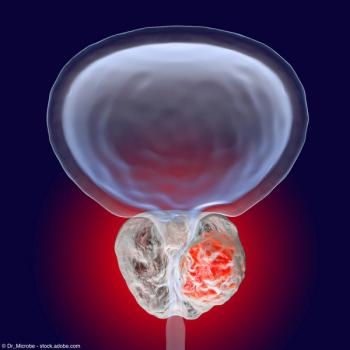
The approval is supported by data from the phase 3 EMBARK trial, which demonstrated that enzalutamide with or without leuprolide prolonged metastasis-free survival compared with leuprolide alone in patients with high-risk biochemically recurrent nmHSPC.

Both the SOLAR-STAGE and SOLAR-RECUR trials are currently enrolling patients with prostate cancer in the US, with additional sites expected to open in Europe later this year.

Findings from the study showed a clinical response rate of 76.4% and 78.4% at 6- and 12-months following activation of the device among patients in the intent-to-treat population.
The approval is supported by findings of the ongoing QUILT-3.032 trial, assessing nogapendekin alfa inbakicept (N-803) plus BCG in patients with BCG-unresponsive non–muscle-invasive bladder cancer.

"At a time when patients are increasingly concerned about prescription drugs, this information will provide a useful starting point for making essential medications as affordable as possible," says Ruchika Talwar, MD.

"This preplanned ENACT trial biomarker analysis demonstrates the value of the Decipher score, AR-A score, and PAM50 genomic classifiers in identifying patients undergoing AS who are most likely to benefit from enzalutamide treatment," wrote the authors.

"We look forward to announcing initial efficacy and safety data from the study, which we expect will be at the end of this quarter," says Salim Yazji, MD.
“This is the first study to show a statistically significant and clinically meaningful survival improvement with any adjuvant therapy in kidney cancer, and this further supports adjuvant pembrolizumab as a standard of care after surgery in this disease setting,” says Toni K. Choueiri, MD.

The MPS2 models demonstrated negative predictive values of 95% to 99% for cancers of grade group 2 or higher and of 99% for cancers of grade group 3 or higher.

“We are hopeful that this therapy will help patients with prostate cancer and that this study will be just the first step towards the effective treatment of other bone tumors,” said Daniel Abate-Daga, PhD.

“These findings suggest that guideline recommended treatment intensification remains low for patients with mCSPC in both Medicare and the Veterans Health Administration, but especially for Black patients,” says Daniel J. George, MD.

“In the future, this imaging technique can help to streamline the drug development process, driving conviction in the agents we bring to larger scale trials," says Stephen Rose, PhD.
"Our clinical trial is the first to show a longer time to biochemical recurrence with chemotherapy plus standard hormone therapy for patients with locally advanced, high-risk prostate cancer," says Jiahua Pan, MD.

iTind is a temporary nitinol device used to treat lower urinary tract symptoms caused by benign prostatic hyperplasia.

The 3 new additional studies are the ABLE-22, ABLE-32, and ABLE-42 clinical trials.

"As a kidney cancer community, we need to investigate these molecular subtypes prospectively in clinical trials to determine whether specific subtypes benefit from certain therapies or not," says David A. Braun, MD, PhD.

The IND will initiate the launch of a phase 3 study to explore the safety and efficacy of UGN-103 in patients with low-grade, intermediate-risk NMIBC.
Since piflufolastat (18F) was granted marketing authorization by the European Commission in July 2023, doses have been commercially sold in Greece, Italy, and the Netherlands.

Data showed that 87.8% of treated patients and 96.1% of patients who completed the study achieved normal 24-hour mean plasma testosterone values (222 to 800 ng/dL) at 90-day follow-up.

"The new results show that the 3-step method now used produces fewer insignificant cancer diagnoses than PSA screening,” says Anssi Auvinen, MD, PhD.
The approval is based on findings from the phase 3 RENOTORCH trial, which showed that toripalimab plus axitinib prolonged progression-free survival and improved the objective response rate in patients with advanced RCC compared with sunitinib.

“Our trial presents the first and the longest durable response we have seen with an allogeneic, off-the-shelf, CAR T cell therapy in the treatment of refractory solid tumors," says Samer A. Srour, MB ChB, MS.

Data showed an increase in participant knowledge in 5 of the 10 items on the Prostate Cancer Knowledge Scale and a decrease in all 10 items on the Decisional Conflict Scale after watching the video.

"This encouraging anti-tumor activity coupled with a favorable safety profile and mode of administration that is both convenient and familiar to urologists indicates that, if confirmed in future studies, TARA-002 could potentially play a meaningful role in NMIBC treatment in the future," says Timothy D. Lyon, MD.