

Notably, the study represents a 57% increase in the number of non-European participants compared with previous prostate cancer genome-wide association studies.
Notably, the study represents a 57% increase in the number of non-European participants compared with previous prostate cancer genome-wide association studies.

“This study confirms what many women who’ve struggled with persistent UTIs already know, which is that the current methods of diagnosing and treating these infections are inadequate," says Jennifer Rohn, PhD.

The CPT code will be effective beginning July 1, 2024.

"This is our biggest meeting ever in our 15-year history [with] almost 1100 people here," says Evan R. Goldfischer, MD, MBA, FACS.
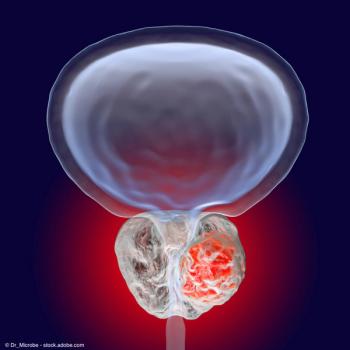
At the time of the data cutoff, a maximum tolerated dose of 225Ac-J591 had not yet been reached.
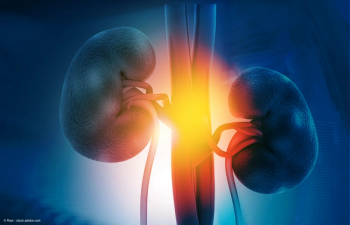
Data showed that plasma oxalate levels were maintained through 24 months of treatment with lumasiran.

“It was interesting to find that when Black and White men were provided equal access to the same therapies, given at the same dosage and monitored in the same setting, disparities in outcomes were eliminated," says Jun Gong, MD.

Novartis is now equipped to provide 177Lu-PSMA-617 to patients within 2 weeks of diagnosis with advanced disease.
The combination of oral masofaniten (formerly EPI-7386) and enzalutamide was well tolerated and elicited durable reductions in PSA levels in patients with metastatic castration-resistant prostate cancer.

Patients were nearly twice as likely to develop urinary symptoms and urinary frequency when their prostatic urethra was greater than 4.6 cm in length.

At the time of data cutoff, 16 patients in cohort 1 and 27 patients in cohort 3 had been treated with TAR-210, an intravesical delivery system for erdafitinib.
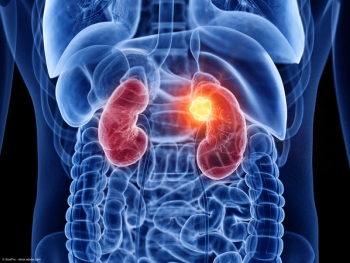
Data showed a 20% reduced risk of recurrence or death among patients who received everolimus compared with placebo.
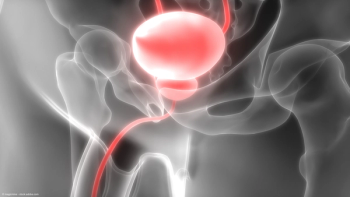
“There’s a 72% less chance of recurrence with oral erdafitinib than with standard of care. The problem is tolerability,” says James W.F. Catto, PhD, FRCS.

“As private equity firms increasingly engage in urology, key stakeholders, including policymakers and urologists, need to ensure that the quality of care is not compromised with the structural changes implemented after acquisition," write the authors.
Adding niraparib to abiraterone acetate and prednisone (AAP) was associated with an overall survival benefit compared with AAP alone in patients with BRCA1/2-mutated metastatic castration-resistant prostate cancer.
Data from the study showed a median PSA-PFS of 13 months with the combination therapy compared with 7.8 months with enzalutamide alone.
Data showed noninferiority of subcutaneous nivolumab to intravenous nivolumab in the time-average to nivolumab serum concentration over 28 days (Cavgd28) and the trough serum concentration at steady state (Cminss).
"Our data show no evidence of benefit from selenium and evidence of harm from vitamin E—a compound readily available over the counter," the authors write.
The model may help identify patients with urothelial carcinoma who could benefit from PPARG inhibition through FX-909, a first-in-class small molecule inhibitor of PPARG.

Overall, 43.3% of patients who had received a diagnosis of NMIBC had 1 or more additional lesions detected with APL-1706 plus BLC compared with WLC alone.

“The ClarityDX Prostate test will reduce the number of unnecessary prostate biopsies, which are invasive, uncomfortable, and carry some risk,” says John D. Lewis, PhD.

Preliminary findings from the study showed a decrease in PSA levels across all doses of PDS0301 assessed.

In this installment, Christopher E. Ramsey, MD, FACS, and Rachel Vann, MSN, RN, NP-C, highlight Tennessee Urology, an affiliate of United Urology Group.

“These findings demonstrate that electrofulguration provides a durable clinical cure that enables many postmenopausal women to remain UTI-free with minimal to no continued need for antibiotic therapy," says Philippe E. Zimmern, MD.

At 3 months following treatment, 50% of men who received CCH injections reported being “very satisfied” overall, compared with 21% of patients in the surgery group.

In patients with microhematuria, a positive result on the test was associated with a 5-fold increase in the risk of patients harboring bladder cancer compared with current metrics alone.
"If additional research confirms our findings, this may lead to a new paradigm in the treatment of muscle-invasive bladder cancer," says Matthew Galsky, MD.

"I treat all aspects of male and female incontinence, whether this be artificial urinary sphincter, the male sling, female sling, bladder Botox, or sacral neuromodulation," said Jas Singh, MD, FRCS.
The study achieved 100% local control and cancer-specific mortality rates with stereotactic ablative body radiotherapy.

"Psychological factors often have an important role [in erectile dysfunction], and psychological treatment options are available that have been found to improve outcomes," said Mark S. Allen, PhD.