

"Results showed that more than two-thirds of these men were found to have positive Posluma scans, with a quarter of them having extrapelvic lesions," says Ashesh B. Jani, MD, MSEE, FASTRO.
"Results showed that more than two-thirds of these men were found to have positive Posluma scans, with a quarter of them having extrapelvic lesions," says Ashesh B. Jani, MD, MSEE, FASTRO.

Data showed that the proportion of Black patients referred for genomic testing increased from 19% to 58% after the implementation of the precision medicine navigator.

The approval is supported by findings from the phase 2 PHYOX2 trial and interim data from the phase 3 PHYOX3 extension study.
Patients who underwent treatment with SBRT demonstrated a 5-year disease control rate of 96%, compared with 95% among patients who underwent conventionally fractionated radiation therapy.
The positioning system would allow patients with cancer to undergo radiation therapy in an upright, seated position.

The inclusion of iTind is reflected in a newly added statement on temporary implanted prostatic devices.

The findings suggest that drug therapies targeting the NOTCH1 gene may serve as an alternative treatment option for patients with kidney cancer in whom surgery is not recommended.

The PSE test was shown to improve the predictive accuracy of a standard PSA test from 55% to 94%.
The reimbursement code for flotufolastat F 18 will be effective October 1, 2023.
“[These] results imply that prostate cancer survival could be improved, especially in historically under-served groups, by improving the timeliness of access to medical care," says Sean Clouston, PhD.
“The ADVANCED-2 trial in NMIBC is an exciting opportunity to build on the favorable anti-tumor and safety data of TARA-002 presented earlier this year," says Gautam Jayram, MD.
Patients with mCRPC will be randomly assigned 2:1 to receive masofaniten/enzalutamide or enzalutamide alone.
The supplemental new drug application is supported by findings from the LITESPARK-005 trial.

In total, the prospective SOPHIA study enrolled 6 men with stress urinary incontinence who have reduced outlet resistance due to intrinsic sphincter deficiency.

Both the LUTS/BPH and testicular cancer guidelines were updated based on the availability of new literature, as identified through an AUA Update Literature Review process.

"A lot of urologic associations have committed a lot of work to diversity, equity, and inclusion, and this just seems like a step backward compared with the policies that they've been working toward in diversifying the urologic work force," says Diana Magee, MD, MPH, MSc, FRCSC.
"The findings suggest that we may need to view urinary symptoms differently, possibly with an emphasis on earlier treatment,” says Blayne Welk, MD, FRCSC, MSc.
Patients with MIBC were randomly assigned to receive APL-1202 in combination tislelizumab or to tislelizumab alone.
"Our study is the first report of bladder auto-transplantation in heart-beating, brain-dead human research donors as a necessary preparatory step toward clinical bladder transplantation in living patients," says Inderbir S. Gill, MD.

Participants who completed a survey following the intervention indicated that the program was most helpful for networking with other applicants, finding a mentor, and serving as an introduction to urology.

The first patient with NMIBC has been dosed with nadofaragene firadenovec-vncg as part of the Adstiladrin Early Experience Program.
The phase 3 URO-901-3005 study met its 2 co-primary end points with vibegron demonstrating a reduction in micturition episodes and urgency episodes from baseline to 12 weeks.

Questions spanned urologic conditions such as benign prostatic hyperplasia, overactive bladder, erectile dysfunction, kidney stones, Peyronie disease, and recurrent urinary tract infections.

"This could make a huge impact for patients with limited resources,” says Benjamin Pockros, MD, MBA.

In this installment, Kevin Zorn, MD, FRCSC, FACS, highlights his disease-specific practice, BPH Canada, which he designates as a “one-stop shop” for patients with benign prostatic hyperplasia.
Men who had a dorsal testosterone/peripheral testosterone ratio greater than 2 were found to have higher rates of PSA persistence compared with patients who had a similar ratio.
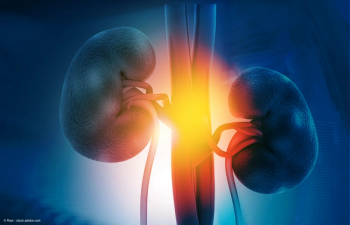
The phase 1/2 Oncorella-1 trial is expected to enroll up to 40 patients with advanced kidney cancer who are on dialysis due to renal failure.

“Our findings show that AI chatbots provided accurate information with little misinformation. However, the information was provided at a college reading level and with little actionability," says Abdo E. Kabarriti, MD, FACS.

“A major finding from our study is how multiple sociodemographic, lifestyle, and medical factors influence testosterone levels in men," says Bu B. Yeap, MBBS, FRACP, PhD.
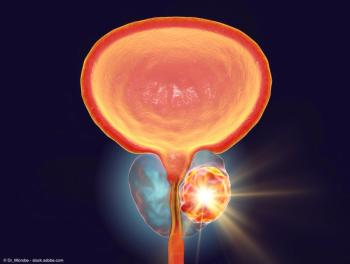
The authors suggest that metastasis-free survival may serve as a more suitable end point for future clinical trials of radiation therapy in localized prostate cancer.