
"We had a Russian-based attack. All of our data was encrypted. They said they’d give us back our data for $24,000 in bitcoins," says one urologist.
Karen Nash is a medical reporter and media consultant based in Monroeville, PA.
"We had a Russian-based attack. All of our data was encrypted. They said they’d give us back our data for $24,000 in bitcoins," says one urologist.
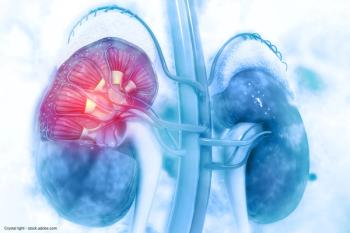
“It’s case dependent. For appropriately selected patients, partial nephrectomy is preferred," says one urologist.

3 urologists discuss their experience with telemedicine during the COVID-19 pandemic.

"I struggle with fighting burnout because I don’t think I’ve done it as well as some people. People advised me to establish a better work-life balance," says one urologist.
"I prefer doing transvaginal prolapse surgery with native tissue and always have. So I was not affected when mesh was restricted," says one urologist.

"I’m only seeing patients I absolutely have to see, like a catheter change or a stent removal. We’ve postponed things like vasectomies," says one urologist.
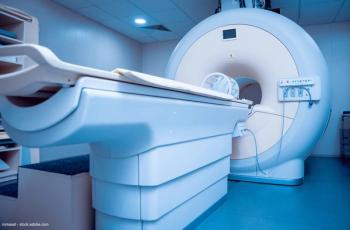
“It hasn’t become the gold standard yet. There are still a lot of inter-reader reliability issues. The same MRI scans, read by different radiologists, may be read differently," says one urologist.
"It certainly looks like these new therapies will provide better results. From the research and literature, it looks like significant improvement," says one urologist.

For this installment of “Speak Out,” urologists were asked to discuss recent studies indicating African-American men with prostate cancer may be put on active surveillance without suffering complications and that they respond to radiation and some chemotherapy better than Caucasian men.

“It’s actually an exciting time for patients who have metastatic urothelial cancers and prostate cancers or advanced prostate cancers because there are a lot more products on the way, like the newer hormone agents for prostate cancer and the new immunologic agents like PARP inhibitors for different types of cancers," says one urologist.

Leonard G. Gomella, MD, Tanya Dorff, MD, Scott Eggener, MD, and Jorge Garcia, MD, all reflect on prostate cancer treatment in 2019.

"Becoming a member of the larger group has given us more bargaining power in the health care marketplace, so we’ve been able to get better health care, not only for us but for our staff," says one urologist.

"In an ideal world, it could work pretty well. We live in a capitalistic society, however, and insurance companies are not going to voluntarily implode in order to make it easy to implement a Medicare for All system," says one urologist.

"I basically choose the procedure based on the patient’s anatomy," says one urologist.

"One is the delay in delivering care. If I order surgery that requires prior authorization, it won’t always come through in a timely manner, and that impacts patients’ quality of life," says one urologist.

"We start by having a discussion with patients and letting them know about available resources, but that they have to accept some responsibility themselves," says one urologist.

"Men’s centers here are offering testosterone treatments without doing much testing beforehand. They also give little or no warning about potential comorbidities of testosterone," says one urologist.
"I would love to hear candidates talk about the astronomically ridiculous prices hospitals charge for surgeries, even outpatient surgeries," one urologist says.

Clinicians from the Society of Urodynamics, Female Pelvic Medicine & Urogenital Reconstruction, AUA, and American Urogynecologic Society discuss the FDA ban on mesh for pelvic organ prolapse.

"All we can do as physicians is reach out to patients with dignity and respect for who they recognize themselves to be," says one urologist.

"There’s mounting evidence that the risk for dementia increases with prolonged use. While impacting only a minority of patients, I think the risk is real," says one urologist.

“Clearly, the doctor has to. Then the question is, does the patient own the records as well? I would say the patient owns the record too-so I would say both,” says one urologist.

"There are better ways to manage people’s medical problems with drugs, especially in routine urologic care. I just don’t agree with marijuana," says one urologist.

"I think the biggest change is that people in this country are realizing that the most important thing in medicine is to figure out how we get everybody covered, regardless of their ability to pay," says one urologist.
"I warn my patients to get their medications at a pharmacy here in the U.S., but there’s not a whole lot I can do once they have the prescription in hand," says one urologist.
"Urologists in practice now need to have at least some working knowledge in this area because I’ve seen it several times in my academic practice," says one urologist.
“I hope we can continue to improve ERAS, but it’s already a significant advance,” says one urologist.
“Our time with patients is very truncated. EMRs actually get in the way of good care. They consume huge amounts of time," says one urologist.
“I don’t expect appreciation... But I believe patients do appreciate what we do, and it’s nice to receive thanks," says one urologist.
“Florida, specifically South Florida, is a very tough place to practice. There’s a fairly prominent infiltration of Medicare HMOs with a lot of obstruction to doing anything for the patient that’s necessary," says one urologist.