Results from the phase 2 PemCab trial showed that the first-line combination elicited promising antitumor activity with tolerable toxicity in patients with advanced urothelial carcinoma, including those who were cisplatin ineligible.
Results from the phase 2 PemCab trial showed that the first-line combination elicited promising antitumor activity with tolerable toxicity in patients with advanced urothelial carcinoma, including those who were cisplatin ineligible.
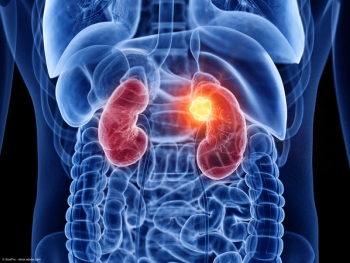
The PARP inhibitor olaparib demonstrated antitumor activity in patients with BAP1-mutated renal cell carcinoma.
At a median follow-up of 67.2 months, the combination of pembrolizumab and axitinib continued to show an overall survival and progression-free survival benefit over sunitinib monotherapy in the first-line setting.

“What is precision medicine? This is not just a vague term; it really looks at individual characteristics of a patient to decide treatment," said Leonard G. Gomella, MD, FACS.
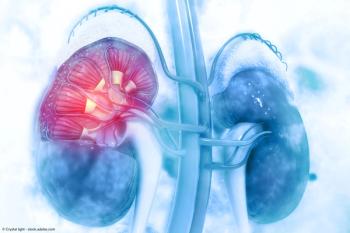
Data from the 3-month analysis showed that the cabozantinib elicited an objective response rate of 29.5% (95% CI, 20.3%-40.2%) in the total population (n = 88), which comprised a complete response rate of 1.2% and a partial response rate of 30.5%.

All patients with prostate cancer, except for those with low-risk or very low-risk localized disease, should be tested for germline mutations, and somatic testing should be done in all patients with metastatic disease as there are therapeutic implications, according to Emmanuel S. Antonarakis, MD.
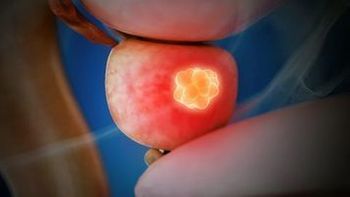
For patients with mCRPC who experience disease progression on novel hormonal agents (NHAs) and androgen deprivation therapy, it is important to consider when the NHA was received and whether docetaxel has been administered, explains Evan Y. Yu, MD.

ADT intensification through doublet and triplet regimens has become standard for most patients with metastatic castration-sensitive prostate cancer, Alicia Morgans, MD, MPH, explained in a presentation at the 2022 LUGPA Annual Meeting.

The FDA has updated the label for mitomycin-containing reverse thermal gel (Jelmyto) in low-grade upper-tract urothelial cancer by extending the in-use period for pyelocalyceal solution admixture.

“Updated results [from the] second interim analysis were consistent with the results from [the first analysis] and showed a continuing trend toward an OS benefit in the ITT population," said Fred Saad, MD, FRCS.
“Relugolix, an oral nonpeptide GnRH receptor antagonist, was generally well tolerated in the phase 3 HERO study,” wrote Bryan Mehlhaff, MD, and coauthors.

BAYOU trial results showed no significant PFS boost in all-comer population with addition of olaparib to frontline durvalumab in metastatic urothelial carcinoma, but potential benefit for combo was observed in HRR-mutation–positive subgroup.
The mitomycin-containing reverse thermal gel UGN-101 (Jelmyto) produced durable responses in patients with low-grade upper tract urothelial carcinoma.
The prognostic factor analysis included patients who received either 177Lu-PSMA-617 or 177Lu-J591.

Determining the optimal treatment approach for patients with non–clear cell renal cell carcinoma has long been an unmet medical need in the field.

Pivotal phase 3 trial launched to confirm promising results in metastatic urothelial carcinoma.

September 29th 2022