
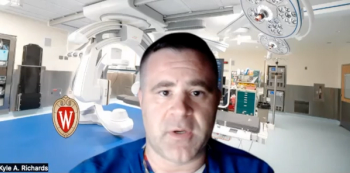
“In the bladder cancer field, there's been a renewed shift on looking at environmental exposures,” says Kyle A. Richards, MD, FACS.
“In the bladder cancer field, there's been a renewed shift on looking at environmental exposures,” says Kyle A. Richards, MD, FACS.

"We'll have to obviously amend this document quickly as these drugs move earlier in the stage of disease," says Thomas A. Hope, MD.

"We're just trying to figure out ways to reduce our readmission rate, ways to reduce complications, and I think this is just a small step in doing that," says Randie White, MD.

“One of the things that the SMSNA does really well is promote, obviously, a lot of important learning, but also a lot of opportunities for networking,” says Matthew Ziegelmann, MD.

“We wound up finding that there was no difference in recurrence, no difference in secondary events, and no difference in our survival end points whether or not you were exposed to Agent Orange,” says Kyle A. Richards, MD, FACS.

“I think one of the most interesting things that we found is that our readmission rate was about 40%,” says Randie White, MD.

“It just gives us another piece of information that we can back up using data,” says Udit Singhal, MD.

“We wanted to look at, is there something to be said for delay in treatment or time to surgery?” says Randie White, MD.

"It's one of the hopes that our colleagues will recommend this book to their patients and their partners, so now they have a knowledgeable patient," says Neil H. Baum, MD.
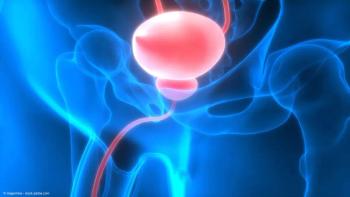
"It is erdafitinib’s time to shine," says Arlene O. Siefker-Radtke, MD.

"I think what should be more appropriate is that the initial treatment decision does not impact [survival], but I don't think you can say that intervening aggressively for this lethal disease does not alter the course," says Isaac Y. Kim, MD, PhD, MBA.

“The better our health care work force represents the patients we're trying to take care of, the better care we'll deliver and the better outcomes our patients will have,” says Christopher J.D. Wallis, MD, PhD.

“I think by applying these metrics that we've outlined in our manuscript, it's a perfect steppingstone in allowing urologists to take that step toward providing value-based care,” says Randall A. Lee, MD.

“I've always felt like my patients are my partners in discovery,” says Edward M. Schaeffer, MD, PhD.

“With regards to urinary function, there were actually no differences between the 2 eras. We thought that was a little surprising,” says Udit Singhal, MD.

“At this point, we really have to consider the hard work and next steps of setting up multi-institutional databases and registries aimed at drilling down on patient and provider factors and medical decision-making around this diagnosis,” says James Ferguson III, MD, PhD.
“I think the key to remember for a lot of what we're doing is that kidney stone disease is complicated. It's a really heterogenous patient population,” says Nicholas L. Kavoussi, MD.

“So many times, partners were left in the dark. They didn't have a clue what their partner who had prostate cancer was going through, and we felt that we could fill that void,” says Neil H. Baum, MD.

“What we're thinking here is that surgeon sex is a surrogate for a whole series of behaviors driven by sociologic conditioning of how people interact with each other and how physicians practice medicine,” says Christopher J.D. Wallis, MD, PhD.

“We found that over 40% of patients with muscle-invasive bladder cancer are not receiving cystectomy or trimodal therapy,” says James Ferguson III, MD, PhD.

“I think the other thing that was surprising was that this allowed us to really pinpoint where we were dragging our feet,” says Randall A. Lee, MD.

“We have over 400 abstracts submitted this year to the SMSNA, which is really outstanding. We're looking at a record in terms of attendance this year, and we're very excited to have this,” says Mohit Khera, MD, MBA, MPH.
“The driving force for this was understanding whether we have made improvements as surgeons over time in how we're able to remove the prostate, but then also what types of functional outcomes patients have with regards to urinary function and sexual function,” says Udit Singhal, MD.

“There's going to be new techniques that we're not even aware of yet to try and break up the stones in a better fashion, but in a less invasive way for patients,” says Ben H. Chew, MD, MSc, FRCSC.

"Patients who have a female surgeon are about 25% less likely to die than if they had a male surgeon," says Christopher J.D. Wallis, MD, PhD.

“As we increase spending, we know there are good data out there that we haven't seen reflective improvement in outcomes or decreasing complications when we treat our patients,” says Randall A. Lee, MD.

"We're currently doing a multicenter, prospective study using the new Boston Scientific scope to measure intrarenal pressure for every ureteroscopy that we perform to get more data and to be able to identify these patients earlier, before they get septic," says Naeem Bhojani, MD, FRCSC.

“Another effort could be querying recent applicants or current applicants and seeing what information about diversity, equity, and inclusion would be important to them,” says Keiko Cooley, MD.

"It was really wonderful to work with a lot of our coauthors for the chapters because they really are thought leaders in the field," says Edward M. Schaeffer, MD, PhD.
The radionuclide-drug conjugate 225Ac-J591 combines J591, a monoclonal antibody that recognizes PSMA, with actinium-225, a potent alpha emitter.