
"I think the main [finding] that continues to strike me working with Dr Hampson on this type of work is how different individual incontinence is for the patient who is experiencing it," says Nathan M. Shaw, MD.
"I think the main [finding] that continues to strike me working with Dr Hampson on this type of work is how different individual incontinence is for the patient who is experiencing it," says Nathan M. Shaw, MD.
This monthly series will begin in January 2024, and attendees can earn one category 1 CME credit per session.

"Nowadays, the complexity of potential management options have gotten increasingly difficult to express to patients," says Andrew L. Siegel, MD.

“The primary outcome will be feasibility of in-home treatments,” says Timothy D. Lyon, MD, FACS.

As 2023 comes to a close, we revisit some of this year’s top content on coding in urology.

“Overall, I'd say these shorter-term outcomes at 6 months look to be very similar to those outcomes measured with the smaller glands. In a sense, at least within this range, volume may not be a deal breaker,” says Kevin T. McVary, MD.

“In addition to the psychological and emotional burden associated with infertility, it's also been growing in incidence,” says Catherine S. Nam, MD.

“[We can use] the study to help further those arguments that we should be able to make our clinical decisions based on the patient's presentation, a risk-benefit discussion between patient and physician, and not based on what insurance companies will pay for,” says Michelle E. Van Kuiken, MD.

“So, always going where the point of max curve is gives a much better outcome compared to if you're using any other technique,” says Landon Trost, MD.
“We were pleased and excited to see that 72% of patients reported openness to receiving in-home intravesical therapy,” says Timothy D. Lyon, MD, FACS.
"For me, as a physician who treats patients with kidney cancer and does surgeries, where this study is going to help me and change my practice is making me more thoughtful and intentional in the way I approach my patients with their pain management," says Craig G. Rogers, MD.

“There's a bit of an unmet need about the impact of Rezum in these bigger prostates,” says Kevin T. McVary, MD.

“Gone are the days when scalpel was king or queen in this space. The armamentarium of medications and systemic treatments, combination treatments has exploded, and our understanding of the biology of disease is expanding,” says Harras B. Zaid, MD.

“Probably one of the most meaningful findings was that insurance type did influence the choice of medication first prescribed by urologists for overactive bladder,” says Michelle E. Van Kuiken, MD.
“I believe that at this point in time, we should be able to offer our patients some options, to at least give them a sense of feeling that they're participating in this procedure, that they have some control over this procedure. I think nitrous oxide can provide that,” says Heidi J. Rayala, MD, PhD.

“So, we see that in [the] men who have sex with men population, they have a greater mental health burden from this disease as they report having a more negative experience with a urologist,” says Thairo Pereira, MD.

“The main rationale for this research was we felt like there was an unaddressed population of patients living with urinary incontinence,” says Nathan M. Shaw, MD.

“The bladder muscle can get weak as you get older, so developing urinary incontinence or ur-gency is very common as you get older,” says Vikas Desai, MD.

"I think that what most people will find is, if you're in an academic center, it can be a little bit difficult to set up a nitrous oxide program because there is a lot of red tape for bringing a gas into the ambulatory setting," says Heidi J. Rayala, MD, PhD.

“So, my take home message for the urology community is even if you're not doing clinical trials, we already have FDA-approved, CMS-covered, most commercial insurances-covered genetic alterations now for our CRPC populations, and there will be more to come,” says Neal D. Shore, MD, FACS.
“I think we should all be pretty selective in whom we're operating on in the metastasectomy setting,” says Harras B. Zaid, MD.

“As far as that point of max curve, I would say this is pretty definitive that this is something that needs to be done and changed within someone's practice,” says Landon Trost, MD.

"The study was done between April 2021 to 2023, so a 2-year span. It was surprising to find that 24% of our patients in that time span had opioid-free discharge," says Katherine Wang, MD.

Bogdana Schmidt, MD, MPH, outlines key bladder cancer research that was presented at this year’s Society of Urologic Oncology Annual Meeting.

“When it comes to this, I think having a great team around you is really so important,” says Bree Duncan, RN, BSN.

"Again, operating has more and more taken a backseat as the armamentarium of systemic medications, especially checkpoint inhibitors [and] combination treatments, has exploded," says Harras B. Zaid, MD.

“I love helping people to connect with their passions and to find and create the lives that they wish to create, both within the field of medicine and urology,” says Anne M. Suskind, MD, MS, FACS, FPMRS.

Janet Kukreja, MD, outlines key kidney cancer research that was presented at this year’s Society of Urologic Oncology Annual Meeting.

“I think if you were to ask what surprised me, I didn't expect it to have more of an effect on pain than anxiety,” says Heidi J. Rayala, MD, PhD.
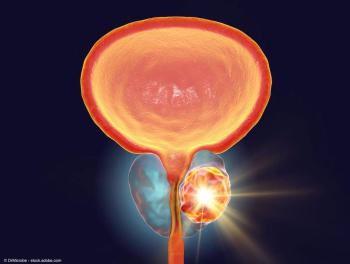
“What it brought up is the point that where the field seems to be going is incorporating the PET imaging and the MRI imaging, and maybe PET MRI,” says Michael S. Cookson, MD, MMHC, FACS.