

“I think the long and short of it is we know tibial nerve stimulation works, we're just trying to identify what's the best way by which we can deliver it conveniently and cost effectively to the patient,” says Suzette E. Sutherland, MD, MS, FPMRS.
“I think the long and short of it is we know tibial nerve stimulation works, we're just trying to identify what's the best way by which we can deliver it conveniently and cost effectively to the patient,” says Suzette E. Sutherland, MD, MS, FPMRS.

"I continue to be regularly surprised at just how much surgeons are affected when things go wrong, and how little surgeons engage with existing support mechanisms," says Kevin Turner MA DM FRCS(Urol).
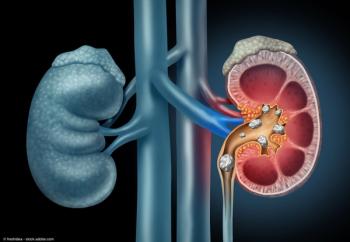
"What we did find was that a preoperative ureteral stent, and when we did semi rigid ureteroscopy initially, seemed to be protective against worse symptoms," says Justin B. Ziemba, MD, MSEd.

"Every time I leave the meeting, I just feel reinvigorated, refreshed, and excited about this field that we're a part of," says Raveen Syan, MD, FPMRS.

"The implications for urology, and every specialty, are immense. It does improve care, and it helps the patient. I think this is what it will be, it just may take some time," says Vipul Patel, MD.
In this video, Jaideep S. Sohi, MD, explains how the expanded information provided by PSMA-PET imaging allows physicians to more accurately tailor treatment plans for patients.
“We're always so focused on the prostate. That's the million-dollar question: are we getting to bladders too late?” says Kevin C. Zorn, MD, FRCSC, FACS.

In this video, Jaideep S. Sohi, MD, explains factors to consider regarding the timing of re-imaging with PSMA-PET in patients with prostate cancer.

In this episode of Speaking of Urology®, Eugene Rhee, MD, MBA, and Logan Galansky, MD, discuss key topics in health policy and recap the AUA's recent Annual Urology Advocacy Summit.

“What is becoming increasingly evident is that the traditional health care model is falling short for patients in rural regions,” says Ramy Abou Ghayda, MD, MPH, MBA candidate.
"PSMA-PET is a radio nucleotide-based imaging modality that really has changed the landscape of how we initially stage and subsequently follow individuals who have a diagnosis of prostate cancer," says Edward M. Schaeffer, MD, PhD.

“It's exciting to see that we now have another offering to men with enlarged prostates that has good outcomes and good durability up to 5 years [based on] the trials,” Kevin C. Zorn, MD, FRCSC, FACS.
Jaideep S. Sohi, MD, discusses the challenges with the use of conventional imaging in prostate cancer and how PSMA-PET alleviates these issues.
"I think it's about engaging with primary care. Primary care physicians need us to provide them with good education and good back-up," says Caroline Dowling, MBBS, MS, FRACS (Urol).

“Currently, in the area of tibial nerve stimulation, there are only 2 FDA approved options,” says Suzette E. Sutherland, MD, MS, FPMRS.
"I think it's important that they go visit someone that does them. Go to the operating room, see it in person," says Matthew E. Sterling, MD.

“These are the technologies that we'll see to empower patients and get more information, so that when we see the patient, it's one less thing we as a physician have to gather during that consultation, making the consultation more efficient,” says Kevin C. Zorn, MD, FRCSC, FACS.

"We're very much looking forward to being able to clinically implement these algorithms, both on the OAB side and the antibiotic resistance side," says Glenn T. Werneburg, MD, PhD.

"We definitely need women to be able to access care quickly and efficiently. But, putting antibiotics at the forefront is not going to be the answer," says Caroline Dowling, MBBS, MS, FRACS (Urol).

"The happier you are in your personal life, I think, the better you are as a doctor, and the better you are as a doctor, the better you can be in your personal life," says Anne M. Suskind, MD, MS, FACS, FPMRS.

"There's fear that telehealth is going to be abused and overused, and the evidence doesn't necessarily point to that, but because of that fear, it does hold things back," says Chad Ellimoottil, MD, MS.
"Talking about the variety that's out there, the lack of regulation, and having things that are independently verified by labs can also enhance the patient outcome," says Bilal Chughtai, MD.
"There are patients who are not able to be submitted to an MRI due to metallic artifacts or to some conditions that are not compatible with the performance of an MRI," says Leonardo Kayat Bittencourt, MD, PhD.
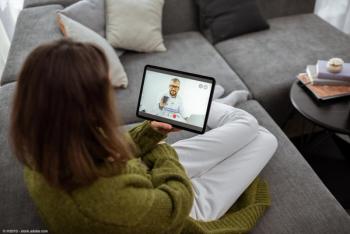
"[Telemedicine] really has demonstrated itself to be a tool that can be used in a variety of ways, according to the discretion and ingenuity of the urologist," says Aaron Spitz, MD.

"We're really enthusiastic on the overactive bladder end and on the antibiotic resistance end, but much more broadly, [AI is] set up to help us counsel our patients better and help us to improve outcomes for our patients as well," says Glenn T. Werneburg, MD, PhD.

"This a fantastic meeting that I really look forward to," says Nazih Paul Khater, MD, FACS.

"In fact, on multivariate analysis, they wanted to look at other health concerns that raise people's risk of getting kidney stones and the 3 things that came up from the study where the history of gallstones, hypertension, and chronic kidney disease," says Ben H. Chew, MD, MSc, FRCSC.

"Some of it actually is self-selecting because people are hearing about it more and come in asking about it first," says Brian Friel, MD.

“One of those gigs was the New York section of the AUA, we did a fundraising event, which was a battle of the bands with 2 other urology departments that had bands as well,” says Debra Fromer, MD.