
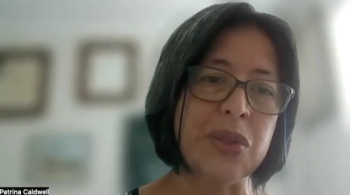
“To the point where a child would come in and request to see a cartoon character was really quite interesting for me,” says Patrina H. Y. Caldwell, BMed, FRACP, PhD.
“To the point where a child would come in and request to see a cartoon character was really quite interesting for me,” says Patrina H. Y. Caldwell, BMed, FRACP, PhD.

"I think some of the biggest advances have come in the surgical space," says Vikas Desai, MD.
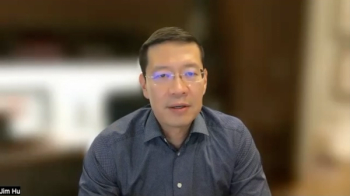
"We investigated and compared the risk of infection after transperineal MRI-targeted biopsy vs a transrectal MRI-targeted biopsy," says Jim C. Hu, MD, MPH.

“I definitely am more careful about who I offer Botox to in men,” says Gina M. Rooker, MD.

"I think that at any point, everyone is somewhere on that spectrum," says Anne M. Suskind, MD, MS, FACS, FPMRS.

"I like to tell my patients, one of the first kind of treatments is actually reassurance," says Miriam Harel, MD.

"I tried to cover the focal therapies, at least just review some of the new ones that are coming in, even though they're still not necessarily 100% mainstream," says Andrew L. Siegel, MD.

"The main finding is that when you look at men with low testosterone, grouped 18 and above, we found that there is an association between low testosterone and kidney stone encounter diagnoses," says Austin Thompson.

“We want to serve as role models for pre-med students to come into the urology field [and] to explore what urology is, because there is a great need not only in general for urologists, but for Hispanic urologists. ,” says Pedro P. Maria, DO.

"In our multivariate analysis, we actually found that there was no significant difference between the groups," says Kevin Shee, MD, PhD.

"There's just a tremendous opportunity for telehealth and being able to increase delivery to patients in these areas or at least reduce their amount of travel time to get to see a urologist based on where they live," says Kara L. Watts, MD.

From a show dog to a family of cats, let's see who some of the top medical professionals are spending their time with when they're not in the clinic.

"It's no surprise that there are many people interested in active surveillance and how we can be doing it better," says Kevin Shee, MD, PhD.

"This is just another way that we can exploit the body's own natural system to take care of cancer," says Daniel P. Petrylak, MD.

"What we found was that the primary outcome didn't change. Whether you had access to eADVICE or you didn't, most people still wanted to see the specialist at the end of their time, including people who were already dry," says Patrina H. Y. Caldwell, BMed, FRACP, PhD.

"If you suspect that you have a calcium oxalate monohydrate stone, we found that the most effective settings are 0.4 J and 40 Hz, and maybe as a backup setting, 0.2 J and 100 Hz," says Ojas Shah, MD.
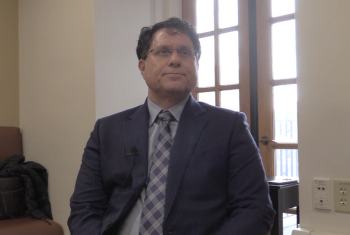
"I think that, across industries, AI is going to provide a great benefit to our day-to-day practice," says Michael Karellas, MD.
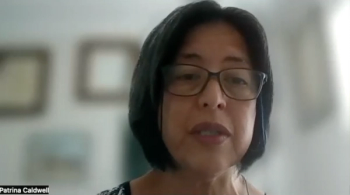
"The reason we did this study was that in Australia, there are usually very long waiting times to be seen in the continence service," says Patrina H. Y. Caldwell, BMed, FRACP, PhD.
"There is a real importance for qualitative research and understanding the patient's experience and voice whether it's incontinence or any other condition," says Lindsay A. Hampson, MD, MAS.

"Probably the most common scenario that we get a lot of parental concerns about are the patients that only have bedwetting, and it just never went away," says Miriam Harel, MD.
"It's really gratifying to see how the field has changed over the last 10 years," says Daniel P. Petrylak, MD.
"PLUS was created to start laying down the foundation for implementing prevention science, and understanding things that helped maintain bladder health [and] things that are risk factors for progression into bladder disease," says Leslie Rickey, MD, MPH.

"There is a definite shortage, so not just increasing the diversity, but we have to increase the work force itself," says Sumit Saini, MD

"For the first 3 years that people join us, there's a whole program set up for them to help assimilate them into the culture, get them the resources that they need, make sure that they're meeting their benchmarks and goals," says Anne M. Suskind, MD, MS, FACS, FPMRS.

“There are a lot of people using this technology now, but it is not mainstream by any means,” says Ojas Shah, MD.
"Ask about leakage and talk about options," says Lindsay A. Hampson, MD, MAS.
"I think as urologists that treat incontinence, both Dr. Shaw and I probably have the experience of talking to many men who actually never pursue surgical treatment for their incontinence, but they still want to understand what the options are," says Lindsay A. Hampson, MD, MAS.

"I find writing kind of relaxing. I like it like I like sitting down and reading for an hour," says Andrew L. Siegel, MD.
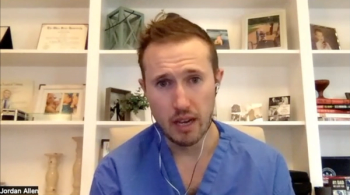
“These are key, because right now our sepsis rates following ureteroscopy are, quite frankly, unacceptable,” says Jordan L. Allen, MD.

"For me, the take-home message is that reduced or even no-narcotic discharge for patients after kidney surgery is feasible, and that it really should be our mindset of, can we reduce the amount of opioids we use?" says Craig G. Rogers, MD.