

"From a usage perspective, it's going to be very easy for urologists or even for labs to transition from urine cytology over to using Oncuria because it's the same practice," says Dave Mori.
"From a usage perspective, it's going to be very easy for urologists or even for labs to transition from urine cytology over to using Oncuria because it's the same practice," says Dave Mori.

"Our outcomes showed 71% of patients achieved dry or near dry results in 6 to 12 weeks," says Nissrine Nakib, MD.
"I don't think 1 database study creates dogma, but I do think we can share these data with our patients and talk to them about treatment options and risk, have that difficult conversation about how BMI may be associated with that risk," says Cassandra K. Kisby, MD, MS.

"If payments are cut, our overall cost per visit goes up, which could be another disincentive to use virtual care," says Chad Ellimoottil, MD, MS.

“Our conclusion was that the amount of pattern 3 in men with grade groups 2, 3, and 4 is not predictive of oncologic outcome once you know the amount of 4,” says Andrew J. Vickers, PhD.

"What we found was that we were able to identify patients who responded vs didn't respond to the treatment with a high degree of accuracy," says Glenn T. Werneburg, MD, PhD.

"We're going to look at whether that difference in the protocol has clinically meaningful implications, such as are patients who receive antibiotic prophylaxis at higher risk of developing resistance in the future?" says Badar M. Mian, MD.

"I think that the heat map is a very intuitive tool. It comes in a 3-dimensional structure so you can move it around," says Wayne G. Brisbane, MD.
"I emphasized the fact that the use of ultrasound is very important and should be done on every single case," says Nazih Paul Khater, MD, FACS.

“But all in all, one thing we did see was that [with] the data for saw palmetto, there was a signal that does seem promising, especially when used in combination with other agents,” says Bilal Chughtai, MD.

"The biggest finding was that the guys lost the weight. They lost 5.5% of their body weight," says Jill M. Hamilton Reeves, PhD, RD, CSO.

"The most important thing that I think came out of this study is really the BMI inflection point for complications. We saw an abrupt rise in complications around a BMI of 40," says Cassandra K. Kisby, MD, MS.

In this interview, Robert Reiter, MD, MBA, discusses the accuracy of PSMA-PET scans, false negative and false positive rates, and how treatment with ADT affects PSMA uptake.

“We don't have the sex therapists or psychologists who specialize in sexual dysfunction here... It's incredibly important, because if it doesn't start out as psychological, certainly, it becomes psychological, at least in some measure,” says Thomas M. Jaffe, MD.
"I would say that the biggest take-home is that many of our patients are using social media for their health care information, and this may influence their preferences [and] their decision-making," says Alexandra Tabakin, MD.
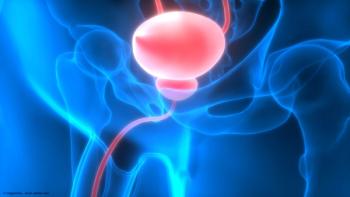
In this interview, Mark D. Tyson, MD, MPH, discusses TAR-200 and other novel investigational treatments for non–muscle-invasive bladder cancer.

"The learning curve is fairly quick; you can pick this up pretty easily vs some of the other prostate procedures that can take a little bit more time to learn how to use," says Matthew E. Sterling, MD.

"in general, we can use a simpler regimen [of testosterone replacement therapy] and achieve normal levels," says Peter N. Tsambarlis, MD.

“What we found was that the rate of complications due to infection were 2.6% with the transrectal approach, and 2.7% with the transperineal,” says Badar M. Mian, MD.
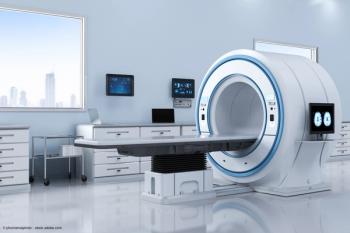
"There are situations where you can use a biparametric or noncontrast approach; most of them you will prefer still to use an approach with contrast," says Leonardo Kayat Bittencourt, MD, PhD.

In this podcast episode, Adam B. Murphy, MD, MBA, MSCI, discusses the need to increase diversity in clinical trials, specifically focusing on studies in prostate cancer.
“With 2 years of follow-up, we saw that there was no difference in these 2 groups in terms of overall survival, metastasis-free survival, or recurrence-free survival,” says Saum B. Ghodoussipour, MD.

"You could look at a person and say that they're extraordinarily successful...but they can be completely miserable," says Anne M. Suskind, MD, MS, FACS, FPMRS.

"Probably the most surprising finding was actually that there were several videos created by health care professionals that contain misinformation," says Alexandra Tabakin, MD.
“We’re in a very exciting time for those of us who take care of patients with bladder cancer. There are a lot of new emerging treatment options,” says Vikram M. Narayan, MD.

“In this study, we sought to compare our early outcomes with transperineal prostate biopsy compared to transrectal,” says Saum B. Ghodoussipour, MD.
"We had interest in trying to look at mechanisms and seeing if the obvious question is, well, if obesity is associated with progressing cancer, can we disrupt that link if we help men lose weight in a healthy way," says Jill Hamilton Reeves, PhD, RD, CSO.

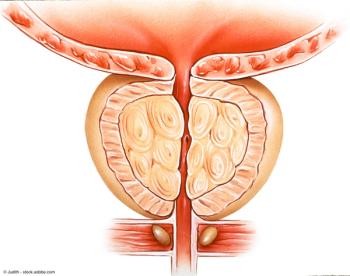
"The limitation of [TURP] is you're shaving out prostate tissue in a layer at a time, and you stop when you think you're deep enough, whereas with an Aquablation, you map all that out ahead of time," says Brian Friel, MD.

“It seems that DRE does not add a clinically or statistically significant [benefit] to PSA testing alone in detecting prostate cancer,” says Shahrokh F. Shariat, MD.