

"Overall, I think this study will allow clinicians to better advise patients in the slightly complex landscape of OAB therapies," says Leo Dreyfuss, MD.
"Overall, I think this study will allow clinicians to better advise patients in the slightly complex landscape of OAB therapies," says Leo Dreyfuss, MD.
"Outside a randomized trial, we cannot make any conclusion about the causal relationship between conducting cytoreductive nephrectomy and improved outcomes," says Jaleh Fallah, MD.

"It's really interesting to see how potentially these differentially expressed genes could suggest a different biology based on the zone that they arose from," says Zeyad Schwen, MD.

"To me, the most compelling outcome is really the quality-of-life outcomes. General quality of life as well as emotional quality of life improved in the intervention group significantly," says Jill M. Hamilton Reeves, PhD, RD, CSO.

"I would say the biggest take-home is that for Hispanic patients, there's a reduced likelihood of a successful fertility outcome that has been observed in an area that is enriched with a Hispanic population that's comparable to that of the US," says Devon M. Langston, MD.

“The first one [is] we confirmed the prognostic value of KIM-1. Overall, in INmotion010, patients with high KIM-1 clearly had a higher risk of recurrence,” says Laurence Albiges, MD, PhD.

"When looking at individual vaginal estrogen products prescribed by OB-GYNs median spending per claim for Vagifem and Yuvafem decreased and median spending per claim increased for Estrace and Estring," says Alexandra Tabakin, MD.

"We really found from the study, clinicians who had wanted to potentially offer the safer alternative of a single-incision sling, we determined that in this circumstance, it was noninferior," says Catherine A. Matthews, MD, FACS, FACOG.
“We are trying to evaluate the ctDNA role in prognostication as well,” says Chinmay Jani, MD.

"When controlling for demographic and clinical factors, the number of live births was reduced for Hispanic men," says Devon M. Langston, MD.

“It's one thing to recruit diverse talent, but it's really another thing to retain it,” says Alexandra Tabakin, MD.
“We hope that the survey can be helpful in practice to actually assess and give advice to some of these partners of patients, in addition to the questionnaires that we use for the patients themselves,” says Stacy Loeb, MD, MSc.
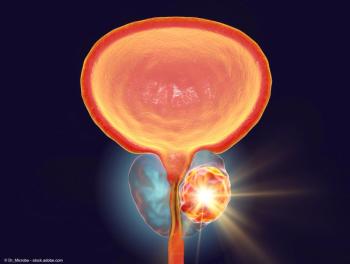
"The main finding from this network meta-analysis is the ranking of the 4 treatment approaches that we considered," says Scott Morgan, MD, MSc, FRCPC.

"The challenge of treating men with high-risk disease and potential micro metastatic disease with this type of targeted therapy is really exciting," says David I. Lee, MD, FACS.

"We found that, in our study, approximately 25% of patients who have had opioids prior to their cystectomy will continue to use opioids 3 to 6 months after their surgery," says Christopher J. Staniorski, MD.

“At the Advocacy Summit earlier this spring, 2 of the 3 leave-behind documents that outlined specific issues related to urology priorities were directly informed by information from the Census,” says Matthew Nielsen, MD, MS, FACS.

"From a learning curve standpoint, there's not much to learn. It tends to be fairly quick in terms of your ability to do the procedure," says Matthew E. Sterling, MD.

"Questions that arise for us [include] why, and what's further contributing to our observed outcome?" says Devon M. Langston, MD.

"We found that during the 5-year study period, the total number of claims for vaginal estrogen, the number of prescribers, and the number of beneficiaries decreased," says Alexandra Tabakin, MD.

“I think my immediate hope and goal with the study finding is universal incorporation of HPV testing on all penile cancer patients,” says Rohan Garje, MD.
"Despite the results of SURTIME and CARMENA, among others, we continue to hear discussions about the role of cytoreductive nephrectomy in conferences and literature, suggesting that this remains a question that has not been fully addressed," says Jaleh Fallah, MD.

“The results of the study showed that regardless of any biomarkers, the combination of pembrolizumab and lenvatinib was superior or associated with a better median progression-free survival compared to sunitinib,” says Jaime R. Merchan, MD.
“We can see that the median survival is going beyond 31 months, meaning that patients with a low tumor burden are benefiting,” says Joaquim Bellmunt, MD, PhD.
"There is a hypothesis that nectin-4 as a potential target for antibody drug conjugates, such as EV, potentially should work," says Marijo Bilusic, MD, PhD.
“So, we split this apart and looked into if the type of progression would occur differently depending on the organ sites, which it did not. What we have seen is maintained benefits for the combination of lenvatinib and pembrolizumab vs sunitinib,” says Viktor Grünwald, MD, PhD.

“My hope is that the DFF332 approach may potentially be one that's palatable in combination with other therapies,” says Sumanta Pal, MD, FASCO.

In this video, Kevin C. Zorn, MD, FRCSC, FACS, discusses key BPH data from the 2024 American Urological Association Annual Meeting.
"Our study looked at data from 5 trials of the combination therapy with an immune checkpoint inhibitor and the VEGF TKI evaluating if there's still any potential role for cytoreductive nephrectomy that is worth being investigated in prospective studies," says Jaleh Fallah, MD.
"There’s potentially a role here for patients with small renal masses that may not want to proceed with a minimally invasive laparoscopic or robotic procedure," says Arun Rai, MD, MBA, MSc.

"When we reviewed the data, we noticed a large difference in outcomes based on ethnicity," says Devon M. Langston, MD.