"Unless there's an anatomic reason why you can't use a bladder scanner reliably, then, really you should be using a bladder scanner," says Jennifer Ann Meddings, MD, MSc.
"Unless there's an anatomic reason why you can't use a bladder scanner reliably, then, really you should be using a bladder scanner," says Jennifer Ann Meddings, MD, MSc.

"Access to clean water and having reliable sewage systems is a huge public health issue," says Elisabeth M. Sebesta, MD.
“We will do exactly what we have done in terms of prototype of our processes, our tools, our design, and how we follow these patients up, and expand this from 10,000 men in less than 2 years to 1 million men in next 10 years,” says Ashutosh K. Tewari, MD.
"You definitely need to be very adaptable. You have to have a great team," says John Michael DiBianco, MD.

"I'm very transparent with my patients by telling them these exist. I don't provide them because we don't have enough level of evidence or body of research supporting them," says Ramy Abou Ghayda, MD, MPH, MBA.

"We wanted to look at the importance of genetic testing in patients with GU cancer and the impact that it has on their treatment decision-making, and the pathways that we put them on," says Mouneeb Choudry, MD.
"My goal as a 'plumber'/urologist is to see if we can find better options and also understand the mechanism behind the disease," says Zhina Sadeghi, MD.
"One of the main conclusions that we can take from our study is that although the current classification systems are somewhat accurate, they are far from being perfect," says Félix Guerrero-Ramos, MD, PhD, FEBU.
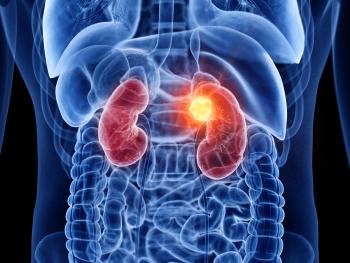
"We can individualize the access and the way we do the operation based on the patient's characteristics, and that hasn't happened in a very long time," says Ketan K. Badani, MD.

“This is a great opportunity for public outreach and re-education on the common misconceptions surrounding vasectomy,” says Catherine S. Nam, MD.

"For [men] to come to the practice and talk about [a sensitive issue] is a big step," says Adity Dutta, MSN, AGACNP-BC.
"What we found is that across the board, all 16 scores did relatively well with the association between an elevated polygenic risk score and prostate cancer incidence," says Randy A. Vince Jr, MD, MS.

“One thing is we’re trying to create an atmosphere in the center whereby men feel at ease, they're comfortable talking to their provider who is specialized in this field,” says Ramy Abou Ghayda, MD, MPH, MBA.
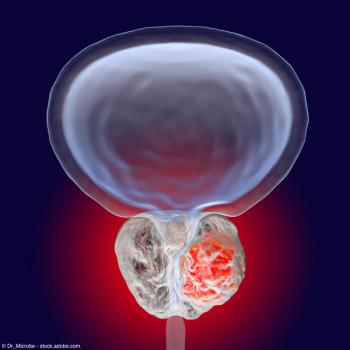
“I think the use and the appropriateness of these agents along the patient journey is also coming into question,” says Brian T. Helfand, MD, PhD.

"Kidney stone treatment is all about access," says Joseph Song, MD.

"This study was looking at the incidence of cognitive impairment and/or manual dexterity disorder diagnoses in men who underwent an artificial urinary sphincter after treatment for prostate cancer," says Jacqueline Zillioux, MD.
"By using our technique, and really preserving that urethral length really well, it seems to help those patients in particular to have better outcomes," David I. Lee, MD, FACS.
“With the support of the pediatric department and the pediatric urologists I work very closely with, we've been very successful in identifying the right patients,” says John Michael DiBianco, MD.

"Compared to the prior years, we found that there was a 150% increase in new vasectomy consults that were completed, and there was a 160% increase in the number of vasectomies that were done," says Catherine S. Nam, MD.

"Understanding that biology of that tumor and/or combining or using multiple radiotracers, either simultaneously or in sequence, may really be exciting to identify where those tumors are located," says Brian T. Helfand, MD, PhD.
“Our goal is to support patients throughout their entire journey with an intelligence chat system that not only evaluates them, but also answers many questions when their treating physician is not available, which is very common,” says Juan Fulla, MD, MSc.

"I think that coping is a key way that we can help intervene here," says Elisabeth M. Sebesta, MD.
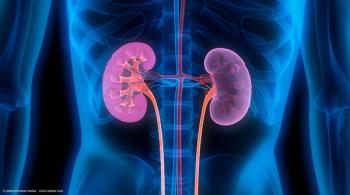
"Stones that recur in children happen about 40% to 50% of the time. That's why the American Urological Association guidelines recommend doing a complete metabolic evaluation in all children," says Katherine Chan, MD, MPH.

“What our major contribution is, I think as urologists doing implementation science, is determining the important questions, which we are particularly well-suited to do because we're taking care of the patients,” says Danil V. Makarov, MD, MHS.

“Interestingly, the trainees, when you look at residents as a conglomerate, experienced burnout at a higher rate than post-trainee urologists,” says Andrew M. Harris, MD.

"There are many opportunities to support our patients with bladder cancer who smoke from their clinic appointments from their intravesical therapy visits to their surveillance cystoscopies," says Marc Bjurlin, DO, MSc, FACOS.
“I think this is really playing a role in the decision for where we're localizing our radiation therapies as well as the addition of ADT plus an androgen receptor pathway inhibitor, ARPI, and the duration of these therapies,” says Brian T. Helfand, MD, PhD.

In this episode of Speaking of Urology®, Ashley G. Winter, MD, discusses the use of vaginal estrogen.