
William Tabayoyong, MD, PhD, highlights the University of Rochester’s upcoming Bladder Cancer Symposium, which will take place on September 14, 2024.
William Tabayoyong, MD, PhD, highlights the University of Rochester’s upcoming Bladder Cancer Symposium, which will take place on September 14, 2024.

“I think particularly as we've had the technology for longer and we've used it more and become more comfortable with it, there's really nobody, necessarily, that can't be considered for it,” says Aaron M. Bernie, MD, MPH.

"It looks like there are a lot of practices that are reticent about employing same-day discharge," says Brian R. Lane, MD, PhD, FACS.

“While we do see a decrease in opioid use, we still want to make sure that the pain is addressed and that it's addressed correctly,” says Laura Gressler, MS, PhD.

“The other thing that I think would be interesting is there's the thought of vasectomy regret where because of the permanent nature, what proportion of patients have regret surrounding their decision?” says Catherine S. Nam, MD.

"We sought to describe the genetic and clinical characteristics for patients undergoing genetic testing at our institution that were referred to genetics from our multidisciplinary stone clinic," says Nicolette G. Payne, MD.

“So, the concept behind delivering something orally in a spray is to hopefully avoid the whole GI effect and get faster absorption,” says Steven A. Kaplan, MD.

"We had a really clear idea...[We were looking at] how we can better optimize the system for cleaning," says Ana Lidia Flores-Mireles, PhD.
“I think the future is very bright for endourology and pushing the envelope with different minimally invasive techniques to remove stones,” says Marcelino E. Rivera, MD.
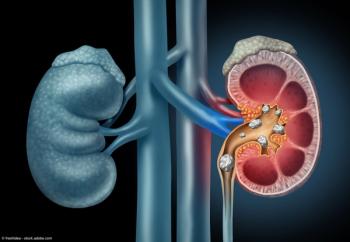
"I think the patients that benefit the most are patients that have certain types of stones that potentially are much harder to treat with some of the more minimally invasive types of procedures," says John Michael DiBianco, MD.

“Within our department at University of Michigan, there has been increased numbers of vasectomy procedure days to be able to meet the demand so that there's not a very long prolonged delay for our patients,” says Catherine S. Nam, MD.

"We've really found that [same-day discharge is] a reasonable option and something that many patients are really pleased by," says Brian R. Lane, MD, PhD, FACS.

“We need formal recommendations for nonopioid pain management strategies and medications,” says Laura Gressler, MS, PhD.
“The hope is that the research and technology will be mature enough at the time that they're ready to use that tissue for a biological child,” says Amanda J. Saraf, DO.

"What we think is really nice about it is it's not required to have it into an electronic medical record for this to work on the wards," says Jennifer Ann Meddings, MD.

“It will be interesting to see how this plays out long-term in the changing political scheme, as well as the general trend of the current generation potentially having different thoughts in terms of wanting to have children or not in the future,” says Catherine S. Nam, MD.

“We believe this is going to be the next rendition of how we can train physicians, as well as make surgeons more effective at their job,” says Nitin K. Yerram, MD.
"If we want to do a targeted therapy, we have to know exactly where and what we are treating," says Gamal M. Ghoniem, MD, FACS, ABU/FPMRS.

"By helping them see what could be going on with their health and knowing when to reach out for help, we think that's a fantastic way to begin to change the paradigm when it comes to men and prostate cancer in the US," says Motolani Adedipe, PhD, DPh, MSc.

"The cases that I've done have been here, at least, have been some of the most, I guess, impactful and really make me proud and happy to be a urologist and to do something [for which] the patients are incredibly grateful," says John Michael DiBianco, MD.
"We did see a rise in 2020, and that's been kind of maintained in 2021 and 2022, but overall, it looked like a pretty low rate," says Brian R. Lane, MD, PhD, FACS.

"My goal in the trip was not to see how many patients I could operate on, how many doctors I could train, [it was] to help 1 person train," says Joel Gelman, MD.
“We get exposure and get an opportunity to work with experts in the field before we even start fellowship, so that we can develop a baseline of expertise in areas of Peyronie's disease, erectile dysfunction, infertility, and managing sexual medicine and fertility in men across the board,” says Jacob Rust, MD.

"If we don't take the time to speak to trainees, an already vulnerable population, we're missing an opportunity to help them early," says Andrew M. Harris, MD.

"A surprise finding was the increase in opioid fulfillment beyond the 7-day postoperative period, which was really unexpected," says Laura Gressler, MS, PhD.
"I think it really is going to change my practice," says Akhil Das, MD, FACS.

“Fortunately, the chemotherapy regimens that Dr. Einhorn put together in combination with the surgical approaches with Dr. Donohue really revolutionized the cure rates and the care for men with testicular cancer,” says Clint Cary, MD, MPH, MBA.

"The scale of that linkage and the manner with which we were able to do it is really exciting and opens the door for a lot of future discovery," says Michael S. Leapman, MD, MHS.
“It's been exciting to be on the forefront of new technology and new implants to help men regain their sexual function and empower them,” says Dr. Helen L. Bernie, DO, MPH.
"When it came down to linking the clinical information with both biopsy reports as well as the prostatectomy pathology reports, we didn't have much of a challenge with that," says Randy A. Vince Jr, MD, MS.