

"The patients who received SBRT were more likely to be Caucasian. We observed that far fewer Black men were treated with SBRT in our cohort," says Michael Stencel, DO.
"The patients who received SBRT were more likely to be Caucasian. We observed that far fewer Black men were treated with SBRT in our cohort," says Michael Stencel, DO.

“We are finding more and more information and evidence to support recommendations to try and reduce the infection rates,” says Christian Moro, PhD, BSc, BEd, MBus, SFHEA.

"For more rural practices, for ureteroscopy, they also received lower reimbursement than urban practices," says Victoria S. Edmonds, MD.

“[This way, I can] educate myself and put myself in their shoes and suggest a treatment or a plan or an evaluation, and then find out what their feedback might be from a collaborative standpoint,” say Robert D. Hoy, MPAS, PA-C.

"Our hope is that if we can improve the experience of their initial treatment for urinary retention, then particularly the patients who actually need to catheterize to maintain their kidney health, they would not be afraid of catheterization," says Jennifer Ann Meddings, MD, MSc.

“Unlike a lot of the societies within oncology, including ASCO or even NCCN, urology really does not do a good job at recommending mental health to our patients,” says Laura Bukavina, MD, MPH, MSc.

"The patients in these networks that were treated with SBRT certainly lived in areas with increased incomes," says Michael Stencel, DO.
"We have now realized that in some patients with a low number of metastatic sites, providing systemic treatment and providing some site-targeted treatment will provide lasting benefit or at least a temporary benefit that will help ameliorate the need for the systemic treatments or very intense systemic treatments," says Armine K. Smith, MD.

"A surprise finding was the increase in opioid fulfillment beyond the 7-day postoperative period, which was really unexpected," says Laura Gressler, MS, PhD.

"Based on our work, it does show that ileal ureter replacement can be an effective long-term option for patients with long-segment ureteral stricture disease," says Ziho Lee, MD.

“While the medications might be covered, while the surgical treatment might be covered, we all know that mental health and dental care are one of those things where people have large copays, long delays to care, and it is very clear to see that from our study,” says Laura Bukavina, MD, MPH, MSc.

"A lot of studies were done in a way that weren't randomized," says Christian Moro, PhD, BSc, BEd, MBus, SFHEA.

"We hypothesize that when we treat female sexual dysfunction, we can ultimately improve the dynamics between the couple, and therefore improve the male partner satisfaction with his IPP," says Thairo Pereira, MD.
"We're actually standardizing how to clean the catheter, because the system tells you exactly [how]," says Ana Lidia Flores-Mireles, PhD.

“Sometimes there's some difficulties with continuity of care, because I'm not the sole provider for that patient,” says Robert D. Hoy, MPAS, PA-C.

"The number of treatment centers that are offering stereotactic body radiation [grew] over the course of the study," says Michael Stencel, DO.

"I actually worked with several different urologists while we were developing this," says Jennifer Ann Meddings, MD.

"We ended up with 3091 participants overall, and 3 trends came out that were significant," says Christian Moro, PhD, BSc, BEd, MBus, SFHEA.

“The great news is that we have now completed recruitment. We actually recruited more than 1700 patients,” says Kari A.O. Tikkinen, MD, PhD.

"There are actually no clear guidelines on when to refer patients with nephrolithiasis to genetic testing," says Nicolette G. Payne, MD.

“One of our goals here with our program is to hopefully expand the APPs in the sexual medicine field,” says Kristy L. Mardis, NP.

"One of the things that's been identified is over 90% of the UTI presentations have found bugs that are antibiotic resistant," says Christian Moro, PhD, BSc, BEd, MBus, SFHEA.
“In addition, the average levels of the medication in the bloodstream, at least during the first 30 minutes, was higher,” says Steven A. Kaplan, MD.

"Our goal is that people would not be getting catheterized when they actually do not have sufficient urinary retention," says Jennifer Ann Meddings, MD.
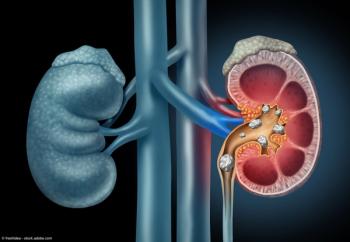
"The great news is that we have now completed recruitment. We actually recruited more than 1700 patients," says Kari A.O. Tikkinen, MD, PhD.

"Pathogens can stay there for a long time, even if the contamination was really quick...It happens really fast," says Ana Lidia Flores-Mireles, PhD.

"We have incredible data based on long-term follow up that help us understand what the right therapy is for kids, primarily kids with neurologic diseases like spina bifida," says Rosalia Misseri, MD, FAAP.

"I think what's really important for this is that you counsel patients before they undergo testing," says Nicolette G. Payne, MD.

"But here at IU, we have an experimental protocol that's open that's called testicular tissue cryopreservation, and it's a collaboration with UPMC," says Amanda J. Saraf, DO.