

"A lingering question is whether the act is increasing patient knowledge about their physicians’ receipt of payments from the industry (or whether they care)," writes Robert A. Dowling, MD.
"A lingering question is whether the act is increasing patient knowledge about their physicians’ receipt of payments from the industry (or whether they care)," writes Robert A. Dowling, MD.

"CPT codes 50080 and 50081 describe the antegrade approach to stone removal requiring lithotripsy through a nephrostomy tract, with 50080 being reported for stones less than 2 cm in size in a single location, whereas 50081 would be reported for large or complex stones, stones in multiple locations, or stones in the ureter (such as in the example provided)," write Jonathan Rubenstein, MD, and Mark Painter.
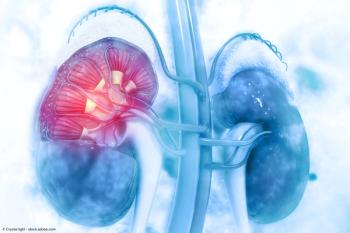
"To avoid unnecessary treatment, percutaneous biopsy of the small renal mass has increased for the past several years, but its use remains highly variable," writes Badar M. Mian, MD.

The minimally invasive surgical therapy is approved for the treatment of lower urinary tract symptoms secondary to BPH.


The new space includes a clinical laboratory for IsoPSA testing, labs for research and development, offices, and manufacturing spaces for production and distribution of in vitro diagnostic kits.
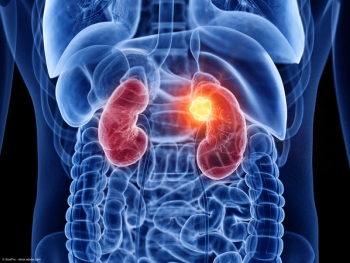
At a median follow-up of 67.2 months, the combination of pembrolizumab and axitinib continued to show an overall survival and progression-free survival benefit over sunitinib monotherapy in the first-line setting.
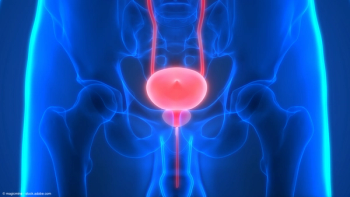
“Both the SWOG S1011 and the LEA trial show very clearly that a bilateral standard node dissection confined to the true pelvis is the standard of care for patients with curable muscle-invasive bladder cancer," says Seth P. Lerner, MD, FACS.
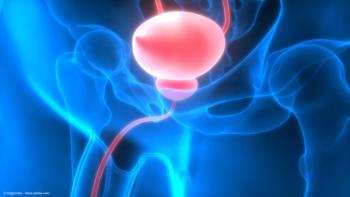
"In EV-103 dose escalation/cohort A, the safety profile of the combination was manageable, with no new safety concerns observed at nearly 4 years of follow-up," said Shilpa Gupta, MD.

The proportion of patients who discontinued initial ARI treatment was 30.4% for darolutamide compared with 40.8% for enzalutamide and 46.0% for apalutamide.