
All News
Advertisement
Advertisement
Researchers who are investigating burst-wave lithotripsy, a potential alternative treatment for kidney stones, report that magnetic resonance imaging and ultrasound scans hold promise as tools to help scientists analyze related kidney injuries.
Results of a retrospective study raise concern that ureteroscopy may adversely affect erectile function.
Radical prostatectomy performed on a Friday is associated with a higher complication rate and extended hospital stay compared with the same surgery performed on other days of the week.
Advertisement
New research suggests that post-surgery symptoms may last for at least 3 months in cystectomy patients and worsen over time in some cases, posing unique management challenges for urologists.
The purpose of this article is to discuss important principles of radical cystectomy, whether performed using the open, laparoscopic, or robotic approach.
The perioperative surgical home is a promising model for delivering high-quality, cost-effective care for patients undergoing inpatient urologic procedures, according to the experience of urologists from Loma Linda University, Loma Linda, CA.
“Preauthorization has escalated beyond reason,” according to AACU President Charles McWilliams, MD.
Advertisement
Nearly one-third of men with testicular cancer undergo diagnostic or therapeutic interventions that are at odds with guidelines from the National Comprehensive Cancer Network (NCCN), according a study published in the Journal of Urology (2017; 197:684-9).
While questions about experience can be uncomfortable for new surgeons, Nirmish Singla, MD, believes the process of mastering procedures is invaluable to conveying the confidence necessary to help patients feel comfortable.
“The evidence is clear: Not only can APRNs practice independently, they can do so effectively and without sacrificing quality of care,” writes SUNA President Gwendolyn Hooper, PhD, APRN.
President Trump’s campaign promise to “repeal and replace” the Affordable Care Act has proved to be easier said than done as Republicans who control Congress have been unable to devise a workable and acceptable replacement for the controversial health care law.
Oral cyclosporine can offer a safe and effective treatment option for refractory interstitial, even in patients who have been on chronic narcotic medications and particularly in those with Hunner’s lesions, according to the findings of a study presented by Cleveland Clinic urologists at the 2016 AUA annual meeting in San Diego.
Three urologists discuss what causes them the most angst and the ways they try to reduce the pressure.
Neil Baum, MD, and Randy Bauman discuss their tips to making the transition from practice seller to buyer as seamless as possible to keep patient retention rates high.
Persistent clinical benefit was seen among a small group of patients with metastatic renal cell carcinoma who had to discontinue therapy with the PD-1 inhibitor nivolumab (Opdivo) because of immune-related adverse events, according to a study presented at the Genitourinary Cancers Symposium in Orlando, FL.
Administration of broad-spectrum antibiotics in patients with metastatic renal cell carcinoma (RCC) undergoing treatment with immune checkpoint inhibitors may have a negative effect on the efficacy of the immunotherapy drugs, according to the results of a recent retrospective analysis.
An investigatory bladder cancer agent was associated with a 12-month high-grade recurrence-free survival of 35% for patients with Ta/T1 disease, researchers reported.
Cancer patients taking certain immunotherapy drugs may be more susceptible to developing autoimmune joint and tissue diseases, including inflammatory arthritis, according to a recent study.
When trying to determine how much is enough when saving for retirement, there are many elements that must be considered. Plus, weigh these pros and cons when deciding how long to receive payments from an immediate annuity.
Urologic oncology fellow, Ariel Schulman, MD, shares some tips to help residents make research a positive experience.
A recent study has found that genetic predictors of normal PSA levels in healthy men could be used to improve the accuracy of PSA-based prostate cancer screening.
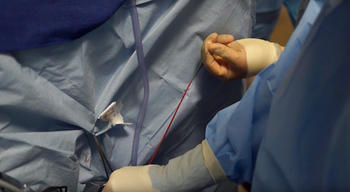
In these videos, high-volume stone surgeons demonstrate novel approaches to classification, visualization, and treatment of stones.
Nivolumab (Opdivo) is the second in class of immune checkpoint inhibitors approved for advanced bladder cancer-treatments that are having “tremendous responses across a spectrum of cancers,” says Leonard G. Gomella, MD.
Urology-related FDA approvals from 2016 encompassed drugs and devices for prostate cancer, renal cell carcinoma, bladder cancer, stone disease, and more.
Using multi-parametric magnetic resonance imaging to triage men with high serum PSA could save about one-fourth of patients from having transrectal ultrasound-guided prostate biopsy, according to a recent study.
The addition of hormonal therapy in post-RP is “practice changing,” study author says.
Other products discussed include an updated prostate tissue ablation device, a contrast agent for voiding ultrasonography, a bladder cancer test and more.
Advertisement
Advertisement
Trending on Urology Times
1
The Evolving Landscape of Minimally Invasive BPH Therapy
2
TURP, HoLEP, and the Future of Minimally Invasive BPH Therapy
3
FDA grants priority review to perioperative durvalumab plus enfortumab vedotin in MIBC
4
AACU, WOCN Society urge safeguards in Medicare catheter bidding
5