
There are several very detailed steps that we will combine into 11 separate functions that have to be performed in a prompt and accurate fashion in order to submit a clean claim and be paid in a timely fashion.
There are several very detailed steps that we will combine into 11 separate functions that have to be performed in a prompt and accurate fashion in order to submit a clean claim and be paid in a timely fashion.
When Dr. Painter started practice during the early 1970s in a small town in western Colorado, the entire billing and collections process was much simpler.
Despite ureteroscopy's high success results, there is still a role for shock wave lithotripsy in treating stones, urologists say.
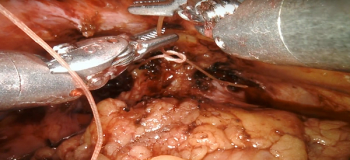
This video depicts a robot-assisted laparoscopic cystectomy with intracorporeal ileal conduit for patients with muscle-invasive bladder cancer.
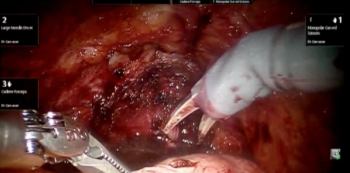
This video demonstrates a technique for the intracorporeal creation of a robot-assisted Y-shaped neobladder after cystectomy.
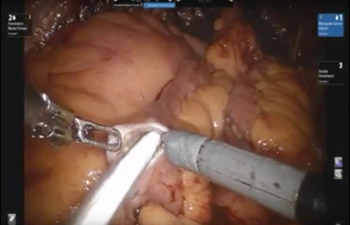
This video demonstrates a robotic neobladder technique using the University of Southern California approach, which applies a number of open surgical techniques.
Check out the latest new products. From Single-use ureteroscope addresses shortcomings of reusable scopes, to an App that helps IC, chronic prostatitis patients choose the right foods and much more.
The authors sought to identify factors associated with 30-day emergency department visits and readmission following URSLL.
Researchers looked at PCNL patients who received a 7-day course of antibiotics, 40 patients treated for 2 days preoperatively, and 72 patients who were given a single perioperative dose.
Results of a recently published study examining the safety of the two approaches support stronger consideration for orchiectomy, according to its authors.
Findings of a large study examining histology of newly diagnosed prostate cancer point to concerning trends in the aftermath of the USPSTF’s recommendation against PSA-based screening.
mentors may come in several disguises, including instructors from whom we have learned, clinicians whom we have observed, or researchers under whom we have worked. For many, however, the quest to find a role model begins at home. Learn more
Urology Times is pleased to announce the appointment of Stacy Loeb, MD, MSc, to its Editorial Council, representing the areas of men’s health and prostate cancer.
The agency issues two strict final orders related to mesh for transvaginal repair of pelvic organ prolapse.
In this interview, E. Jason Abel, MD, discusses biopsy’s role in small and large renal masses, associated risks, and when patients can be safely observed.
The U.S. Preventive Services Task Force, which in 2012 recommended against PSA-based screening for prostate cancer, is developing a new research plan for updating recommendations that urology practices will be expected to follow once it is finalized.
Henry Rosevear, MD, recently read what he felt was 2015's best article on the business of health care.
Number of preoperative biopsies does not appear to have any clinically significant effect on self-reported urinary or erectile function outcomes at 1 year after radical prostatectomy, researchers say.
The HHS Office of the Inspector General work plan for fiscal year 2016 includes a number of topics of interest to urologists, which is my focus in this article.
A combination of findings on preoperative multi-parametric magnetic resonance imaging showed good accuracy for predicting lymph node involvement on final pathology in men who underwent robot-assisted radical prostatectomy for prostate cancer, reported researchers from the National Institutes of Health, Bethesda, MD.
In this "Coding Q&A" column, the Painters also the explain difference between CPT codes 74420 and 74450.
The future of erectile dysfunction management following prostate cancer surgery will likely include novel options, among them cell-based therapies, North American experts in the field predict.
In 2015, more than 200 bills were introduced in 42 states addressing telehealth. The use of telehealth services is expected to grow from 250,000 patients in 2013 to 3.2 million in 2018. These are just some of the findings contained in an extensive report on telehealth by the National Conference of State Legislatures..
"We’re definitely seeing fewer men referred for elevated PSAs," one urologist told Urology Times.
Other pipeline products discussed in this article include an immunotherapy for metastatic bladder cancer, a treatment for lower urinary tract symptoms of BPH, and an investigational clear cell renal cell carcinoma treatment.
" ‘Underpromise and overdeliver’ when it comes to penile length issues in your IPP patients," writes Allen F. Morey, MD.
Evaluation of online videos is a feasible method for peer review of robot-assisted radical prostatectomy surgical skills, according to a pilot project undertaken by the Michigan Urological Surgery Improvement Collaborative (MUSIC).
Ten percent of men with penile implants express dissatisfaction with their implant, and 12% either do not use their implant or use it less often than desired, according to data from a patient registry known as PROPPER (Prospective Registry of Outcomes with Penile Prostheses for Erectile Restoration).
In this first installment in a new bimonthly column, I will cover discrete, but important issues that present themselves in medical malpractice suits to best inform the urologic community of their existence and how attorneys may handle them.
In this article, we review the etiology and pathophysiology of ED in this challenging patient population and provide an approach to treatment and risk reduction via lifestyle modification and pharmacologic intervention.