

"Nurse practitioners and physician assistants are considered qualified health care professionals and are able by license to supervise diagnostic tests and interpret based upon state laws," write Jonathan Rubenstein, MD, and Mark Painter.
"Nurse practitioners and physician assistants are considered qualified health care professionals and are able by license to supervise diagnostic tests and interpret based upon state laws," write Jonathan Rubenstein, MD, and Mark Painter.
“This highlights a need for physicians to better integrate patient preferences into their treatment recommendations," says Jonathan Bergman, MD, MPH.

The CHMP’s positive recommendation is based on findings from the first interim analysis of the phase 3 EV-302 trial.
"Stones that recur in children happen about 40% to 50% of the time. That's why the American Urological Association guidelines recommend doing a complete metabolic evaluation in all children," says Katherine Chan, MD, MPH.

“What our major contribution is, I think as urologists doing implementation science, is determining the important questions, which we are particularly well-suited to do because we're taking care of the patients,” says Danil V. Makarov, MD, MHS.

"Receiving the new CPT code and national payment rate for Unfold AI is an important development in making advanced personalized prostate cancer care accessible to more patients," said Brit Berry-Pusey, PhD.

"Documentation must support the existence and treatment of a separate stone," write Jonathan Rubenstein, MD, and Mark Painter.

In this episode of Speaking of Urology®, Ashley G. Winter, MD, discusses the use of vaginal estrogen.

The PDUFA goal date for TLX007-CDx is March 24, 2025.

"Going forward after this study, we hope to be able to expand and potentially look at patients undergoing either surgery or radiation therapy, and really try to determine the potential benefit," says Kelly L. Stratton, MD, FACS.

Data from phase 2 of the SANS-UUI trial are expected to support an application to the FDA for approval of the device in patients with urge urinary incontinence.
"This is an exciting step in the evolution of urological surgery for both adult and pediatric patients,” says Chester J. Koh, MD, MBA, FACS, FAAP.

"Although there is a good chance that you will face allegations of medical negligence at some point in your career, it is unlikely that you will ever be found liable by a jury," writes Victoria L. Neikam, Esq.

"We will be looking not only at how well this software performs in a busy clinical setting and whether diagnostic accuracy and efficiency improves, but also assessing the experience of clinicians and patients, and looking at the impact on workflow," says Clare Verrill, BM, FRCPath, MMedEd.
"The incorporation of NGI into the BCR disease state definition necessitates a consensus within the medical community," write Spyridon P. Basourakos, MD, and Jack R. Andrews, MD.

"One day, we're going to have to move away from fee for service, so we'd be wise to try to navigate those waters ahead of time, so we're not left dealing with the aftermath when someone else has implemented it for us," says Ruchika Talwar, MD.

"While our results may imply that a strict all-business professionalism is superior, I think it's important to acknowledge that humor is really subjective," says Max D. Sandler.

The study has enrolled 8 patients to assess the safety and efficacy of the device in sealed vasectomy procedures.
"While the addition of an ICI to low dose FOTIVDA did not improve PFS outcomes after prior ICI, we consider the control arm data an important, evidence-based and clinically meaningful contribution to the oncology community treating relapsed or refractory advanced RCC following front-line ICI combinations," says Michael P. Bailey.
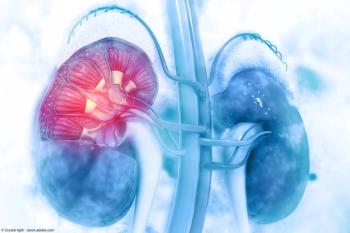
here was a higher concordance of somatic alterations between tissue and ctDNA testing in patients with metastases vs those without.
"In the last decade, we've observed a high number of new alternatives within clinical trials, especially with intravesical delivery," says Félix Guerrero-Ramos, MD, PhD, FEBU.

ORIC-944 was initially being evaluated as a monotherapy in the phase 1b trial.
Topline results from the phase 3 ARANOTE trial showed a statistically and clinically significant improvement in rPFS with the addition of darolutamide to ADT vs ADT alone.
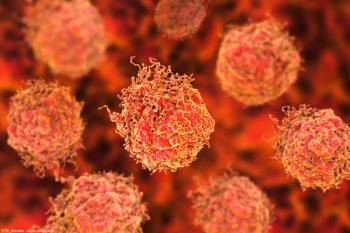
"I think the micronized formulation is something to think about," says Gautam Jayram, MD.

Data showed a 90.6% rate of correct consumer self-selection among those who used the Web App Technology with the DFL vs 57.3% among those that used the DFL alone.

"We've been working with families and other providers to learn the diagnostic criteria for what makes a urinary tract infection and to avoid treating when it's unnecessary," says Briony K. Varda, MD, MPH.
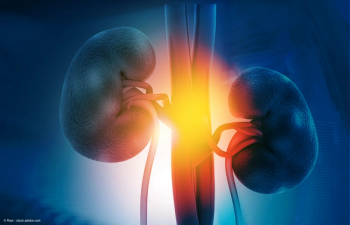
“These findings provide a plausible mechanism for the enhanced clinical outcome with CBM588 now seen across 2 small, randomized trials,” write the authors.
All patients have now been enrolled in cohort 6 of the trial, and dosing with ONCT-534 has begun at the dose level of 1200 mg.
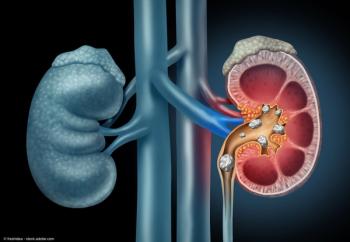
"We found that as we got better and better at doing it, the majority of patients now can go home in this fashion. They can go home the day of the procedure with nothing in them," says Mantu Gupta, MD.

“Our findings suggest an impact of living in disadvantaged neighborhoods—which more commonly affects African Americans—on stress-related genetic pathways in the body. We believe this may increase an individual’s risk of aggressive prostate cancer and contribute to prostate cancer disparities by race,” says Kathryn Hughes Barry, PhD, MPH.