Jack R. Andrews, MD, discusses BED-PSMA-411 findings comparing PSMA-PET detection rates and urinary excretion in prostate cancer biochemical recurrence.
Jack R. Andrews, MD, discusses BED-PSMA-411 findings comparing PSMA-PET detection rates and urinary excretion in prostate cancer biochemical recurrence.

Panelists discuss how the recent FDA approval of darolutamide for metastatic hormone-sensitive prostate cancer (mHSPC) expands treatment options, offering improved tolerability with lower fatigue rates and fewer central nervous system adverse effects than other androgen pathway inhibitors, while exploring considerations for patient selection, trial design interpretation, and the evolving role of real-world evidence in clinical decision-making.
Panelists discuss how the recent FDA approval of darolutamide for metastatic hormone-sensitive prostate cancer (mHSPC) expands treatment options, offering improved tolerability with lower fatigue rates and fewer central nervous system adverse effects than other androgen pathway inhibitors, while exploring considerations for patient selection, trial design interpretation, and the evolving role of real-world evidence in clinical decision-making.
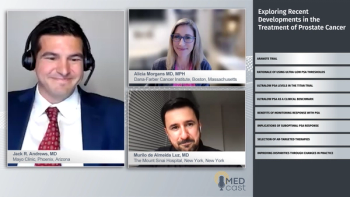
Jack R. Andrews, MD; Alicia Morgans, MD, MPH; and Murilo de Almeida Luz, MD, discuss how ultralow prostate-specific antigen thresholds (below 0.02) serve as important prognostic biomarkers in metastatic hormone-sensitive prostate cancer, with recent post hoc analyses from the ARANOTE trial showing that patients achieving these ultralow levels with combination androgen deprivation therapy plus darolutamide therapy have significantly better radiographic progression-free survival and time to castration-resistant disease compared with those who don't reach these thresholds.
Jack R. Andrews, MD; Alicia Morgans, MD, MPH; and Murilo de Almeida Luz, MD, discuss how ultralow prostate-specific antigen thresholds (below 0.02) serve as important prognostic biomarkers in metastatic hormone-sensitive prostate cancer, with recent post hoc analyses from the ARANOTE trial showing that patients achieving these ultralow levels with combination androgen deprivation therapy plus darolutamide therapy have significantly better radiographic progression-free survival and time to castration-resistant disease compared with those who don't reach these thresholds.

Jack Andrews, MD; Alicia Morgans, MD, MPH; and Ashley Ross MD, PhD, discuss how trial design, inclusion criteria, and end points like radiographic progression-free survival vs overall survival impact clinical decision-making in prostate cancer treatment, emphasizing the importance of quality of life data and the shift from using ADT alone as standard care toward combination therapies in prostate cancer management.
Jack Andrews, MD; Alicia Morgans, MD, MPH; and Ashley Ross MD, PhD, discuss how trial design, inclusion criteria, and end points like radiographic progression-free survival vs overall survival impact clinical decision-making in prostate cancer treatment, emphasizing the importance of quality of life data and the shift from using ADT alone as standard care toward combination therapies in prostate cancer management.
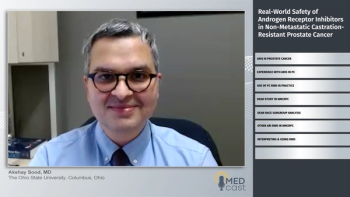
Jack Andrews, MD; Eugene Cone, MD; and Akshay Sood, MD, discuss how real-world safety and efficacy data for androgen receptor inhibitors (apalutamide, darolutamide, and enzalutamide) in nonmetastatic castration-resistant prostate cancer (nmCRPC) show darolutamide may offer superior tolerability with lower discontinuation rates and fewer drug interactions, while emphasizing the importance of critically evaluating real-world studies by examining methodology rather than just conclusions.

Jack Andrews, MD; Eugene Cone, MD; and Akshay Sood, MD, discuss how real-world safety and efficacy data for androgen receptor inhibitors (apalutamide, darolutamide, and enzalutamide) in nonmetastatic castration-resistant prostate cancer shows darolutamide may offer superior tolerability with lower discontinuation rates and fewer drug interactions, while emphasizing the importance of critically evaluating real-world studies by examining methodology rather than just conclusions.

Jack R. Andrews, MD; Eugene B. Cone MD; and Edwin Posadas, MD, FACP, discuss how early intervention with individualized treatment approaches based on disease volume, patient characteristics, and biomarkers significantly improves survival outcomes in metastatic hormone-sensitive prostate cancer.
Jack R. Andrews, MD; Eugene B. Cone MD; and Edwin Posadas, MD, FACP, discuss how early intervention with individualized treatment approaches based on disease volume, patient characteristics, and biomarkers significantly improves survival outcomes in metastatic hormone-sensitive prostate cancer.

Panelists discuss how future trials in metastatic castration-resistant prostate cancer (mCRPC) should focus on developing reliable biomarker-driven treatment selection strategies to optimize sequencing decisions and identify which patients will benefit most from specific therapies or combinations, particularly as the treatment landscape becomes increasingly complex.
Panelists discuss how the phase 3 DORA trial investigates the combination of standard of care darolutamide with radium-223 in patients with metastatic castration-resistant prostate cancer (mCRPC), building upon the positive safety profile of novel hormone therapy combinations with radiopharmaceuticals seen in PEACE-3.
Panelists discuss how early implementation of RAD-ENZ combination therapy requires careful consideration of patient characteristics, disease burden, and long-term treatment planning while potentially offering the greatest benefit when initiated before significant disease progression occurs.
Panelists discuss how patients with bone-predominant mCRPC, good performance status, adequate bone marrow function, and limited visceral disease are ideal candidates for RAD-ENZ combination therapy, particularly when proper bone health monitoring and prophylaxis can be implemented.
Panelists discuss how regulatory approval of the radium-223 and enzalutamide combination would likely lead to significant guideline updates, particularly in treatment sequencing recommendations for patients with metastatic castration-resistant prostate cancer (mCRPC) with bone-predominant disease and adequate bone marrow function.
Panelists discuss how adapting the PEACE-3 protocol to real-world US patient populations requires careful consideration of broader patient demographics, comorbidities, and prior treatment histories than were represented in the trial’s relatively strict eligibility criteria.
Panelists discuss how the combination of radium-223 and enzalutamide (RAD-ENZ) demonstrated a manageable safety profile in PEACE-3, with bone health monitoring and prophylactic bone-targeted therapy being crucial considerations, particularly given the potential impact on future treatment options.
Panelists discuss how the PEACE-3 trial demonstrated meaningful clinical benefits with the combination of radium-223 and enzalutamide compared with enzalutamide alone in patients with metastatic castration-resistant prostate cancer (mCRPC), showing both improved radiologic progression-free survival and a significant overall survival advantage of 7.3 months.
Jack Andrews MD; Eugene Cone, MD; and Arash Rezazadeh, MD, discuss how metastatic hormone-sensitive prostate cancer presents clinically, explore current treatment standards including combination therapies, evaluate emerging data from the ARANOTE trial on darolutamide efficacy, consider quality of life factors in treatment selection, and examine how novel therapeutic approaches may reshape future care pathways.
Panelists discuss how radiopharmaceuticals like lutetium-177 prostate-specific membrane antigen (PSMA) may be preferred over systemic therapy in patients with prostate cancer who have high PSMA expression, multiple bone metastases, and limited visceral disease, particularly after progression on standard therapies like androgen receptor pathway inhibitors and taxane-based chemotherapy.
Panelists discuss how the evolving treatment landscape for metastatic castration-resistant prostate cancer (mCRPC) encompasses multiple therapeutic options including novel hormonal agents, chemotherapy, and targeted therapies while highlighting persistent challenges in treatment sequencing, drug resistance, and the need for improved biomarker-driven approaches to optimize patient outcomes.
Jack Andrews MD; Eugene Cone, MD; and Arash Rezazadeh, MD, discuss how metastatic hormone-sensitive prostate cancer presents clinically, explore current treatment standards including combination therapies, evaluate emerging data from the ARANOTE trial on darolutamide efficacy, consider quality of life factors in treatment selection, and examine how novel therapeutic approaches may reshape future care pathways.
"The incorporation of NGI into the BCR disease state definition necessitates a consensus within the medical community," write Spyridon P. Basourakos, MD, and Jack R. Andrews, MD.

March 1st 2025