
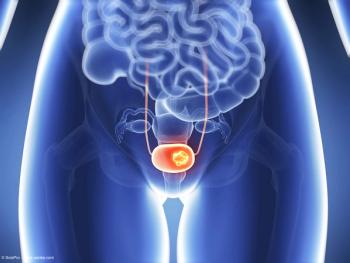
Nadofaragene firadenovec received FDA approval in December 2022 for the treatment of patients with high-risk BCG-unresponsive NMIBC with carcinoma in situ with or without papillary tumors.
Nadofaragene firadenovec received FDA approval in December 2022 for the treatment of patients with high-risk BCG-unresponsive NMIBC with carcinoma in situ with or without papillary tumors.

From a show dog to a family of cats, let's see who some of the top medical professionals are spending their time with when they're not in the clinic.

"Without interoperability, electronic insurance billing would be nearly impossible. Insurance payers, healthcare providers and claim clearinghouses all rely on interoperability at their core," writes Lisa Taylor.

Clarius Bladder AI ultrasound software may have significant utility in acute care settings, urology clinics, and nursing homes.

In total, the study plans to enroll approximately 100 BCG-unresponsive NMIBC CIS patients across 15 clinical study sites in the US and Canada.

The conference, “PSMA PET and RLT: Present and Future," is taking place online and in-person in San Francisco on January 18 and 19, 2024.

"Specialty providers can take three steps now to succeed with MIPS while prioritizing caring for their patients," writes Wayne Singer.
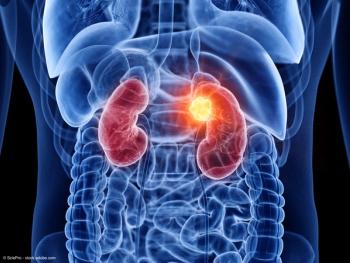
"While preliminary in nature, these data provide a compelling rationale for consideration of PSMA PET as an alternative staging modality at the time of primary diagnosis," wrote the authors.
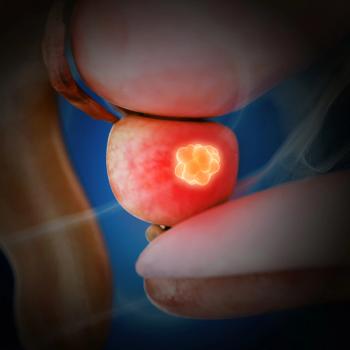
“To our knowledge, this is the largest investigation of the antitumor effect and toxicity of 225Ac-PSMA radioligand therapy in mCRPC,” the authors wrote.

Neeraj Agarwal, MD, discusses an analysis from the phase 3 TITAN trial that explored the correlation between PSA response and survival among patients with metastatic castration-sensitive prostate cancer receiving apalutamide.

"While alkaline water products have a higher pH than regular water, they have a negligible alkali content–which suggests that they can't raise urine pH enough to affect the development of kidney and other urinary stones," says Roshan M. Patel, MD.
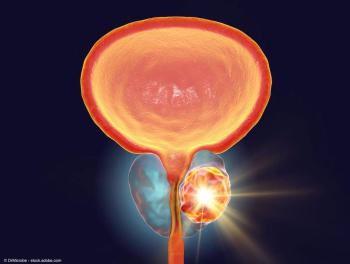
Zeyad Schwen, MD, a urologic oncologist at Cleveland Clinic, discusses how patient factors and cancer characteristics are key to deciding between focal therapies and whole gland treatment for prostate cancer.
The phase 1/2 study is scheduled to commence in the first half of 2024.

"The mental toll of excessive screen time is a pressing concern in health care," writes Neil Baum, MD.

The oral TRT study plans to enroll 20 male patients aged 18 to 49 years who meet the American Urological Association’s criteria for hypogonadism and who have not previously used TRT.

The combination is approved for the treatment of patients with metastatic castration-resistant prostate cancer, regardless of mutation status.

The coverage policy went into effect on December 28, 2023.

The study is enrolling patients with relapsed/refractory metastatic castration-resistant prostate cancer who have received at least 1 next-generation androgen receptor pathway inhibitor.
The facility will increase the production capacity of 177Lu-PSMA-617 to 250,000 doses in 2024 and beyond.

Immunotherapy initiation within 1 month of death for patients with renal cell carcinoma increased from 0.5% to 2.6% over the course of the study.
The phase 1/2a CYPIDES trial assessed the safety and preliminary efficacy of ODM-208 in heavily pretreated patients with metastatic castration-resistant prostate cancer.
Previously reported data showed promising efficacy signals and a manageable safety profile for the combination in patients with advanced solid tumors.
"When we think about a typical procedure for performing a radical cystectomy for cancer with an ileal conduit, that would typically involve lymph node dissection, and therefore CPT 51595 would be best chosen to report that combined procedure," write Jonathan Rubenstein, MD, and Mark Painter.
Data from the EV-302 trial showed a doubling of progression-free survival and overall survival with the ADC/checkpoint combination versus standard chemotherapy.

The payment rate for the prostate cancer test went into effect on January 1, 2024.

"The future of quality measurement is multiple different inputs to give us the best picture possible of the care we provide," says Timothy D. Lyon, MD, FACS.
Data from the phase 2 TheraP trial showed that 177Lu-PSMA-617 induced comparable overall survival outcomes as cabazitaxel in patients with metastatic castration-resistant prostate cancer who progressed after receiving docetaxel.

The open-label CaRe PC trial plans to enroll up to 30 adult patients with mCRPC, who will be treated across 3 dose levels of INKmune.

"All participants in the process must recognize that telehealth is a resource for rendering health care and not a different type of practicing medicine," writes Richard Cahill, JD.
Over a decade of data document a continued increase in the use of hypofractionation in patients with localized prostate cancer.