

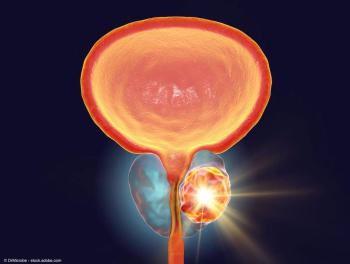
Treating patients with localized prostate cancer with high-intensity focused ultrasound led to noninferior salvage treatment-free survival vs radical prostatectomy.
Treating patients with localized prostate cancer with high-intensity focused ultrasound led to noninferior salvage treatment-free survival vs radical prostatectomy.

Treatment with stereotactic ablative body radiotherapy resulted in no observed local failures or cancer-related deaths among patients with primary renal cell cancer.

Patients in the CONTACT-02 trial had received exactly one prior novel hormonal therapy (abiraterone acetate, apalutamide, darolutamide, or enzalutamide) to treat their prostate cancer.
Over a decade of data document a continued increase in the use of hypofractionation in patients with localized prostate cancer.
"These tests, germline and tumor somatic testing, are extremely important and can no longer be ignored in the clinic when we see these patients," says Neeraj Agarwal, MD.
BT8009 targets the tumor antigen Nectin-4, which has elevated expression levels in urothelial cancer.

The disease-free survival and distant metastasis-free survival benefits observed with adjuvant pembrolizumab in the intent-to-treat population of patients with clear cell renal cell carcinoma extended across all subgroups defined by disease risk, tumor stage, and lymph node involvement.
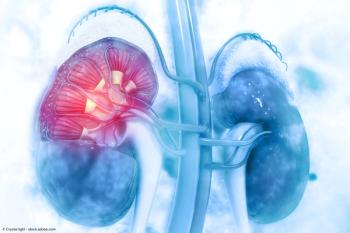
Researchers may be able to use imaging mass cytometry to capture and classify the tumor-immune evasion cell networks in clear cell renal cell carcinoma.

The 5-year metastasis-free survival rate was 75% with trimodality therapy vs 74% with radical cystectomy.

The addition of STAD did, however, improve secondary end points, including metastases rates, prostate cancer-specific mortality, and PSA failure.

The investigators identified several genetic factors, including ARID1A mutation, that correlated with survival outcomes in patients with advanced urothelial carcinoma treated with immune checkpoint blockade.

Researchers identified 9 novel susceptibility loci for prostate cancer, 7 of which were substantially more prevalent in patients of African ancestry.

“As a whole, the benefits of the lenvatinib plus pembrolizumab combination proved to be durable, statistically significant, and clinically meaningful,” said senior author Camillo Porta, MD.

Median progression-free survival in the intent-to-treat population by blinded independent central review was 16.6 months (95% CI, 12.8-19.8) with nivolumab plus cabozantinib vs 8.4 months (95% CI, 7.0-9.7) with sunitinib (HR, 0.58; 95% CI, 0.48-0.71).
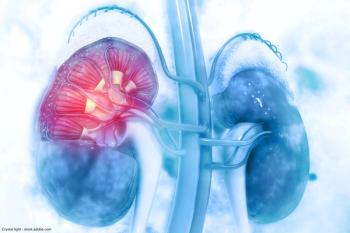
Published results from the phase 3 CONCEPT study showed improved outcomes with the combination compared with either agent alone.
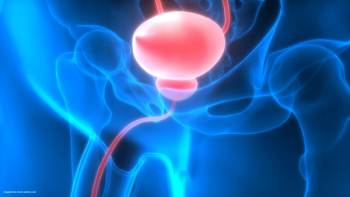
Novel targeted therapy BT8009 granted FDA Fast Track Designation for urothelial cancer.

The FDA’s Fast Track Designation is designed to expedite the review and development of novel treatments that will fill an unmet medical need.
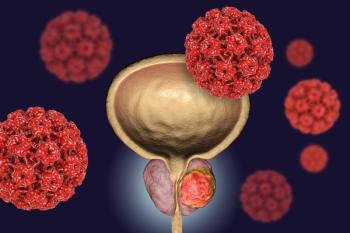
177Lu-PSMA-617 is approved by the FDA for the treatment of patients with PSMA-positive metastatic castration-resistant prostate cancer in the post androgen receptor pathway inhibition, post taxane-based chemotherapy setting.
The findings are from the phase 2/3 FORT-1 study published in the Journal of Clinical Oncology.

The trial prospectively included a subgroup analysis comparing patients who received SBRT using robotic non-coplanar radiotherapy (CyberKnife) compared with conventional linear accelerator.