
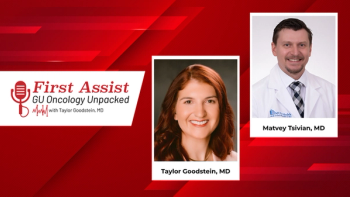
Taylor Goodstein, MD, and Matvey Tsivian, MD, discuss how patient selection, staging, and quality-of-life considerations influence early cystectomy decisions in NMIBC.
Taylor Goodstein, MD, and Matvey Tsivian, MD, discuss how patient selection, staging, and quality-of-life considerations influence early cystectomy decisions in NMIBC.
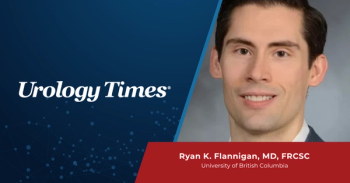
Ryan K. Flannigan, MD, FRCSC, highlights a phase 2 study of the sustained-release lidocaine formulation ST-01 as a potential nonsurgical treatment for chronic scrotal content pain.

According to the authors, the findings lay the groundwork for future work of genomics-guided treatment de-escalation in prostate cancer.
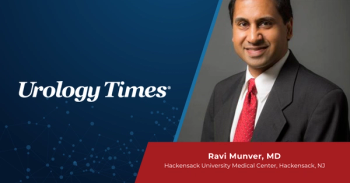
Ravi Munver, MD, discusses a propensity score–matched comparison of the AquaBeam system and the second-generation AI-powered HYDROS platform for BPH.

Amy Pearlman, MD, is joined by Larry I. Lipshultz, MD, and Dolores J. Lamb, PhD, to discuss the evolving role of semen analysis, laboratory diagnostics, and emerging genetic technologies in the evaluation of male infertility.

Enfortumab vedotin-ejfv (Padcev) plus pembrolizumab's (Keytruda) expanded approval shifts the perioperative MIBC conversation from cisplatin eligibility to optimal systemic strategy, according to María Natalia Gandur Quiroga, MD, MSc.

Daniel J. George, MD reviews the data behind the FDA approval of capivasertib for PTEN-deficient metastatic prostate cancer.

CVAC and FANS reflect different surgical philosophies—dusting vs fragmentation—with distinct ergonomic trade-offs and shared intrarenal pressure risks that urologists must actively monitor, according to Krambeck.

This decision extends the indication for pembrolizumab plus enfortumab vedotin to all patients with MIBC who are candidates for cystectomy.
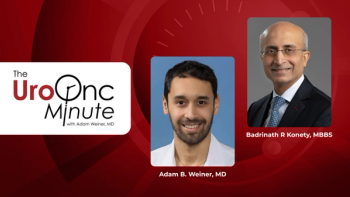
In this episode, Badrinath R. Konety, MBBS, walks through key recommendations from the 2026 AUA/SUO Early Detection of Prostate Cancer Guideline amendment.

The phase 1 trial is assessing the safety and preliminary antitumor activity of actinium (225Ac) rhPSMA-10.1 injection.

FDA clearance of the IND for UGN-501 paves the way for a first-in-human phase 1 trial evaluating its safety and feasibility in patients with NMIBC.
The findings suggest that a significant proportion of participants may benefit from discontinuing tamsulosin.

Sender Herschorn, BSc, MDCM, FRCSC, discusses a subgroup analysis of the COURAGE trial showing that vibegron provided comparable efficacy and favorable safety in men 75 years and older with persistent OAB symptoms receiving pharmacotherapy for BPH.

In this episode, Anup A. Vora, MD, discusses patient selection for focal therapy in localized prostate cancer, the role of precision medicine, and how advanced practice providers are helping deliver comprehensive, patient-centered GU oncology care.
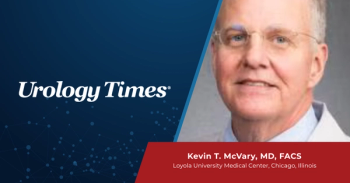
Urocross produced deepening IPSS improvement through 24 months post-retrieval, with Kevin T. McVary, MD, FACS, attributing a post-removal symptomatic boost to completed prostatic remodeling and full preservation of future treatment options.
A recent meta-analysis suggests that the Prolaris combined clinical risk score is prognostic across NCCN risk groups in men with localized prostate cancer.

Amy Pearlman, MD, and guests discuss how to address unmet needs in bladder care through telehealth, education, and behavioral interventions.

Kristen Scarpato, MD, discusses 2026 AUA/SUO Advanced Prostate Cancer Guideline amendment recommendations on the use of PSMA-PET imaging for staging and treatment selection.
Data from the ARC-20 study are the first to link HIF-2a inhibitor-associated changes in circulating serum EPO, tumor biology, and clinical activity.
Results from a cross-sectional study suggest that unmet social needs are associated with kidney stone disease and worse stone-specific quality of life.
Matthew Truesdale, MD, FACS, discusses validation data showing that IsoPSA improves risk stratification for clinically significant prostate cancer in men with elevated PSA both with and without pre-biopsy mpMRI.
"This is really going to make access to care a lot better, and workflow is going to be a lot easier," says Ben H. Chew, MD, MSc, FRCSC.
In this episode of The UroOnc Minute, host Adam Weiner, MD, is joined by David Canes, MD, for a thoughtful discussion on practical strategies to improve efficiency, reduce physician burnout, and preserve meaningful patient-centered care in urologic oncology.
These results are intended to support a premarket approval submission for an expanded indication of the Vanquish device for the management of clinically localized prostate cancer.
Enucleation is appropriate for the vast majority of patients with BPH, but certain patient profiles—including prior radiation, significant neurologic conditions, morbid obesity, and dementia—warrant caution or referral to specialists, whereas the most consistent technical failure among surgeons past their learning curve is inadequate apical tissue removal driven by discomfort with sphincter proximity, according to Amy E. Krambeck, MD.

Gopa Iyer, MD, reviews early NEXUS-01 data evaluating the investigational anti–Nectin-4 ADC LY4052031, highlighting the importance of CYP2D6-guided dosing to optimize safety.
A recap of the FDA submissions and regulatory decisions in urology from June 2026.
A health-economic analysis of the ASPIRE trial data found that the steerable ureteroscopic renal evacuation (SURE) procedure was linked to roughly $3464 in downstream savings per patient over 2 years compared with standard ureteroscopy, with lead investigator Brett Johnson, MD, framing this as a value-committee benchmark rather than a full cost comparison, since the analysis deliberately excludes the index procedure's incremental cost due to wide variability across payers and care settings.

In this episode, host Amy Pearlman, MD, is joined by Larry Lipshultz, MD, and Nicholas Deebel, MD, to discuss a new men's health program and a clinical trial evaluating incobotulinumtoxinA for erectile dysfunction.