

Amanda North, MD, discusses the AUA census in depth, specifically highlighting the data collected on residents and fellows.
Amanda North, MD, discusses the AUA census in depth, specifically highlighting the data collected on residents and fellows.

“Almost 1/3 [of telehealth visits] were planned as audio-only, and the healthcare system is no longer going to pay for that. We can use the data from our census to go to Congress and say, 'Hey, you're making a mistake,’” says Amanda North, MD.

“There have been a lot of efforts to increase the diversity of the urologic workforce, and I think the fruits of our labor are starting to show themselves when we look at the residents,” says Amanda North, MD.

Study authors found a rise in public interest in vasectomies, “particularly in states where abortion is or is expected to be prohibited.”

"As more genes are classified and catalogued, diagnosis and treatment of kidney stones inches further and further toward 'precision medicine,' " write Rutul Patel, DO, MS, and Alexander Small, MD.

In this interview, Nitya E. Abraham, MD, discusses innovations in vesicovaginal fistula repair.
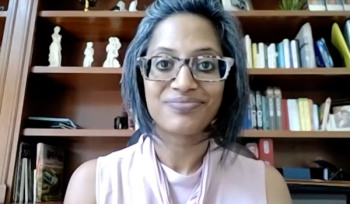
"I would argue most people perform complicated vesicovaginal fistula repairs that can't be reached vaginally using a robotic abdominal approach," says Nitya E. Abraham, MD.

In this installment of the Urology Times' 50th Anniversary Innovation Celebration, Kara L. Watts, MD, discusses the emergence and increasing uptake of active surveillance as a management strategy for men with prostate cancer.

"Active surveillance is an innovation because it's truly a departure from the idea that all prostate cancers or cancer, in general, needs to be treated," says Kara L. Watts, MD.