

|Videos|July 27, 2022
Urology Times 50 Innovations Series: Advancements in vesicovaginal fistula repair
Author(s)Urology Times staff
"I would argue most people perform complicated vesicovaginal fistula repairs that can't be reached vaginally using a robotic abdominal approach," says Nitya E. Abraham, MD.
Advertisement


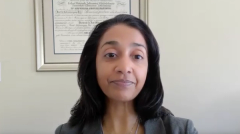

























Urology Times® is celebrating its 50th anniversary in 2022. To mark the occasion, we are highlighting 50 of the top innovations and developments that have transformed the field of urology over the past 50 years. In this installment, Nitya E. Abraham, MD, discusses innovations in vesicovaginal fistula repair. Abraham is an associate professor and residency program director of urology at Montefiore Medical Center in Bronx, New York.
Advertisement
Related to this article

The phase 1/2 CELC-G-201 study found preliminary antitumor activity and manageable toxicity with gedatolisib plus darolutamide in metastatic castration-resistant prostate cancer.

Kim Chi, MD, FRCPC, discusses the rationale and design of the phase 3 KLK2-comPAS trial evaluating pasritamig alone and in combination with JNJ-9401 in patients with mCRPC.

Longer-term findings from the phase 2 ARACOG study suggest differences in objectively measured cognitive function between ARPIs.

Engy Habashy, MD, discusses key takeaways from the 2025 AUA GSM guideline, including the role of androgens and hormonal therapies in managing genitourinary syndrome of menopause.

Chad R. Ritch, MD, MBA, FACS, discusses how PSMA-PET informs staging, treatment planning, recurrence workup, and the interpretation of equivocal findings.
Michael S. Cookson, MD, MMHC, FACS, discusses how Anktiva’s expanded FDA approval may broaden bladder-preserving treatment options for BCG-unresponsive papillary-only NMIBC.

Jeffrey M. Spier, MD, discusses how fatigue may impact patient quality-of-life and when dose reduction may be an appropriate treatment strategy.

This approval expands the perioperative use of pembrolizumab plus enfortumab vedotin to all patients with MIBC, regardless of cisplatin eligibility.
Advertisement
Advertisement
Trending on Urology Times
1
How PSMA-PET shapes staging and recurrence workup in prostate cancer
2
ESMO 2026: Key presentations across genitourinary oncology
3
Engy Habashy, MD, on the role of androgens in GSM management
4
Darolutamide associated with less cognitive change than enzalutamide in prostate cancer
5