

|Videos|March 9, 2022
Urology Times 50 Innovations Series: Active surveillance for prostate cancer
Author(s)Urology Times staff
"Active surveillance is an innovation because it's truly a departure from the idea that all prostate cancers or cancer, in general, needs to be treated," says Kara L. Watts, MD.
Advertisement


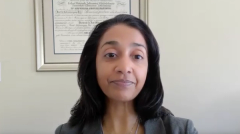



























In this installment in Urology Times®' 50th Anniversary Innovation Celebration series, Kara L. Watts, MD, discusses the emergence and increasing uptake of active surveillance as a management strategy for men with prostate cancer. Watts, a member of the Urology Times® Editorial Council, is an assistant professor of urology at Montefiore Medical Center, Bronx, New York.
Advertisement
Related to this article

Kim Chi, MD, FRCPC, discusses the rationale and design of the phase 3 KLK2-comPAS trial evaluating pasritamig alone and in combination with JNJ-9401 in patients with mCRPC.

Longer-term findings from the phase 2 ARACOG study suggest differences in objectively measured cognitive function between ARPIs.

Chad R. Ritch, MD, MBA, FACS, discusses how PSMA-PET informs staging, treatment planning, recurrence workup, and the interpretation of equivocal findings.

Jeffrey M. Spier, MD, discusses how fatigue may impact patient quality-of-life and when dose reduction may be an appropriate treatment strategy.

Jeffrey M. Spier, MD, reviews evidence on ARPI dose reduction in prostate cancer and discusses monitoring treatment response, tolerability, and dose reescalation.
Jeffrey M. Spier, MD, discusses managing ARPI-related fatigue through dose adjustments, patient monitoring, and strategies to maintain treatment adherence.

Moderators and participants reviewed ARANOTE, ARACOG, and ARASEC data and how they inform individualized treatment for mCSPC.

Jack R. Andrews, MD, discusses BED-PSMA-411 findings comparing PSMA-PET detection rates and urinary excretion in prostate cancer biochemical recurrence.
Advertisement
Advertisement
Trending on Urology Times
1
How PSMA-PET shapes staging and recurrence workup in prostate cancer
2
ESMO 2026: Key presentations across genitourinary oncology
3
Engy Habashy, MD, on the role of androgens in GSM management
4
European Commission approves perioperative pembrolizumab plus enfortumab vedotin for MIBC
5