

|Videos|April 20, 2022
Urology Times 50 Innovations Series: Radiation therapy for prostate cancer
Author(s)Urology Times staff
"I would say our greatest advance of the past 30 years is our clinical trials infrastructure, because we can now use our therapies with intelligence," says Anthony Zietman, MD.
Advertisement






















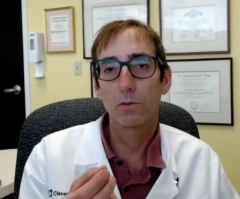














Urology Times® is celebrating its 50th anniversary in 2022. To mark the occasion, we are high-lighting 50 of the top innovations and developments that have transformed the field of urology over the past 50 years. In this installment, Anthony Zietman, MD, discusses the development of radia-tion therapy for prostate cancer. Zietman is interim chief of Radiation Oncology at Massachusetts General Hospital in Boston and has recently retired as Editor-in-Chief of the International Journal of Radiation Oncology Biology Physics (The “Red Journal”).
Advertisement
Related to this article
VIR-5500 is a PSMA-targeted PRO-XTEN dual-masked T-cell engager entering phase 3 development for prostate cancer.

Abraham Morgentaler, MD, reviews evidence showing no association between testosterone therapy and prostate cancer risk and explains the saturation model of androgen action.

Based on these results, the trial protocol has been amended to move enrollment earlier in the course of disease progression.

An analysis of NRG/RTOG 0815 found Decipher predicted distant metastasis risk and identified patients with greater benefit from short-term ADT.
Exploratory analyses suggest persistent immune remodeling after aglatimagene plus radiation in localized prostate cancer.

Brian Mazzarella, MD, discusses the landscape for intermediate-risk prostate cancer and early VAPOR 2 findings on water vapor ablation.
The phase 3 BiPASS trial is evaluating the use of 68Ga-PSMA-PET in combination with MRI for pre-biopsy prostate cancer detection.

In RTOG 3506, adding enzalutamide to standard ADT and salvage radiotherapy was associated with 2-year PFS benefit.
Advertisement
Advertisement