

|Videos|June 8, 2022
Urology Times 50 Innovations Series: Neobladder reconstruction
Author(s)Urology Times staff
"It's not perfect; you have to sort of retrain it, and there are some downsides to it. But it's the closest that we can get to, essentially, an artificial bladder," says Eila C. Skinner, MD.
Advertisement





















Urology Times® is celebrating its 50th anniversary in 2022. To mark the occasion, we are high-lighting 50 of the top innovations and developments that have transformed the field of urology over the past 50 years. In this installment, Eila C. Skinner, MD, discusses neobladder reconstruction in patients undergoing radical cystectomy. Skinner is a urologic oncologist and Thomas A. Stamey research professor of urology at Stanford Health in Palo Alto, California.
Advertisement
Related to this article
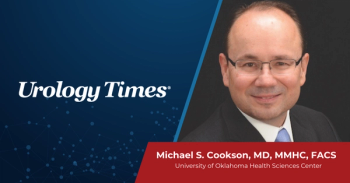
Michael S. Cookson, MD, MMHC, FACS, discusses how Anktiva’s expanded FDA approval may broaden bladder-preserving treatment options for BCG-unresponsive papillary-only NMIBC.
This approval expands the perioperative use of pembrolizumab plus enfortumab vedotin to all patients with MIBC, regardless of cisplatin eligibility.
The agency issued a PDUFA target action date of June 14, 2027.
Long-term QUILT-3.032 findings show durable responses with Anktiva plus BCG in BCG-unresponsive NMIBC, with an estimated 84.2% cystectomy-free survival at 3 years.
Vignesh Packiam, MD, discusses strategies to manage intravesical therapy toxicity in NMIBC, improve treatment tolerability, and preserve bladder function.
Sandip M. Prasad, MD, MPhil, discusses the safety profile of mitomycin intravesical solution, including common adverse events and patient counseling during chemoablation for NMIBC.
Sandip M. Prasad, MD, MPhil, discusses 3-year ENVISION trial data showing durable responses with mitomycin intravesical solution for recurrent LG-IR-NMIBC.
Armine K. Smith, MD, discusses sexual health counseling, sex-specific considerations, and organ-preserving approaches for patients undergoing radical cystectomy.
Advertisement
Advertisement
Trending on Urology Times
1
How PSMA-PET shapes staging and recurrence workup in prostate cancer
2
ESMO 2026: Key presentations across genitourinary oncology
3
Engy Habashy, MD, on the role of androgens in GSM management
4
European Commission approves perioperative pembrolizumab plus enfortumab vedotin for MIBC
5