

Scott Bauer, MD, ScM, discusses an N-of-1 trial showing heterogeneous responses to long-term tamsulosin, identifying older men who may be candidates for deprescribing.
Scott Bauer, MD, ScM, discusses an N-of-1 trial showing heterogeneous responses to long-term tamsulosin, identifying older men who may be candidates for deprescribing.
A recent study found active surveillance use for low-risk prostate cancer rose from 27% to 93% among veterans from 2005 to 2024.
In this episode of The UroOnc Minute, Carissa Chu, MD, discusses the prevalence, biology, prognostic significance, and emerging molecular targets of variant histologies in bladder cancer.

Robert Flavell, MD, PhD, and Anil P. Bidkar, PhD, discuss the synergistic potential of CD46-directed alpha radiation and ADC therapy combination.
In this episode, Farnoosh Nik-Ahd, MD, joins host Adam Weiner, MD, to discuss emerging guidance on prostate cancer screening in transgender women.

Rahul Aggarwal, MD, shares key takeaways from the PRESTO trial as well as remaining questions in the field.
Rahul Aggarwal, MD, highlights final results from the phase 3 PRESTO trial in biochemically relapsed prostate cancer.
Kevin Shee, MD, PhD, shares findings on factors associated with recurrence and treatment failure following HIFU for prostate cancer.

Catch up on exclusive videos you may have missed from the first half of the year.

Sima P. Porten, MD, MPH, discusses the need to better understand how genetic makeup influences how individuals process environmental toxins.
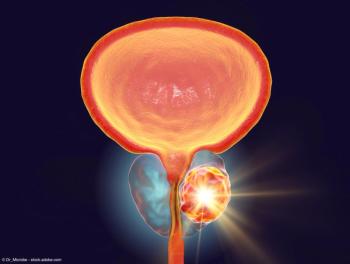
The company plans to initiate the phase 2 monotherapy trial by mid-year.

"They are risking their own lives for their job, so it's the part of the whole community to do our best to try to keep them safe," says Sima P. Porten, MD, MPH.

“Black patients have over 2-fold excess mortality compared to White men, and that has been fairly consistent; the actual rate ratio has hovered between 2 and 2.5 for many years,” says Matthew R. Cooperberg, MD, MPH.

“It does seem clear that we need to get back to a smarter middle ground of screening—using screening more intelligently, finding the high-grade cancers and treating them—so that we can get that mortality curve back on a downward trajectory,” says Matthew R. Cooperberg, MD, MPH.

"I'm hopeful that the decisions are more informed in terms of actual science," says Daniel Kwon, MD.

"Whenever they discuss germline testing, an important part of that is this pretest counseling process where you talk about the pros and the cons," says Daniel Kwon, MD.

"[Veterans] may be missing out on potentially life-saving treatments, and their family might also be missing out on some benefits as well," says Daniel Kwon, MD.
"We were trying to understand how veterans were making decisions about germline testing for their prostate cancer," says Daniel Kwon, MD.

"[One] of the things that makes the technology really interesting, in my mind, for CVAC, is that it's not just a suction device," says Thomas Chi, MD, MBA.
"From a revenue, profit and loss perspective, actually, in many instances, they anticipate that physicians may actually make more money using the second-generation CVAC device compared to traditional ureteroscopy, depending on your payer mix and your practice," says Thomas Chi, MD, MBA.
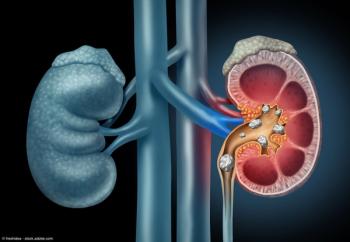
Thomas Chi, MD, MBA, discusses advantages to the CVAC System.

"What we demonstrated was that at 30-day and 90-day interval outcomes, the patients actually had equivalent safety profiles compared to traditional ureteroscopy with basketing," says Thomas Chi, MD, MBA.

Over 12 weeks, the average reduction in total UI frequency was 2.3 episodes per day among those in the pelvic yoga program compared with 1.9 episodes per day among those in the general physical conditioning program.
Experts on prostate cancer discuss current unmet needs in the therapeutic landscape and outline treatment considerations for patients receiving androgen deprivation therapy.
Stephen Freedland, MD, discusses the role of GnRH agonists and antagonists on improving cardiovascular outcomes in patients with prostate cancer.
Experts on prostate cancer discuss the relationship between prostate cancer and cardiovascular disease, highlighting ongoing research for safer treatment.
Focusing on castration-resistant prostate cancer, the panel reviews treatment options for patients with metastatic and nonmetastatic disease.
The panel outlines combination therapy options for patients with advanced prostate cancer and discusses the potential benefits of intensification of androgen deprivation therapy.
Experts on prostate cancer discuss factors to consider while making treatment decisions for patients with nonmetastatic castration-sensitive prostate cancer.
Stephen Freedland, MD, reviews findings from the EMBARK study, which investigated enzalutamide in patients with nonmetastatic castration-sensitive prostate cancer.