

"I think there's going to be a rapid adoption of artificial intelligence platforms in our field," says David Sheyn, MD.
"I think there's going to be a rapid adoption of artificial intelligence platforms in our field," says David Sheyn, MD.
"UH is working on starting clinics throughout rural Northeast Ohio, and we're meeting to develop a FPMRS program, both virtual and in-person, so patients can have access to this point of care," says David Sheyn, MD.
“I am interested in looking at postpartum issues for sexual function,” says Rachel Pope, MD, MPH.

"UH is working on starting clinics throughout rural Northeast Ohio, and we're meeting to develop a FPMRS program, both virtual and in-person, so patients can have access to this point of care," says David Sheyn, MD.
"The overarching goal is to both increase the identification of patients with urinary incontinence as well as shorten the time between diagnosis and appropriate treatment," says David Sheyn, MD.

“For a lot of women with lichen sclerosis, they actually go for years without being diagnosed,” says Rachel Pope, MD, MPH.
“I would have to say the most exciting part of the whole conference was how many medical students and trainees were there,” says Rachel Pope, MD, MPH.
"The MMAI model had significantly improved accuracy and prognostication to discriminate which patients would develop distant metastasis or die from prostate cancer," says Daniel E. Spratt, MD.

“I would just burn it into everyone's brain that pain with intercourse is also going to be associated with genitourinary syndrome of menopause,” says Rachel Pope, MD, MPH.

“There's a huge potential role for urologists out there for female sexual health,” says Rachel Pope, MD, MPH.

“There are just a lot of barriers, unfortunately, to speaking freely about women's sexual health,” says Rachel Pope, MD, MPH.

“It didn't happen overnight. The way we built the program was an iterative process,” says Shubham Gupta, MD.

“The short-term goals are really community building [and] relationship building,” says Randy Vince Jr, MD.

“Coordination between urology and radiation oncology, if urology is placing the device, is really critical,” says Jonathan E. Shoag, MD.
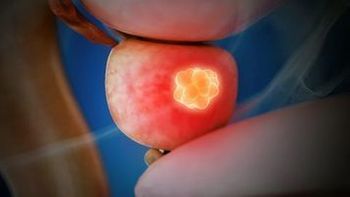
“Each patient is different, and some patients are more challenging than others in terms of placement,” says Jonathan E. Shoag, MD.
“It's really the overall excellence of a multidisciplinary program focused on improving patient outcomes,” says Daniel E. Spratt, MD.

Press Release
The device helps reduce unintentional side effects of prostate cancer therapy.