

University Hospitals Urology Institute
Latest Content
"I think the main takeaway from this study is that prostate cancer is not as rare in trans women as we think it is, and that we really need to be giving this population the time that they deserve, and that they should be screened equally to their cis male counterparts," says Matthew Loria.

“The main takeaway is that we want to be working with [transgender and gender-diverse patients] the same way that we are working with cisgender folks,” says Matthew Loria.

"We ultimately found that trans women from between the ages of 50 and 65 who were on hormone therapy had a 2.5-fold decreased risk of prostate cancer compared with cis men," says Matthew Loria.

“What is becoming increasingly evident is that the traditional health care model is falling short for patients in rural regions,” says Ramy Abou Ghayda, MD, MPH, MBA candidate.

“Remarkably, relugolix demonstrated a faster return to baseline testosterone levels compared [with] traditional therapies, a crucial aspect for patients' quality of life post-treatment," says Daniel E. Spratt, MD.
"There are patients who are not able to be submitted to an MRI due to metallic artifacts or to some conditions that are not compatible with the performance of an MRI," says Leonardo Kayat Bittencourt, MD, PhD.
"There are situations where you can use a biparametric or noncontrast approach; most of them you will prefer still to use an approach with contrast," says Leonardo Kayat Bittencourt, MD, PhD.
"We have information today from a number of well-powered, well-designed prospective studies showing that performing an MRI before the decision to do the first biopsy adds value," says Leonardo Kayat Bittencourt, MD, PhD.
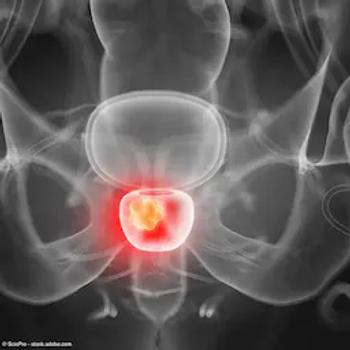
Daniel Spratt, MD, highlights the evolving paradigm of PET-based imaging agents in prostate cancer, with a focus on the impact of PSMA-PET imaging.

"What we found was that the obedience to the upgrading criteria of PI-RADS as they are today resulted in a better overall outcome for all the patients that were included in the study," says Leonardo Kayat Bittencourt, MD, PhD.
“I think that having the clinical context such as the PSA, the Gleason score, the other features that assess the aggressiveness of the disease can really help with some of these subtle findings that can be found on PET imaging,” says Daniel Spratt, MD.

"When we think about germline mutations, I think the number one thing that comes through for many urologists as well as oncologists is Lynch syndrome," says Laura Bukavina, MD, MPH, MSc.

"The main finding is that when you look at men with low testosterone, grouped 18 and above, we found that there is an association between low testosterone and kidney stone encounter diagnoses," says Austin Thompson.

From a show dog to a family of cats, let's see who some of the top medical professionals are spending their time with when they're not in the clinic.
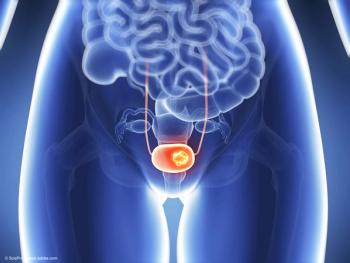
Laura Bukavina, MD, MPH, offers a preview of noteworthy bladder and kidney cancer research to be presented at this year's Society of Urologic Oncology Annual Meeting.

"It's very important to build trust early on for a urologist and with a patient so that they're more likely to stay with a screening program," says Daniel E. Spratt, MD.

“About 25% of men didn't even want to know that they had cancer,” says Daniel E. Spratt, MD.

“Patients just need to be educated that you don't have to live this way,” says J. Welles Henderson, MD, FACOG.

Patients classified as high-risk by the genomic classifier who underwent radical prostatectomy had a 3-fold higher risk of harboring adverse pathology at the time of surgery compared with those with low-risk.

Anna L. Myers, APRN-CNP, WHNP-BC, FNP-BC, IF, and Jean Marino, ARPN-CNP, NCMP, IF, preview an upcoming University Hospitals-led symposium titled, “What’s your pelvic floor plan? 2nd Annual Female Sexual Health Symposium.”

University Hospitals Urology Institute is excited to announce that this coming fall, the department is hosting 2 educational courses in cutting-edge urologic specialties: female sexual health and gender care.

“The real immediate use case is that this biomarker can be an adjunct, or it can be something to assist in making the shared decision making with patients [with prostate cancer],” says Daniel E. Spratt, MD.

"The thing that's unique about this course, in my opinion, is that we are combining the vaginoplasty and phalloplasty discussions," says Kirtishri Mishra, MD.

"It could identify about 2/3 of men that normally we'd be recommending hormone therapy would appear to have no benefit from hormone therapy," says Daniel E. Spratt, MD.
Dr. Vince has an interest in disparities in urologic care, specifically among patients with prostate cancer.
"I tried to highlight how race has been used in medical research, specifically analyzing how this may [be] used toward Black people as a way to uphold systems of oppression," says Randy Vince, Jr., MD, MS.
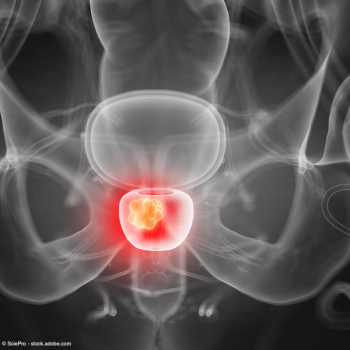
“Combined MRI-targeted and systematic biopsies were nearly twice as likely to result in downgraded pathology at prostatectomy compared [with] systematic biopsies," says Ilon C. Weinstein.
"What we found was a very different frequency of alterations in important genes," says Camilo Arenas-Gallo, MD.
"Something that we did find that was more promising was that regardless of whether a patient did or did not have a mental health disorder diagnosis, that did not affect their rate of receiving gender-affirming medical therapy," says Helen Sun, MD.
Advertisement
Advertisement
Trending on Urology Times
1
Michael Cookson, MD, reacts to Anktiva’s expanded approval in NMIBC
2
European Commission approves perioperative pembrolizumab plus enfortumab vedotin for MIBC
3
FDA accepts new drug application for UGN-103 in recurrent LG-IR-NMIBC
4
ESMO 2026: Key presentations across genitourinary oncology
5