

"In the moment, I think it's important to take a deep breath and try not to just be reactive," says Anne M. Suskind, MD, MS, FACS, FPMRS.
"In the moment, I think it's important to take a deep breath and try not to just be reactive," says Anne M. Suskind, MD, MS, FACS, FPMRS.

“The actions taken by those matched over 80% of the time. It seemed like what they saw, knowing the history, was a reasonable approximation of what an in-person urologist would do,” says Tracey L. Krupski, MD.

"We ultimately found that trans women from between the ages of 50 and 65 who were on hormone therapy had a 2.5-fold decreased risk of prostate cancer compared with cis men," says Matthew Loria.

“I think in actuality it's going to have to be one of our trained APPs going to these sites on a scheduled day, like the third Wednesday of every month,” says Tracey L. Krupski, MD.

"Like any test, it's really a very powerful tool. It's just how you deploy the tool," says Edward M. Schaeffer, MD, PhD.
“The hope is that we can collaborate with folks who might be interested in trying nadofaragene plus something else, something that compliments the mechanism of action, so that we can build upon what we have now,” says Vikram M. Narayan, MD.

"We hope that this paper encourages urologists to rethink non definitive treatment/active surveillance for prostate cancer and consider definitive treatment options earlier in the treatment pathway based on evidence that has accumulated," says Mital Patel, MD.
“I think 1 size doesn't fit all. We can't make a blanket statement that 1 of those types of therapy is better for all patients than another,” says Suzette E. Sutherland, MD, MS, FPMRS.

"We know that surgical intervention for ureteroscopy for both renal and ureteral stones does result in a relatively rapid and also quite substantial improvement in quality of life that does exceed preoperative baseline," says Justin B. Ziemba, MD, MSEd.

“I would just say that urologists should be focusing much more on the total amount of pattern 4, if they have that information available, than on the ratio of pattern 3 and 4, and therefore the grade group,” says Andrew J. Vickers, PhD.
"Because it takes advantage of a viral vector and is delivered as a gene therapy product, what it can do is it can have sustained release of IFNα2b in the bladder," says Vikram M. Narayan, MD.

"The point is healthy, adaptive changes that are sustainable, that you can keep off, because we don't want that rebound/regain," says Jill M. Hamilton-Reeves, PhD, RD, CSO.
"PSMA PET imaging is used in the initial diagnostic staging and then in subsequent cases where there can be a recurrence after primary treatment.," says Edward M. Schaeffer, MD, PhD.

“The 1 tweak that's different for our model is that the trained urologist is watching the cysto at the same time as the nurse practitioner is doing it,” says Tracey L. Krupski, MD.

"As most of us know, 1 in 8 couples undergo issues pertaining to fertility, and in about half of those cases, there is a male factor involved, resulting in infertility," says Akash Kapadia, MD.

"We must do more to help surgeons prepare for the impact of adverse events before they happen," says Kevin Turner MA DM FRCS(Urol).

"One notable finding was that veterans may not have access to the same quality of prostate cancer care as the US general population," says Olubiyi Aworunse, MD, MPH, PhD.

“I think the long and short of it is we know tibial nerve stimulation works, we're just trying to identify what's the best way by which we can deliver it conveniently and cost effectively to the patient,” says Suzette E. Sutherland, MD, MS, FPMRS.

"I continue to be regularly surprised at just how much surgeons are affected when things go wrong, and how little surgeons engage with existing support mechanisms," says Kevin Turner MA DM FRCS(Urol).
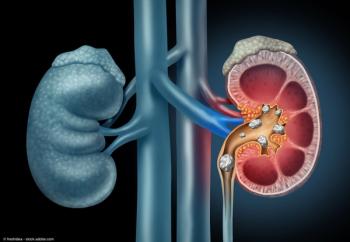
"What we did find was that a preoperative ureteral stent, and when we did semi rigid ureteroscopy initially, seemed to be protective against worse symptoms," says Justin B. Ziemba, MD, MSEd.

"Every time I leave the meeting, I just feel reinvigorated, refreshed, and excited about this field that we're a part of," says Raveen Syan, MD, FPMRS.

“We're always so focused on the prostate. That's the million-dollar question: are we getting to bladders too late?” says Kevin C. Zorn, MD, FRCSC, FACS.
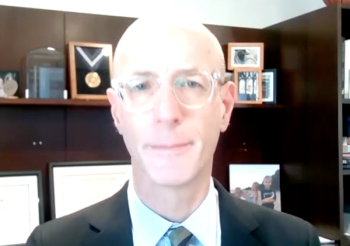
"PSMA-PET is a radio nucleotide-based imaging modality that really has changed the landscape of how we initially stage and subsequently follow individuals who have a diagnosis of prostate cancer," says Edward M. Schaeffer, MD, PhD.

“It's exciting to see that we now have another offering to men with enlarged prostates that has good outcomes and good durability up to 5 years [based on] the trials,” Kevin C. Zorn, MD, FRCSC, FACS.

"I think it's about engaging with primary care. Primary care physicians need us to provide them with good education and good back-up," says Caroline Dowling, MBBS, MS, FRACS (Urol).

“Currently, in the area of tibial nerve stimulation, there are only 2 FDA approved options,” says Suzette E. Sutherland, MD, MS, FPMRS.

“These are the technologies that we'll see to empower patients and get more information, so that when we see the patient, it's one less thing we as a physician have to gather during that consultation, making the consultation more efficient,” says Kevin C. Zorn, MD, FRCSC, FACS.

"We're very much looking forward to being able to clinically implement these algorithms, both on the OAB side and the antibiotic resistance side," says Glenn T. Werneburg, MD, PhD.

"There's fear that telehealth is going to be abused and overused, and the evidence doesn't necessarily point to that, but because of that fear, it does hold things back," says Chad Ellimoottil, MD, MS.