

Eugene Cone, MD, discusses SWOG S1602 findings comparing Tokyo-172 and TICE BCG and the potential role of alternative BCG strains in NMIBC
Eugene Cone, MD, discusses SWOG S1602 findings comparing Tokyo-172 and TICE BCG and the potential role of alternative BCG strains in NMIBC

Juan Gómez-Rivas, MD, discusses barriers to PSMA-PET imaging and how disparities in access may affect prostate cancer staging and treatment planning.

Jonathan Harper, MD, discusses findings from the PUSH trial may inform counseling on hydration and stone recurrence.

Cameron C. Jones, MD, discusses patient selection for Aquablation, including prostate size, anatomy, and factors that may favor alternative BPH procedures.
Andrew Peterson, MD, discusses the quality-of-life impact of post-cancer incontinence and advances in electronically controlled artificial urinary sphincters.
John P. Sfakianos, MD, discusses the challenges of managing recurrent LG-IR-NMIBC and the role of chemoablation.

Rising patient interest in TRT, GLP-1s, and peptide stacking requires clinicians to anchor conversations in evidence tiers, use baseline DEXA scans to monitor body composition, and engage patient goals without endorsing unsupported claims.

Martin Schoen, MD, PhD, discusses key factors clinicians should consider when interpreting comparative real-world evidence for ARPI selection.
Martin Schoen, MD, PhD, discusses how clinicians can interpret comparative real-world evidence and indirect analyses when head-to-head ARPI data are unavailable.
Prof Declan Murphy discusses PROTEUS pathologic responses with apalutamide plus ADT and their implications for future treatment strategies.
Timothy D. McClure, MD, discusses 2-year PRESERVE trial safety data and 12-month AUA findings linking prostate size to IPSS improvement after focal IRE.

Mary Dunn, MSN, RN, NP-C, OCN, discusses how APPs support genetic testing through patient counseling, test ordering, result communication, and referrals to genetics specialists.
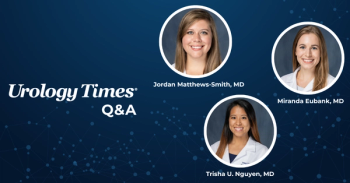
University of Florida urology chiefs Miranda Eubank, MD; Trisha Nguyen, MD; and Jordan Matthews-Smith, MD, reflect on residency milestones, mentorship, community, and lessons learned along the way.

Emanuele Crupi, MD, discusses prospective data supporting GemFLP as a benchmark for treatment of advanced urachal and non-urachal urinary tract adenocarcinomas.

Nicole L. Miller, MD, FACS, discusses how to distinguish bladder dysfunction from persistent obstruction when evaluating LUTS after BPH treatment.

Davis Viprakasit, MD, FACS, discusses advanced cystoscopy training for APPs and the importance of collaboration between APPs and urologists to expand patient care.

María Natalia Gandur Quiroga, MD, MSc, highlights treatment selection, negative trials, and implementation in GU oncology as 3 key themes emerging from ASCO 2026.

Kari Tikkinen, MD, PhD, discusses POISE-3 findings showing tranexamic acid reduced major bleeding without significantly increasing thrombotic events in urologic surgery.
Mary Dunn, MSN, NP-C, OCN, RN, highlights advances in advanced prostate cancer, including earlier systemic therapy, PSMA-PET, and PARP inhibitors.
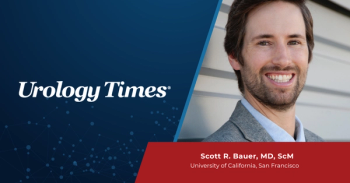
Scott Bauer, MD, ScM, discusses an N-of-1 trial showing heterogeneous responses to long-term tamsulosin, identifying older men who may be candidates for deprescribing.

Hans Arora, MD, PhD, discusses how communication and collaborative leadership can strengthen teamwork and performance in the operating room.
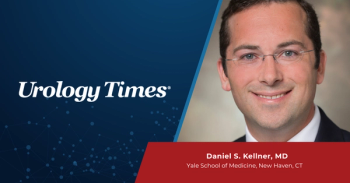
Daniel S. Kellner, MD, discusses patient selection for HoLEP and strategies for surgeons interested in adoption.
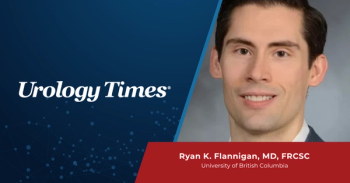
Ryan K. Flannigan, MD, discusses phase 2 data showing promising efficacy with sustained-release lidocaine in men with chronic scrotal pain.

Nima Almassi, MD, reviews long-term evidence for bladder preservation after systemic therapy in muscle-invasive bladder cancer.

Functional reconstructive urology emerged gradually as anatomical success proved insufficient—enabled by urodynamics, neurourology, and institutional milestones, according to Sasha Vereecken, BScN, RN.

Narmina Khanmammadova, MD, discusses interim findings on preoperative pelvic floor therapy and its potential to improve continence recovery after HoLEP.

Jessica Yih, MD, reviews evidence on testosterone therapy for female sexual dysfunction, highlighting promising but limited data in premenopausal women.

Elizabeth Nally, MBBS, highlights the impact of long-term immunotherapy toxicity and the need for patient-informed approaches to treatment decisions.
Abraham Morgentaler, MD, joins Neil Baum, MD, to discuss the historical origins of the belief that testosterone drives prostate cancer and the new framework presented in his recent Journal of Urology publication.
Alan Bryce, MD, breaks down the key prostate cancer studies that he believes are going to change practice from ASCO 2026.